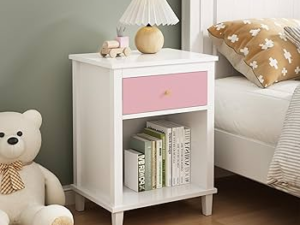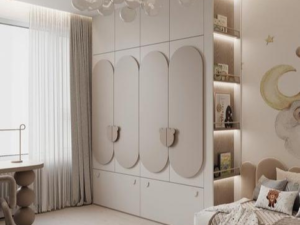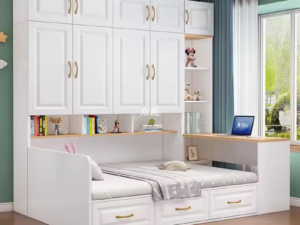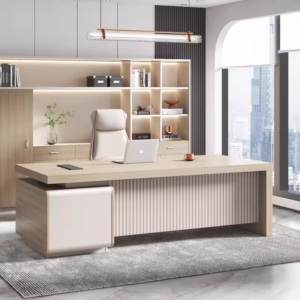
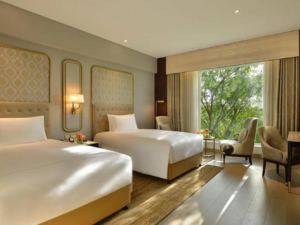
Hotel bedroom furniture is one of those categories where a “nice-looking set” can still fail on-site. Skirting boards can push the wardrobe forward. Door casings might collide with handles. Sometimes, walls aren’t straight. The AC return can also conflict with a headboard feature panel. This guide is written from a B2B project/OEM/ODM manufacturer viewpoint. It helps you issue cleaner RFQs. You can lock down dimensions early. It helps you avoid rework, claims, and schedule slips.
You’ll get:
- A procurement-grade configuration table mindset (what’s required vs optional vs “adds perceived star rating”)
- Key dimension ranges to start design coordination
- A list of common engineering omissions
- A copy-paste RFQ field template
- Acceptance standards for appearance, function, installation, and packaging arrival condition include detailed criteria. There is also a CTA at the end to request editable RFQ + BOQ samples.
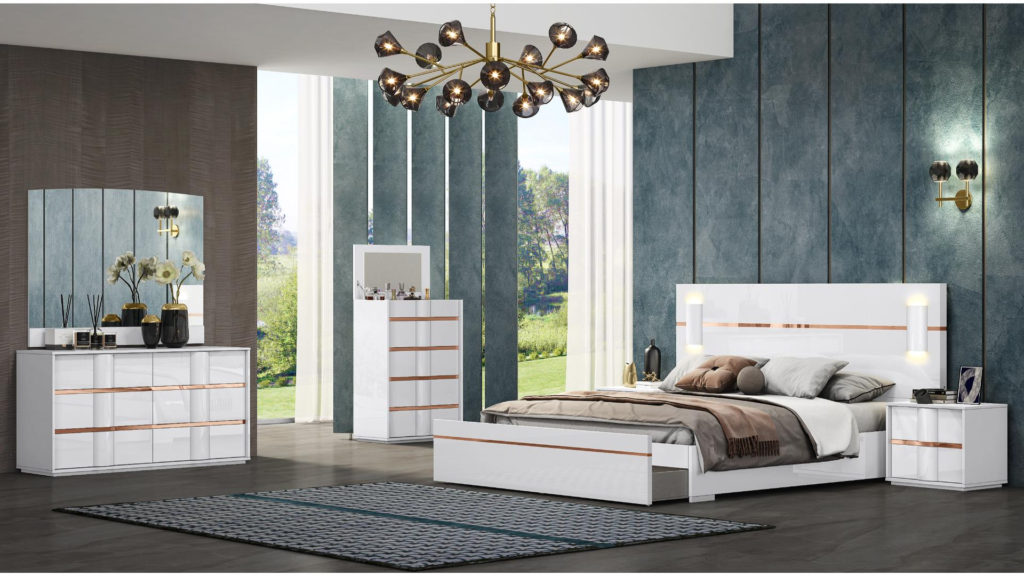
Table of Contents
- Different positioning, different set composition (required/optional/upgrade)
- Key size ranges (bed width, nightstand height, wardrobe depth, desk clearance)
- Common site omissions that cause clashes (skirting, walls, casing, AC return)
- RFQ field template (materials, edge banding, hardware, finish, packing, spares)
- Acceptance standards (appearance / function / installation / packaging arrival)
- FAQ (for buyers)
- CTA: Request editable RFQ + BOQ sample
Different Positioning = Different Set Composition (Required / Optional / Upgrade)
Procurement tip: Don’t buy “a set.” Buy a performance outcome: durability, housekeeping efficiency, guest experience, and maintenance cost over 3–7 years. Below is how we normally structure hotel bedroom furniture sets by positioning.
Economy / Limited Service (2–3★, tight CAPEX, high turnover)
Must-have (baseline set)
- Bed frame + headboard (often panel headboard)
- 1–2 nightstands
- Wardrobe or open hanging + luggage rack/bench
- Desk + chair (or compact console)
- Mirror (full height or above desk)
- TV panel / low console (depends on operator standard)
Optional (only if layout supports it)
- Mini-fridge cabinet / coffee station
- Floating shelf / simple open storage
- Basic upholstered bench
Upgrade items (high ROI for reviews)
- Integrated power/USB at bedside (serviceable module)
- Scratch-resistant HPL on top surfaces
- Rounded “housekeeping-friendly” edges at high-contact points
Midscale / Full Service (3–4★, balanced CAPEX + experience)
Must-have
- Bed + upgraded headboard wall (panel + integrated lighting)
- Two nightstands (often with drawer + open niche)
- Wardrobe (full carcass) + safe box niche
- Desk/vanity + mirror + task lighting
- TV wall / console with cable management
- Luggage bench (often upholstered top for comfort)
Optional
- Mini bar + tall cabinet (if operator wants merchandising)
- Window-side lounge chair + side table
- Partition / feature screen (if zoning needed)
Upgrade items
- Soft-close hardware
- Better acoustic solutions on headboard wall
- Stain-resistant fabric and replaceable upholstery panels
Upscale / Luxury (4–5★, brand standards, low tolerance for defects)
Must-have
- Custom headboard feature wall (multi-material: veneer/stone-look/metal accents)
- High-end bedside consoles (stone/metal detail options)
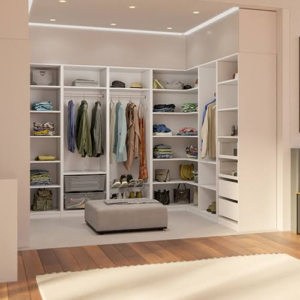
- Walk-in wardrobe system or large wardrobe with internal lighting
- Vanity + desk function (dual-use) with premium mirror + backlighting
- Seating (chaise or lounge chair) + nesting tables
- Integrated minibar + display shelving
Optional
- Decorative wall panels / full-height millwork
- Hidden service access panels (for electrical/LED drivers)
- Smart-room integration (control panels)
Upgrade items
- Natural veneer matching plan + “book-matching” requirements
- Higher-grade hardware, better drawer systems, concealed hinges
- Stronger packaging + on-site “white glove” handling plan
Apartment / Extended Stay (kitchenette adjacency)
These projects often mix bedroom furniture sets with compact storage requirements:
- More drawers (long-stay storage)
- Higher wear resistance (guests treat it like a home)
- More cable routing (WFH behavior)
Key Size Ranges You Should Lock Early
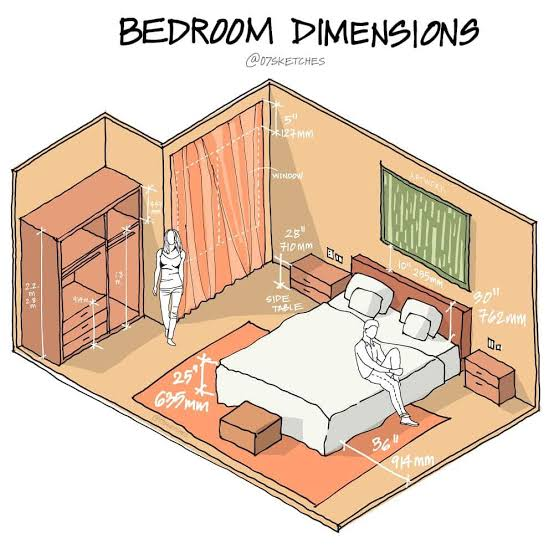
(Bed width, nightstand height, wardrobe depth, desk clearances)
Below ranges are “procurement-starting points.” Always coordinate with operator standards + room plans.
Bed width (mattress size drives everything)
Common hotel specs:
- Twin / Single: ~900–1000 mm width
- Full / Double: ~1350 mm
- Queen: ~1500–1600 mm
- King: ~1800–2000 mm
Procurement note: When buyers search terms like bedroom furniture sets king, they’re often thinking residential bundles. The same applies to those searching for bedroom furniture sets queen. For hospitality, confirm:
- Mattress thickness (affects headboard height and visual proportion)
- Under-bed clearance (housekeeping tools)
- Bed base ventilation (mold risk in humid regions)
Nightstand height (guest comfort + outlet access)
Typical target range: 500–650 mm
- Align with top-of-mattress or slightly below
- If using a thick mattress + topper, increase nightstand height accordingly
- Plan the outlet/USB module position so cords don’t drape across the tabletop
Wardrobe depth (door swing + hanger clearance)
Typical external depth: 550–650 mm
- Internal usable depth must support hangers without crushing garments
- If the corridor/entry is tight, consider sliding doors or open wardrobe concepts
Compliance reminder: If accessibility requirements apply, coordinate circulation/clear floor space with applicable standards and local codes. For U.S. projects, refer to ADA design standards guidance. ADA.gov+1
Desk / vanity clearances (knee space + chair movement)
Typical planning:
- Desk depth: 500–600 mm (more if dual-use vanity)
- Knee clearance (net): aim ≥600 mm width and ≥680–730 mm height depending on design
- Keep cable routing accessible (serviceability beats “hidden forever”)
Headboard wall thickness allowance
Hidden risk: Feature headboard walls often add 40–120 mm thickness.
If the room is tight, this can affect:
- Door swing clearance
- Bed-to-TV viewing distance
- Curtain stack space near windows
Common Site Omissions That Cause Rework
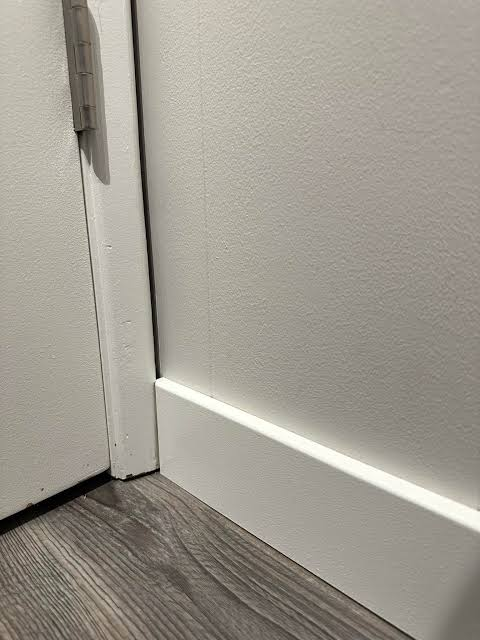
(Skirting, uneven walls, casing clashes, AC return)
This is where hotel bedroom furniture fails most often—not in the factory, but at the interface with the building.
Skirting boards / baseboards
If your wardrobe/TV console is drawn “flush to wall” without skirting allowance:
- Carcass shifts forward
- Doors misalign with wall panels
- Gaps appear at scribes
Procurement fix: Require either:
- Scribed backs / removable back rails, or
- Site scribe fillers, or
- Wall cleats with adjustable offsets
Walls not straight / corners not 90°
Even good construction has tolerances. Millwork needs a plan:
- Scribe panels
- Shadow gaps
- Adjustable fillers
Procurement fix: Add site measurement confirmation milestone before final production.
Door casing interference
Common clash points:
- Wardrobe door swing hits casing
- Drawer pulls scrape adjacent walls
- TV panel protrudes into doorway line
Procurement fix: Lock:
- Handle projection limits
- Door swing drawings
- “No-interference” clearance zone on shop drawings
HVAC return / supply conflicts
Headboard feature walls, tall wardrobes, and soffits often compete with HVAC.
Procurement fix: Ask MEP for:
- Return grille location + free area
- Access panel requirements
- Minimum service clearances for FCU/VRF units
RFQ Field Template
(Materials, edge banding, hardware, surface, packing, spares)
Use this structure to force apples-to-apples pricing and reduce “assumption gaps.”
1) Project basics
- Hotel name / brand (if NDA, use code)
- Location + climate notes (humidity/coastal)
- Room type list + quantities (King/Queen/Twin/Suite)
- Delivery terms (FOB/CIF/DDP) + target lead time
- Installation scope (supply only vs supply + install)
2) Scope definition (what’s included in “bedroom furniture sets”)
For each room type, list:
- Bed + headboard wall
- Nightstands
- Wardrobe system
- Desk/vanity + mirror
- TV console/panel
- Luggage bench
- Optional: minibar, tall cabinet, seating, shelving
3) Core materials
- Panel type: MDF / plywood / PB (and grade)
- Emission compliance (e.g., TSCA Title VI / CARB Phase 2 for U.S. market). US EPA
- Veneer species (if any) + matching rules
- Moisture resistance requirements (bath-adjacent zones)
Sustainability option: FSC Chain of Custody availability (if required by brand). fsc.org
4) Edge banding / sealing
- Edge material: PVC/ABS/solid wood lipping
- Edge thickness: 0.8 / 1.0 / 2.0 mm by part
- Hot-melt type (PUR preferred for wet/humid use)
- Exposed edge rules (which edges must be sealed)
5) Hardware
- Hinges: soft-close? opening angle?
- Drawer slides: load rating, full extension, soft-close
- Handles: material, finish, maximum projection
- Adjustable feet / wall hanging rails
- Bed fittings: knock-down connectors spec
Reference point: institutional durability standards are commonly anchored around ANSI/BIFMA families (buyers may request these as benchmarks). bifma.org
6) Surface finish
- HPL / melamine / veneer + lacquer / paint
- Gloss level (matte/satin)
- Stain resistance requirement
- Abrasion resistance test reference if needed (example: ASTM D4060 for coatings). ASTM International | ASTM
7) Packaging
- Carton type (5-ply/7-ply), corner protectors, foam density
- Knock-down vs assembled packing
- Palletization requirements
- Drop/transport testing expectations (many buyers align to ISTA procedures for transit robustness). ista.org
8) Spares / extra parts
- Standard recommendation: 1–2% consumables and high-risk parts
- List by category: handles, hinges, slides, LED drivers, power modules, leveling feet, touch-up kits
- Define warranty response time and spare packing method
9) Documentation deliverables
- Shop drawings + revision log
- Material samples + finish boards
- Pre-production sample (PPS) requirements
- Packing test photos/videos
- Installation manuals
Acceptance Standards (Appearance / Function / Installation / Packaging Arrival)
Acceptance should be written before production starts. Otherwise, disputes become subjective.
A) Appearance inspection (visual)
- Color consistency under agreed lighting
- Veneer matching rules met (if applicable)
- No chips, bubbles, sink marks, glue lines on visible faces
- Edge banding tight, no gaps, no sharp edges
- Hardware finish consistency (no peeling, scratches)
Tip: Define “viewing distance” (e.g., 600 mm) and acceptable defect size thresholds.
B) Functional inspection
- Drawer smoothness, no rubbing, proper soft-close
- Door alignment, hinge performance, no sag
- Bed stability (no squeak, no wobble)
- Power/USB modules work and are serviceable
- Mirror safety backing if required by local code/brand spec
C) Installation inspection (site interface)
- Leveling tolerance achieved without forcing
- Scribes/fillers installed cleanly
- No clashes with door casing, skirting, HVAC grilles
- Cable management accessible (not sealed permanently)
D) Packaging & arrival condition
- Carton integrity, corner protection, moisture protection
- Correct labeling: room type, item code, orientation, fragility marks
- No missing hardware packs / manuals
- If you require transit testing alignment, reference an ISTA procedure in RFQ so vendors pack accordingly. ista.org
Cross-Category SEO Add-on (Bathroom Vanity Keywords, Naturally Placed)
Many hotel buyers bundle bedroom casegoods with bathroom storage in the same sourcing cycle. If your procurement scope includes bathroom cabinet vanity manufacturer partners, align standards across packages. You should also align standards if you’re comparing a wholesale bathroom vanity supplier for bathroom vanities for small bathrooms. Focus on edge sealing, moisture resistance, wall plumb tolerance, and packaging robustness.
Practical examples we see in mixed RFQs:
- bathroom vanity with tall cabinet for tight layouts (door swing coordination matters, just like wardrobes)
- corner vanities for bathrooms where walls are rarely perfect 90°
- custom built bathroom vanity requirements that mirror custom headboard walls (shop drawing discipline is identical)
- double vanity sinks for bathrooms projects where stone tops + cutouts need strict templates
- A surprisingly common maintenance ticket is about how to replace a bathroom vanity. Serviceability should be designed in with removable panels and accessible fasteners. This approach is similar to designing bedside power modules.
FAQ
What should a standard hotel bedroom furniture set include?
At minimum: bed + headboard, nightstand(s), wardrobe/storage, desk/console, and mirror. Midscale adds better cable management and soft-close; luxury adds multi-material feature walls and premium hardware.
How do I choose materials for durability without overspending?
Use HPL or high-performance melamine on top surfaces, upgrade edge banding and sealing, and specify hardware performance clearly. Focus budget where housekeeping contact is highest.
What is the #1 reason hotel furniture projects get delayed?
Interface omissions occur when skirting allowances are not properly addressed. Issues also arise with wall straightness and door casing interference. HVAC returns are another point of concern. Late site measurement confirmations trigger rework and change orders.
What RFQ details reduce supplier “assumptions” the most?
Material grade and emission compliance are important. Edge banding specs should be considered. Hardware brand and performance also matter. The finish system is crucial. Packaging spec must not be overlooked. A spares list is necessary. There is also a drawing revision process.
How should I write acceptance criteria to avoid disputes?
Define objective checks: visual distance, functional cycles, installation tolerances, packaging arrival rules, and a punch-list workflow.
Article Wrap-up
If you’re sourcing bedroom furniture sets for hospitality, protecting your schedule and cost quickly requires additional measures. It takes more than just choosing the “best-looking catalog set.” Consider other strategies that are more comprehensive. Instead, focus on more comprehensive strategies. Issuing a procurement-grade RFQ is essential. It should have a clear scope, dimension ranges, interface allowances, packaging rules, and acceptance standards. This ensures your supplier quotes the same target. Your site team can then install without surprise clashes.
CTA
Request the “Editable RFQ Sheet + BOQ Sample Template” (hotel bedroom furniture + optional vanity package alignment).
Reply with your room types (King/Queen/Twin/Suite) and target positioning (economy/midscale/luxury), and I’ll format the RFQ/BOQ structure to match your project.