
For hotel groups, apartment developers, furnishing contractors, and procurement teams, choosing the right furniture manufacturer is not just a sourcing decision. It is a project delivery decision.
When a furniture supplier supports a hotel fit-out, serviced apartment program, rental housing rollout, or residential furnishing package, the manufacturer affects more than product cost. The factory influences lead time, installation efficiency, room consistency, site coordination, packaging damage rate, replenishment speed, and even handover risk.
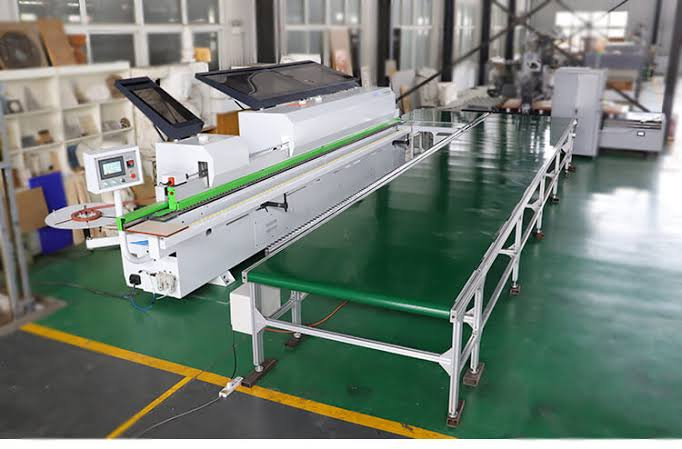
That is why experienced project buyers do not choose a hotel and apartment furniture manufacturer in China based on catalog photos alone. They look deeper into production capability, OEM and ODM support, panel material options, packaging engineering, project coordination, and the supplier’s ability to deliver repeatable room furniture systems at scale.
Starwood’s current site positioning aligns closely with this project-focused demand. The homepage presents the factory as a flat-pack furniture manufacturer in China serving global brands, importers, wholesalers, and projects, with OEM & ODM panel furniture manufacturing, CNC production, strict quality control, export-ready packaging, and product coverage across bedroom, kitchen, living room, home office, kids’ room, storage, and space-saving furniture. It also states applications for apartments, hotels, and residential projects, and lists a minimum order quantity of 1 container.
If your business is sourcing for hotel rooms, furnished apartments, student housing, serviced residences, or residential development projects, the following 10 checks will help you select a manufacturer that can support both the product and the project.
Table of Contents
- Why project buyers need a different supplier checklist
- Check #1: Confirm project category fit
- Check #2: Review OEM and ODM capability for project work
- Check #3: Evaluate materials for hospitality and apartment use
- Check #4: Confirm production capacity for repeated room programs
- Check #5: Check customization depth for room types and layouts
- Check #6: Ask about MOQ, BOQ handling, and phased orders
- Check #7: Review lead time and project scheduling control
- Check #8: Inspect export packaging and site-delivery readiness
- Check #9: Verify quality control for bulk room consistency
- Check #10: Assess communication and long-term project support
- FAQ
- Final CTA
Why Project Buyers Need a Different Supplier Checklist
A wholesale furniture supplier and a project furniture supplier are not always the same thing.
A general wholesale program may focus on standard SKUs, routine container loading, and ongoing replenishment. But hotel and apartment projects often require a more structured delivery model:
- repeated room layouts
- multi-category furniture coordination
- finish consistency across phases
- room-type variations
- BOQ-based quoting
- carton coding for site distribution
- delivery timing aligned with installation schedules
- quick handling of missing parts or replenishment needs
That is why a hotel furniture manufacturer or apartment furniture supplier should be evaluated not only by price and product range, but also by project execution ability.
Your site already presents several signals that matter to project buyers, including OEM & ODM manufacturing, export-ready packaging, quality control, advanced CNC production, apartment/hotel applications, and customization support. Those are all directly relevant when a buyer is sourcing for furnished residential units or hospitality rooms rather than general retail sales.
Check #1: Confirm Project Category Fit
The first question is simple: Does the factory actually make the types of furniture your project needs?
For hotel and apartment furnishing, that usually means a mix of casegoods and storage-focused products such as:
- beds and bed bases
- bedside tables
- wardrobes
- dressers
- TV cabinets
- desks or workstations
- storage cabinets
- kitchen cabinets for furnished apartments
- multifunctional furniture for compact layouts
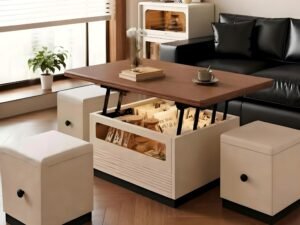
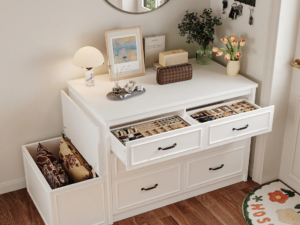
The Starwood homepage shows category coverage across Bedroom, Kitchen, Living Room, Home Office, Kids’ Room, Storage Cabinet, and Space-Saving & Multi-Functional furniture, which is a strong fit for apartment furnishing and many hospitality casegood programs.
Why This Matters for Projects
A supplier that already works across several matching categories can help reduce sourcing fragmentation. Instead of coordinating multiple factories for wardrobes, storage units, desks, and bedroom furniture, project buyers often prefer a more centralized casegoods partner.
Buyer Tip
Ask the factory to identify:
- which categories are exported most often
- which categories are most suitable for hotel rooms
- which product lines are most suitable for apartments or rental housing
- whether mixed-category container orders are supported
Check #2: Review OEM and ODM Capability for Project Work
For hotel and apartment projects, OEM and ODM services are not optional extras. They are often essential.
The OEM & ODM page states the factory provides custom furniture manufacturing services for bedrooms, storage solutions, apartments, homes, and commercial properties, with customization in materials, finishes, hardware, dimensions, and configurations. It also describes support for retailers, interior designers, property developers, and growing brands.
That matters because project buyers rarely order furniture exactly as shown in a standard catalog. Instead, they often need:
OEM Support
- manufacturing from buyer drawings
- production based on BOQ and specifications
- exact room-size adaptation
- branding or project labeling where needed
ODM Support
- adjusting existing models to fit room layouts
- improving functionality for compact units
- optimizing construction for budget targets
- offering finish alternatives for local market preferences
Project Examples
For a hotel room, a buyer may want:
- a slimmer wardrobe depth
- integrated luggage space
- reinforced desk construction
- finish coordination with interior design standards
For an apartment project, a buyer may need:
- more storage under beds
- wardrobe modules sized by unit type
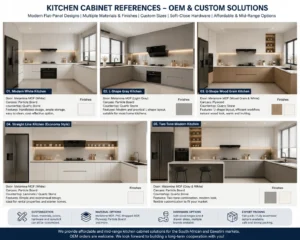
- kitchen cabinet adaptation by floor plan
- flat-pack formats for easier site handling
As a general trade reference for international procurement and supplier partnerships, the International Trade Administration provides useful guidance on cross-border trade and sourcing. You can naturally cite it in the article as: International Trade Administration.
Check #3: Evaluate Materials for Hospitality and Apartment Use
Project furniture should not be selected by appearance alone. Material decisions must balance durability, visual consistency, budget, and end-use conditions.
The homepage states the factory uses MDF, particle board, plywood, and engineered panels for flat-pack furniture manufacturing.
Typical Material Considerations for Projects
MDF
Suitable for smooth surfaces and painted or laminated applications, often used where clean appearance is important.
Particle Board
Often chosen for cost efficiency and stable, scalable panel furniture production.
Plywood
A stronger option when better screw-holding strength or more durable structural performance is required.
Engineered Panels
Useful when projects need consistent finishes, scalable production, and a practical balance of cost and appearance.
Why Material Choice Matters by Project Type
Hotels
Often prioritize appearance consistency, durability, easy maintenance, and stable repeat production.
Serviced Apartments
Need practical furniture that looks residential but stands up to turnover and repeated use.
Rental Apartments / Student Housing
Often prioritize cost control, compact design, and reliable replacement availability.
If your target market requires emission-related documentation for composite wood products, the U.S. EPA’s page on TSCA Title VI composite wood products is a credible external reference. For material traceability and responsible forest sourcing, FSC Chain of Custody is also relevant.
Check #4: Confirm Production Capacity for Repeated Room Programs
A project supplier must do more than produce nice samples. It must deliver repeatable room-by-room consistency across bulk production.
The homepage highlights advanced CNC manufacturing and automated production lines for precise processing and large-scale production, plus strict quality control and stable lead times.
For hotel and apartment buyers, this is important because room furniture often needs:
- matching finishes across dozens or hundreds of rooms
- repeated drilling accuracy
- consistent hardware placement
- stable module sizing
- fewer on-site adjustments during installation
Ask the Factory:
- Can you handle repeated room sets at scale?
- How do you control finish consistency across batches?
- How do you manage drilling and panel-size accuracy?
- Can multiple room types be produced under one project schedule?
- How do you separate SKUs and cartons for different unit types?
A factory with genuine project experience will answer these questions in operational terms, not just with sales language.
Check #5: Check Customization Depth for Room Types and Layouts
Real project customization goes beyond color selection.
Your OEM & ODM page mentions design flexibility, material options, finish and hardware customization, and dimensions/configurations.
For project work, buyers should confirm whether the supplier can customize at three levels:
1. Room Layout Level
- different furniture sizes for studio, one-bedroom, and two-bedroom units
- wardrobe resizing for narrow walls
- cabinet adaptation for fixed room geometry
2. Functional Level
- added drawers for long-stay apartments
- desk integration for business hotels
- storage beds for small-space apartments
- modular pieces for phased installation
3. Delivery Level
- carton marks by room type
- project code on labels
- assembly instruction variation by destination market
- spare parts planning for after-sales support
This is especially valuable for small apartments, hotel rooms, and shared-living spaces, which your OEM & ODM page explicitly references when discussing space-saving and functional furniture.
Check #6: Ask About MOQ, BOQ Handling, and Phased Orders
Project buyers should not discuss MOQ the same way retail buyers do.
The homepage states a minimum order quantity of 1 container, which is relevant for export-oriented supply.
But for hotel and apartment projects, buyers also need to ask:
BOQ and Project Order Questions
- Can you quote from a BOQ?
- Can multiple SKUs be mixed in one container?
- Can one project be split into phased shipments?
- Is MOQ handled at SKU level, order level, or container level?
- Can repeat orders be matched to the original finish and hardware standard?
Why This Matters
A hotel rollout or residential project may not ship in one single phase. There may be:
- mock-up room orders
- pilot unit orders
- main bulk shipments
- top-up or replenishment orders
A project-capable supplier should understand that commercial flexibility matters almost as much as manufacturing ability.
Check #7: Review Lead Time and Project Scheduling Control
In hospitality and residential projects, delayed furniture affects more than inventory planning. It can affect installation sequencing, room completion, handover timing, and opening schedules.
The homepage says the factory offers stable lead times, while the site overall positions the business around product development, sampling, mass production, and export packaging.
Project Buyers Should Ask:
- What is the sample lead time after drawing confirmation?
- What is the bulk lead time after deposit and material approval?
- How are schedule changes communicated?
- What are the main risk points for delay?
- Can urgent replacement items be prioritized?
Best Practice
Ask for the supplier’s production workflow in stages:
- drawing confirmation
- sample approval
- material / finish confirmation
- bulk production
- QC
- packing
- loading
The more clearly a factory can describe that schedule, the easier it is for project teams to align furniture delivery with site readiness.
For shipping responsibility and delivery term alignment, ICC Incoterms 2020 is a useful external reference buyers can consult during contract planning.
Check #8: Inspect Export Packaging and Site-Delivery Readiness
Packaging is often underestimated until the first damaged shipment arrives on site.
The homepage emphasizes export-standard flat-pack packaging designed to reduce damage during long-distance transportation.
For hotel and apartment projects, packaging should be evaluated not only for sea shipment safety, but also for site handling practicality.
Ask These Packaging Questions
- Are panels protected at edges and corners?
- Are hardware bags clearly labeled?
- Are cartons marked by SKU or room type?
- Can packing lists be aligned with site receiving?
- Are spare parts included for installation teams?
- Can cartons be optimized for apartment elevator or room access constraints?
Why This Matters by Project Type
Hotels often need room-based receiving and fast installation.
Apartments may need unit-based sorting and phased floor-by-floor delivery.
Rental projects often benefit from flat-pack efficiency and simpler storage before installation.
If wood packaging material is used, ISPM 15 guidance is a useful authority reference for international shipments.
Check #9: Verify Quality Control for Bulk Room Consistency
Project QC is different from retail QC because consistency matters across many units.
The site presents strict quality control as one of its manufacturing advantages.
For project buyers, QC should cover:
Incoming Material Check
- board quality
- finish consistency
- hardware accuracy
- carton quality
In-Process Check
- panel sizing
- drilling position
- edge banding
- assembly fit
- finish appearance
Pre-Packing Check
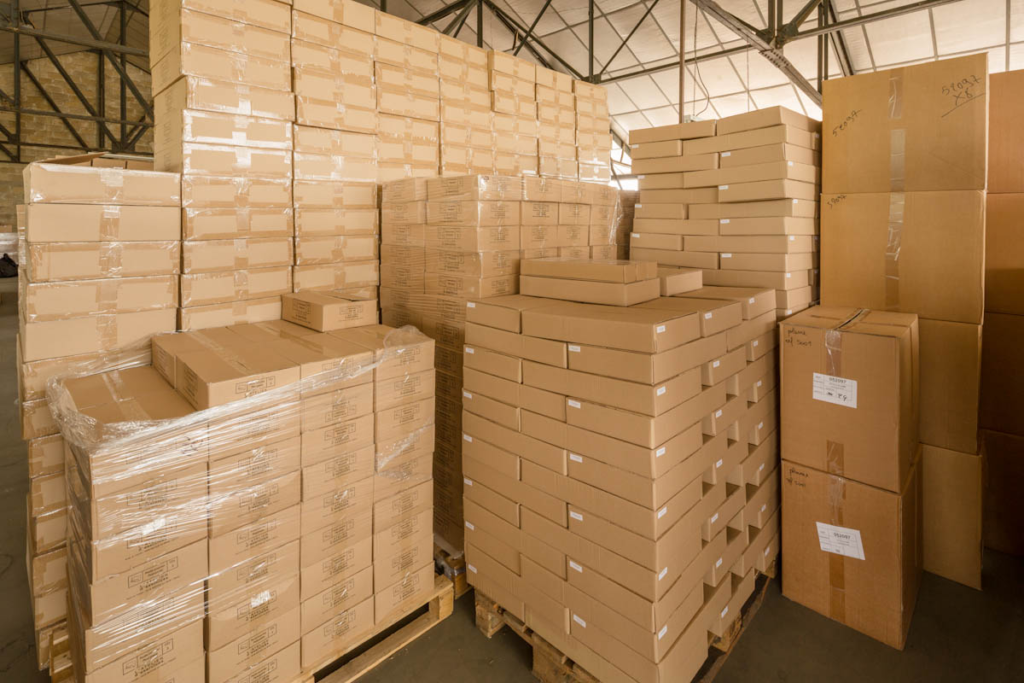
- part completeness
- hardware bag count
- labels and instructions
- room-set accuracy where relevant
Pre-Loading Check
- final quantity confirmation
- carton condition
- shipping marks
- loading sequence
Why It Matters for Hotels and Apartments
If one wardrobe dimension is wrong across 120 rooms, that is not a minor issue. If hardware is missing in 80 cartons, installation teams stop. If finishes vary between phases, visual consistency across the property is compromised.
A project-oriented QC process protects schedule, labor efficiency, and final presentation.
Check #10: Assess Communication and Long-Term Project Support
The final check is often the most revealing: How does the factory communicate once the discussion becomes technical?
The homepage says the team will respond within 24 hours and positions the company as a long-term manufacturing partner for global buyers. It also notes experience since 2013 and support for brands, importers, wholesalers, and distributors.
Project buyers should evaluate whether the supplier:
- asks precise follow-up questions
- understands BOQs and drawings
- confirms details in writing
- explains risks early
- provides realistic timelines
- can support repeat or phased orders
Strong Project Suppliers Usually:
- clarify room-type differences early
- confirm material and finish assumptions before sampling
- organize quotations clearly
- communicate packaging and loading details proactively
- support replenishment and after-sales follow-up
Weak Suppliers Usually:
- rely only on catalogs
- avoid technical details
- give vague delivery answers
- do not structure project communication clearly
- treat project orders like ordinary wholesale orders
For hotel groups, apartment developers, and furnishing contractors, communication quality is often a leading indicator of final execution quality.
What a Reliable Hotel & Apartment Furniture Manufacturer Should Offer
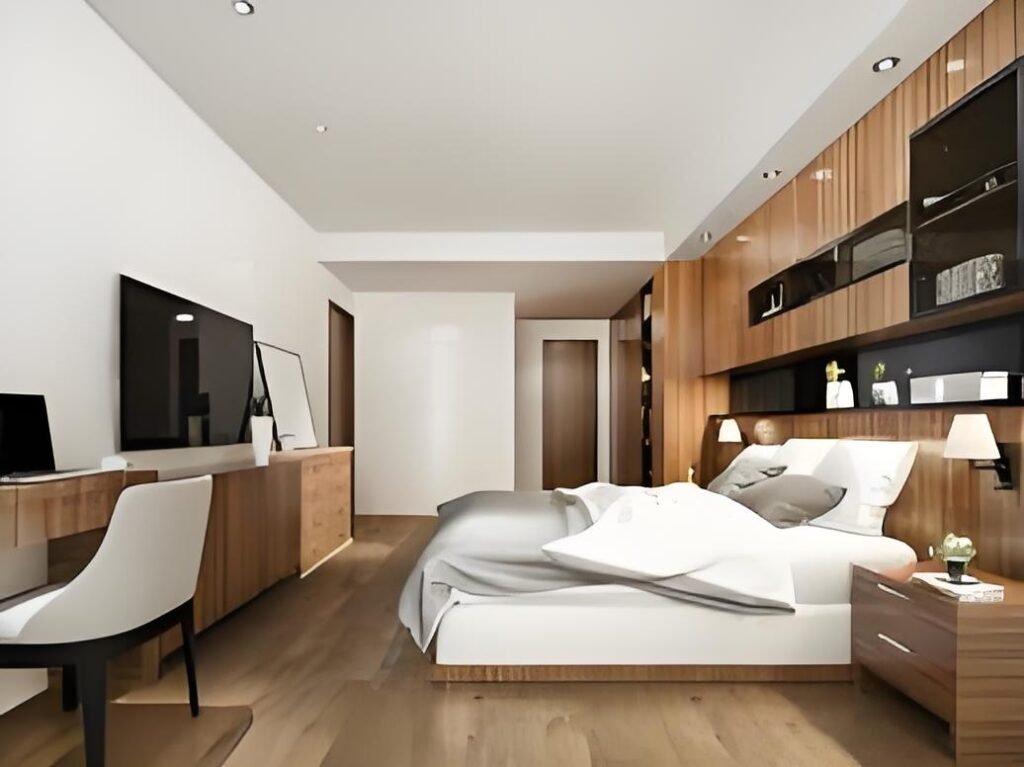
Before placing a project order, your preferred supplier should ideally show strength in the following areas:
Product Fit
- bedroom and storage furniture
- wardrobes, cabinets, desks, and project casegoods
- apartment and hospitality-friendly categories
OEM / ODM Capability
- drawing-based production
- layout adaptation
- finish and hardware customization
- room-type flexibility
Manufacturing
- CNC accuracy
- scalable panel furniture production
- repeatable dimensions and finishes
Commercial Support
- MOQ clarity
- BOQ handling
- phased shipment flexibility
- reasonable sample policy
Project Delivery
- export-ready flat-pack packaging
- room-type or SKU carton marking
- stable lead time planning
- installation-friendly supply thinking
Partnership Value
- clear communication
- quick technical response
- repeat-order consistency
- long-term supply support
FAQ
Is flat-pack furniture suitable for hotel and apartment projects?
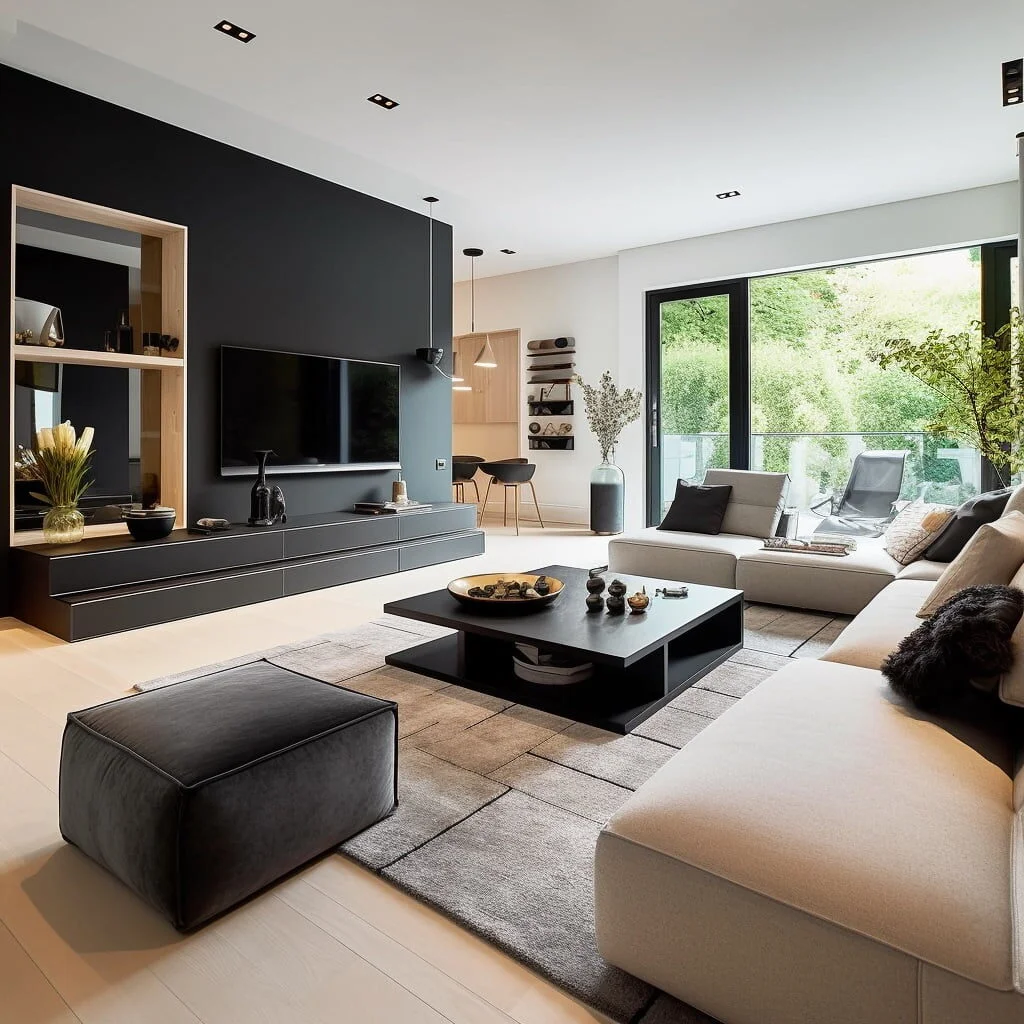
Yes. Flat-pack furniture is often suitable for hotels, apartments, serviced residences, and rental projects because it supports container efficiency, practical delivery, and scalable room programs. Your site explicitly positions its furniture for apartments, hotels, and residential projects.
What is the difference between hotel furniture sourcing and regular wholesale furniture sourcing?
Hotel and apartment projects typically require BOQ-based quoting, repeated room layouts, phased delivery, finish consistency, and stronger coordination between production and installation.
Does the factory support OEM and ODM for project buyers?
Yes. The OEM & ODM page describes custom manufacturing support for property developers, brands, retailers, and designers, including dimensions, materials, finishes, and functional customization.
What materials are available for project furniture?
The homepage states the factory uses MDF, particle board, plywood, and engineered panels, which are common materials for panel furniture manufacturing.
What is the MOQ for export project orders?
The homepage lists a minimum order quantity of 1 container. Project buyers should still confirm whether mixed SKUs and phased shipments are available.
Final Thoughts
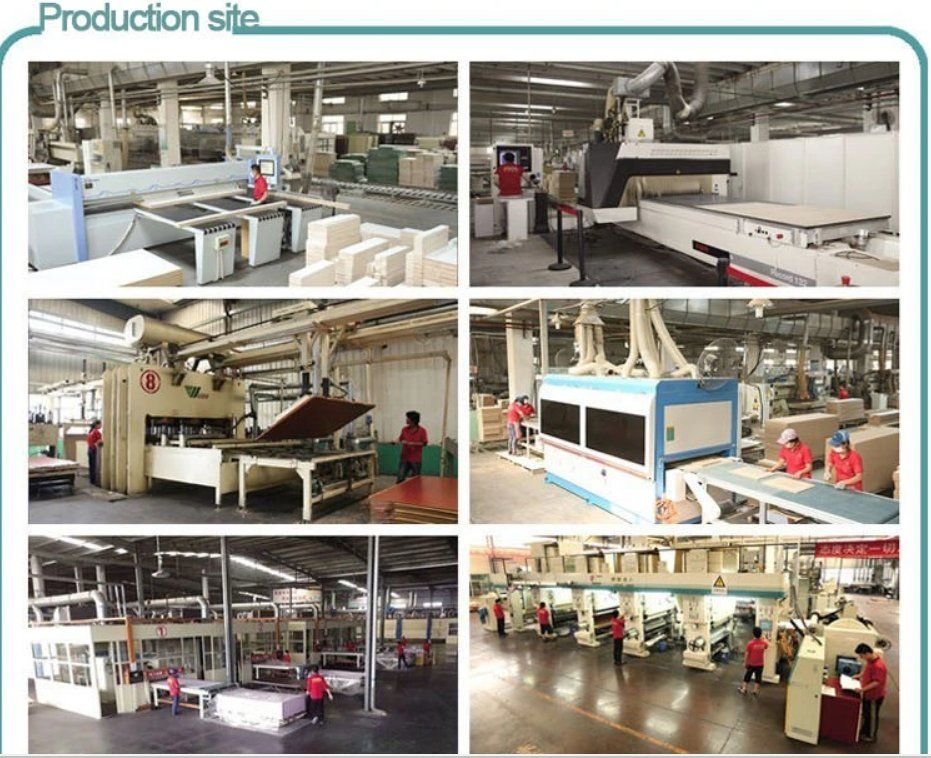
A hotel and apartment furniture manufacturer in China should be evaluated as a project partner, not only as a product supplier.
The best factory for hospitality and residential furnishing is usually the one that can combine:
- the right category coverage
- real OEM and ODM capability
- practical materials for the target use
- repeatable production accuracy
- export-safe packaging
- project-oriented order handling
- stable lead times
- clear communication from sampling to shipment
For developers, hotel buyers, contractors, and importers, choosing the right supplier early can reduce risk across the full project cycle — from design review and sample approval to installation and post-delivery support.
CTA
Planning a hotel, apartment, serviced residence, or rental housing furniture project?
Send us your BOQ, drawings, room layouts, finish requirements, or reference images. Our team can review your project needs, recommend suitable panel materials and packaging solutions, and provide a factory quotation for OEM, ODM, or bulk project supply.