Short Intro for the Editor
This article is written for importers, distributors, project buyers, wholesalers, apartment developers, hotel procurement teams, and private-label furniture brands looking for a reliable home office furniture manufacturer for long-term B2B cooperation.
Table of Contents
- Why the right manufacturer matters more than the lowest quote
- Check 1: Product specialization and category fit
- Check 2: Material system and board quality
- Check 3: OEM/ODM and customization capability
- Check 4: MOQ flexibility and order planning
- Check 5: Lead time and production stability
- Check 6: Packaging strength and shipping efficiency
- Check 7: Compliance and market access
- Check 8: Quality control system
- Check 9: Project support for hotel, apartment, and multi-unit supply
- Check 10: Communication speed and documentation accuracy
- Check 11: Reorder consistency and long-term cost control
- Common mistakes buyers should avoid
- FAQ
- Conclusion and CTA
Why the Right Manufacturer Matters More Than the Lowest Quote
For professional buyers, sourcing home office furniture is no longer just about finding a cheaper desk or cabinet. The real decision is whether your supplier can support your business over multiple orders, multiple SKUs, and multiple sales channels.
A reliable home office furniture manufacturer should help you solve practical problems: stable material sourcing, repeatable quality, flat-pack optimization, market-ready compliance, packaging that survives export transit, and the ability to adapt products for e-commerce, wholesale, apartment, hotel, and project use. When buyers choose only by price, they often discover hidden costs later: damage claims, delayed shipments, unstable finishes, wrong hardware, poor assembly experience, or inconsistent reorder quality.
For importers and project buyers, the best factory is usually not the cheapest factory. It is the one that can protect margin, reduce claims, and keep your supply chain predictable.
Check 1: Product Specialization and Category Fit
Not every furniture factory is truly experienced in home office products. Some plants mainly produce living room or bedroom furniture and only add office desks occasionally. That matters because home office furniture has its own engineering logic.
A manufacturer with real category experience should understand:
- desk depth and ergonomic proportions
- cable management needs
- drawer layout for home users
- compact storage for small apartments
- flat-pack structures that reduce shipping costs
- finish trends for online and retail channels
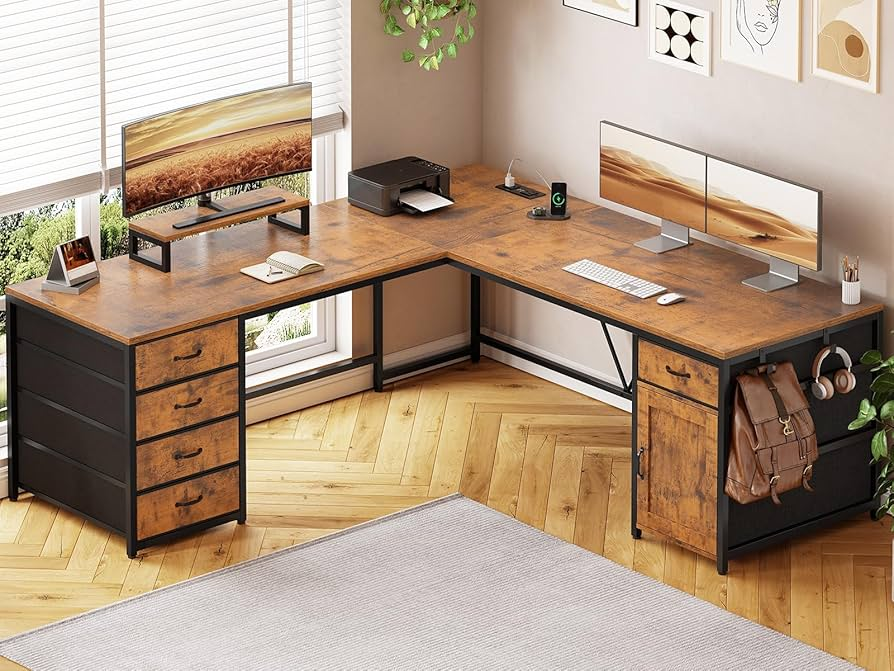
- combinations such as desk plus bookshelf, desk plus file storage, and corner desk solutions
For B2B buyers, this specialization becomes even more important in apartment, hotel, serviced-apartment, and student-housing projects. In these projects, furniture must balance appearance, cost, ease of assembly, and repeat production. A supplier that already understands these scenarios will move faster and make fewer engineering mistakes.
What to ask
- Which home office SKUs are your core products?
- How many repeat orders have you shipped for this category?
- Can you provide desk, storage, bookshelf, and combo-set options in matching finishes?
- Do you support both retail SKUs and project configurations?

Check 2: Material System and Board Quality
For panel furniture exporters, material choice directly affects cost, appearance, lead time, and compliance. Most buyers compare plywood, particle board, and MDF, but the real conversation should be broader: panel density, finish consistency, moisture resistance, edge banding quality, internal structure, and hardware matching.
A good manufacturer should clearly explain:
- whether the product uses particle board, MDF, plywood, or mixed structures
- board thickness by component
- melamine paper quality and scratch resistance
- edge banding material and adhesion performance
- reinforcement methods for long desks or storage units
- whether board supply is stable for reorders
If you are sourcing for the U.S. market, composite wood products may need to meet EPA TSCA Title VI formaldehyde requirements, which cover products such as hardwood plywood, particleboard, and MDF. California has its own well-known CARB composite wood products program, which also targets emissions from those material categories. Buyers should verify these requirements early instead of waiting until after quotation or sampling.
A sustainability-minded buyer may also prefer wood-based products linked to responsible sourcing. In that case, it is useful to discuss whether the factory can support FSC-certified options and chain-of-custody needs for relevant programs or customer requirements.
Natural external links you can place in the body:
For buyers shipping to the U.S., it is worth reviewing the EPA composite wood formaldehyde standards before finalizing material specs. California-focused importers should also confirm details under the CARB composite wood products program. If your customers ask about responsible sourcing, the FSC furniture resource page is a useful reference point.
What to ask
- What board types do you recommend for this market and price level?
- Can you provide CARB P2 or TSCA Title VI supporting documentation where needed?
- Do you offer FSC-certified supply options?
- What finish options are stable for repeat orders?
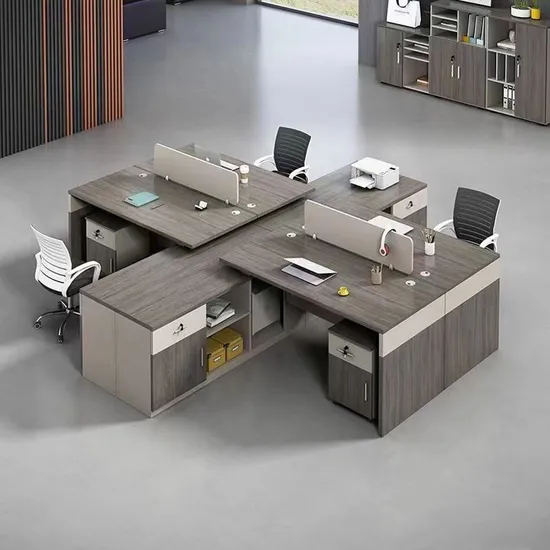
Check 3: OEM/ODM and Customization Capability
For many overseas buyers, standard catalog supply is not enough. You may need:
- your own dimensions
- your own carton marks
- private label packaging
- color or finish changes
- hardware upgrades
- multilingual instruction manuals
- shelf or drawer structure modifications
- SKU bundles for your distribution model
That is where true OEM/ODM capability matters.
A strong OEM/ODM manufacturer should have a clear development process:
- requirement review
- drawing confirmation
- material confirmation
- sample making
- packaging review
- testing or adjustment
- order approval
- bulk production
This is especially important for e-commerce sellers, hotel operators, apartment developers, and regional brands. In those channels, a product may look simple, but backend details decide whether it succeeds: carton size, assembly time, weight limits, instruction clarity, and return rate.
Application scenarios where customization matters
Retail and wholesale: need mixed SKUs, market-driven finishes, and price-point control.
Apartment projects: need compact footprints, functional storage, and consistent replenishment.
Hotels and serviced apartments: need coordinated furniture language, durable finishes, and project documentation.
E-commerce: need carton durability, reduced damage risk, and assembly-friendly engineering.
What to ask
- Can you develop from reference photos, technical drawings, or buyer samples?
- What is your sample lead time?
- Can you customize packaging, manuals, labels, and hardware kits?
- Do you support exclusive models for distributors or brands?
Check 4: MOQ Flexibility and Order Planning
MOQ is not only a number. It reflects how flexible the factory is in production scheduling, purchasing, and SKU planning.
A home office furniture buyer may need:
- one-container mixed orders
- trial orders for new customers
- repeat orders with seasonal adjustments
- one best-selling desk plus several support SKUs
- project orders with phased delivery
A manufacturer that understands export business should explain MOQ by:
- SKU
- color
- finish
- packaging type
- mixed container options
- sample policy
- repeat-order exceptions
For buyers entering a new market, the best supplier is often the one that helps you launch safely. That may mean a reasonable MOQ on the first order, then better pricing as volumes grow.
What to ask
- What is the MOQ per item and per finish?
- Can we mix SKUs in one container?
- Do you support trial orders?
- Will MOQ improve after the first bulk order?
Check 5: Lead Time and Production Stability
A quotation is useless if the factory cannot ship on time. Professional buyers should always evaluate lead time in layers:
- sample lead time
- raw material purchasing time
- production lead time
- packaging lead time
- booking and loading time
- peak season risk
The right question is not “What is your normal lead time?” The right question is “What causes your lead time to change, and how do you control it?”
Reliable manufacturers usually have:
- stable board and hardware supply channels
- planned production scheduling
- standard QC checkpoints
- carton supplier coordination
- experience with repeat-order forecasting
This matters even more for project supply. A hotel or apartment installation schedule can be damaged by one delayed container. The same is true for online promotions, wholesale seasonal launches, and tender-based delivery windows.
What to ask
- What is the standard lead time for samples and bulk orders?
- What happens to lead time in peak season?
- Which components create the biggest risk: board, hardware, cartons, or finish?
- Can you provide a production timeline before PO confirmation?
Check 6: Packaging Strength and Shipping Efficiency
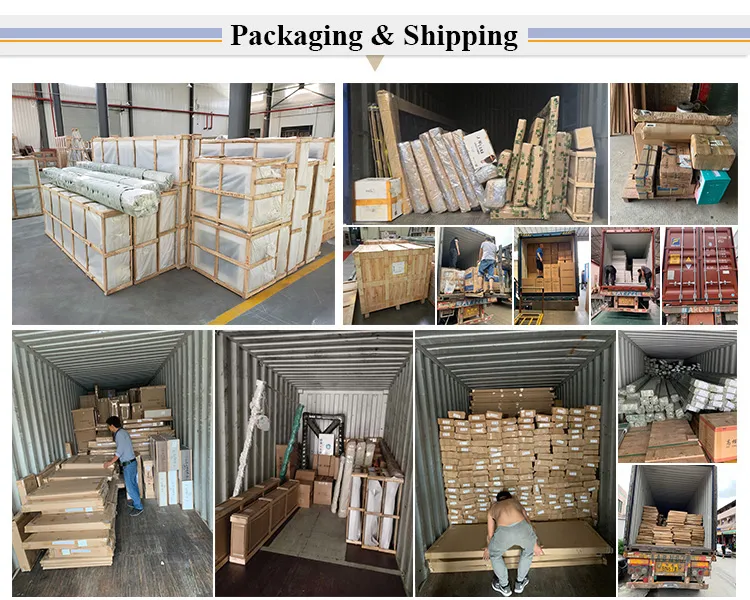
Many good-looking products fail because of bad packaging. For export furniture, packaging is not a small detail. It is part of product engineering.
Strong export packaging should consider:
- drop resistance
- corner protection
- internal foam or honeycomb structure
- carton compression strength
- hardware bag organization
- moisture protection
- loading efficiency
- barcode and carton mark clarity
For flat-pack furniture, better packaging often means lower total cost:
- fewer claims
- less damage in transit
- easier warehousing
- better container loading
- smoother last-mile handling for e-commerce
The International Safe Transit Association publishes packaging test procedures widely used to evaluate transit performance. For buyers who sell online or distribute through multiple warehouses, discussing ISTA-aligned packaging thinking with the factory is worthwhile.
Natural external link for the body:
When packaging performance is critical, especially for mail-order or e-commerce furniture, buyers can review the ISTA test procedure overview and ask whether the supplier has experience designing cartons around transit-testing principles.
What to ask
- What packaging structure do you use for desks, drawers, and storage units?
- Do you optimize carton size for container loading?
- Can you improve packaging for e-commerce or courier handling?
- Do you perform drop-test or transit-test related evaluations?
Check 7: Compliance and Market Access
Compliance should be discussed before sampling, not after production.
Depending on market and category, buyers may need to review:
- formaldehyde emissions
- timber sourcing claims
- packaging markings
- safety labeling
- anti-tip considerations for storage units
- customer-facing documentation
For example, the U.S. Consumer Product Safety Commission adopted a mandatory safety standard based on ASTM F2057-23 for dressers and other clothing storage units to reduce tip-over risk. If your home office range includes tall storage furniture, bookcase-like units, or clothing-storage-adjacent case goods, it is wise to discuss stability and category positioning with the manufacturer early.
Natural external link for the body:
If your assortment includes taller storage furniture, review the CPSC information on furniture tip-over standards and confirm how your supplier addresses stability, anti-tip hardware, and warning instructions where relevant.
What to ask
- Which compliance documents can you provide for this market?
- Do you have experience with U.S., EU, or Middle East buyer requirements?
- How do you handle anti-tip hardware or stability concerns on taller units?
- Can you customize warning labels and instruction manuals?
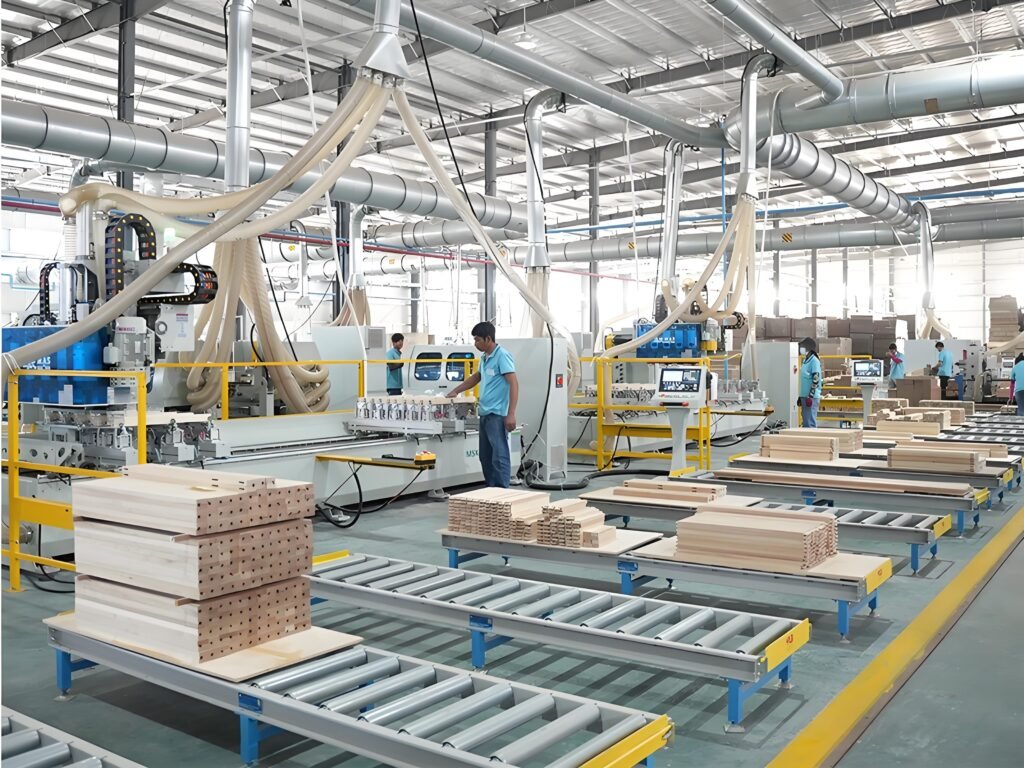
Check 8: Quality Control System
A serious manufacturer should never answer “We inspect everything” without showing the process.
A useful QC system usually includes:
- incoming material inspection
- first-piece confirmation
- in-line production checks
- hardware counting checks
- finish inspection
- packaging inspection
- pre-shipment inspection
For home office furniture, typical quality risks include:
- chipped edges
- poor edge banding
- color variation
- inconsistent drilling
- weak drawer slides
- missing hardware
- damaged panels from poor packing
Ask the supplier to show real inspection photos, not only generic workshop images. Better yet, ask for a QC checklist used for similar products.
What to ask
- What are your standard QC checkpoints?
- How do you control color and board consistency between batches?
- How do you reduce missing hardware claims?
- Can you share inspection reports from previous export orders?
Check 9: Project Support for Hotel, Apartment, and Multi-Unit Supply
B2B sourcing is not always about container-after-container wholesale business. Many buyers supply:
- apartments
- student housing
- co-living spaces
- serviced apartments
- hotels
- office-residential hybrid projects
In these cases, the manufacturer must think beyond one SKU.
Project buyers usually need:
- coordinated finishes across categories
- practical dimensions for unit layouts
- durable materials for frequent use
- phased deliveries
- clear packing lists
- installation-friendly assembly instructions
- replacement-part support
A factory with project experience can often suggest better configurations: smaller desk depth for compact units, integrated shelves for better value perception, or flat-pack structures that make site handling easier.
What to ask
- Have you supplied apartment or hospitality-related projects before?
- Can you support BOQ-based quotation?
- Can you coordinate finishes across desk, storage, and shelving items?
- Do you provide spare parts or replenishment support?
Check 10: Communication Speed and Documentation Accuracy
Many sourcing problems are really communication problems.
A reliable supplier should be able to provide:
- clear quotations
- accurate dimensions
- board thickness details
- finish names or sample references
- packaging specs
- loading estimates
- production timelines
- labeled drawings or mockups for custom projects
Fast replies are useful, but accurate replies are more important. Misunderstood dimensions or hardware specifications create delays that cost more than slow emails.
Signs of a professional export supplier
- quotations are structured and easy to compare
- technical changes are confirmed in writing
- sample issues are tracked clearly
- shipping marks and carton details are double-checked
- the team understands commercial urgency
Check 11: Reorder Consistency and Long-Term Cost Control
The first order gets attention. The second and third orders reveal the real supplier.
For long-term business, buyers should evaluate:
- whether board and finish sourcing are stable
- whether hardware remains consistent
- whether packaging is standardized
- whether dimensions remain repeatable
- whether lead times stay manageable
- whether replacement parts can still be supplied
This is where a real manufacturer becomes valuable. Long-term cost control is not just unit price. It is the total result of fewer complaints, smoother reorders, more predictable margins, and less time spent solving preventable issues.
What to ask
- How do you manage finish consistency on repeat orders?
- Will the same hardware and packaging be available for reorders?
- How do you handle discontinued materials?
- Can you reserve or standardize key materials for long-term programs?
Common Mistakes Buyers Should Avoid
Choosing only by the cheapest price
A low quote may hide thinner panels, weaker hardware, or reduced packaging protection.
Skipping sample review
Even experienced buyers should confirm material, drilling, assembly logic, finish tone, and carton design before bulk production.
Ignoring packaging until the end
For export furniture, packaging affects claims, cost, and customer satisfaction.
Discussing compliance too late
Material compliance and labeling requirements should be checked before production planning.
Forgetting the final sales channel
A desk for e-commerce may need different packaging from a desk for wholesale distribution or hotel installation.
Failing to ask about reorder control
The true value of a factory is proven over time, not only in the first order.
FAQ
What is the most important factor when choosing a home office furniture manufacturer?
The most important factor is not the lowest unit price. It is the supplier’s ability to deliver stable quality, correct materials, export-safe packaging, and repeatable lead times for your target market.
What materials are commonly used in home office furniture manufacturing?
Particle board, MDF, and plywood are commonly used, often with melamine finishes. The right choice depends on budget, product positioning, durability targets, and compliance requirements.
Is flat-pack home office furniture better for B2B importers?
In many cases, yes. Flat-pack furniture usually improves container loading, reduces shipping volume, and supports easier warehousing and distribution.
What MOQ should I expect from a manufacturer?
MOQ varies by SKU, finish, and packaging type. Many export factories can support mixed containers or trial-order structures for new buyers.
What should be included in an OEM/ODM development process?
A good process includes design review, drawings, material confirmation, sample making, packaging review, revision approval, and bulk production planning.
How can I reduce risk on my first order?
Start with a focused SKU plan, request clear specs, confirm packaging details, approve samples carefully, and verify compliance and lead time before PO confirmation.
Final Conclusion + CTA
Choosing a home office furniture manufacturer is not just a sourcing task. It is a margin decision, a risk-control decision, and a long-term growth decision.
The right partner should help you do more than place one order. They should help you build a repeatable product program with the right materials, suitable MOQ, stable lead time, export-ready packaging, and practical OEM/ODM support for your market.
If you are developing a new home office collection, quoting a wholesale program, or sourcing for apartment, hotel, or multi-unit projects, it is worth taking time to evaluate the factory through these 11 checks before you move forward.
Looking for a reliable home office furniture manufacturer for bulk orders, OEM/ODM projects, or project-based supply? Contact us now for catalog, quotation, sample support, and packaging recommendations tailored to your market.