Custom Kitchen Cabinets vs RTA Cabinets: Which Is Better for Your Market?
For importers, wholesalers, apartment developers, kitchen brands, and project contractors, choosing between custom kitchen cabinets and RTA kitchen cabinets is not simply a style decision. It is a business decision that affects cost structure, shipping efficiency, installation workflow, lead time, and your ability to fit the right product to the right market.
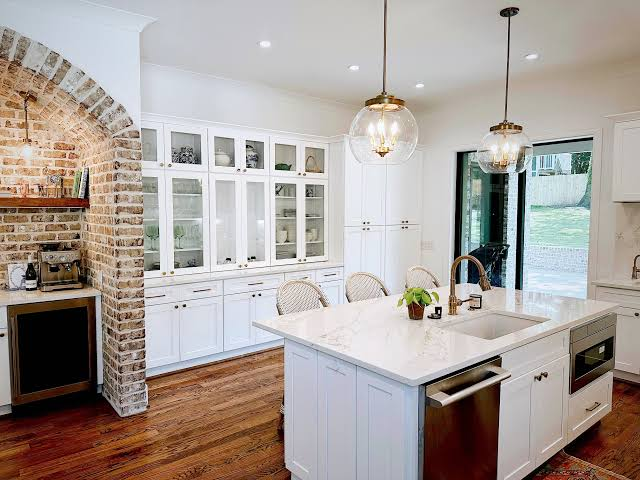
In many export markets, both cabinet types can work well. The key is understanding where each solution creates better value. For example, a developer furnishing standardized rental apartments may prioritize flat-pack efficiency, predictable carton sizes, and easier bulk logistics. A premium distributor or private-label brand may care more about layout flexibility, finish differentiation, and custom configuration.
On your site, the kitchen category already positions the factory around custom kitchen cabinets, modular kitchen storage systems, flat-pack RTA kitchen furniture, OEM & ODM customization, private labeling, sample production, and bulk manufacturing. The broader homepage also emphasizes export-standard packaging, MDF / plywood / engineered panels, CNC production, 1-container MOQ, and supply for apartments, hotels, and residential projects. That makes this topic highly relevant to your actual offer and highly aligned with B2B search intent.
This guide compares the two cabinet approaches from a practical sourcing perspective so buyers can decide which model better suits their channel, project type, and price point.
Table of Contents
- What are custom kitchen cabinets?
- What are RTA kitchen cabinets?
- Cost comparison: which option is more competitive?
- Shipping, warehousing, and packaging differences
- Installation and assembly considerations
- Which markets fit custom cabinets better?
- Which markets fit RTA cabinets better?
- Materials, compliance, and durability
- MOQ, lead time, and customization workflow
- Final recommendation for B2B buyers
- FAQ
1) What Are Custom Kitchen Cabinets?
Custom kitchen cabinets are built or developed according to specific project, brand, or buyer requirements. In B2B export, “custom” can mean several things:
- custom dimensions for a room layout
- customized finish, color, or wood grain
- adjusted storage configuration
- custom hardware selection
- branding and packaging changes
- market-specific construction or labeling
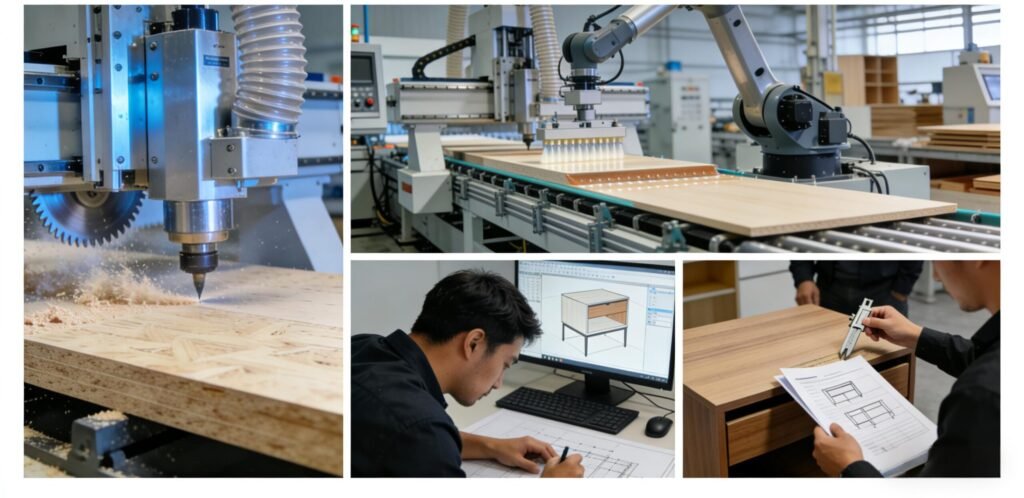
On your kitchen page, the offer clearly includes custom kitchen cabinets, custom design and layout planning, selection of finishes, colors, and hardware, material choices, private labeling and packaging options, and sample plus bulk production services.
For developers and contractors, custom cabinets are often selected when room size, wall conditions, utility points, or local style expectations vary from one project to another. For brands and distributors, custom cabinets are also useful when they want a more differentiated collection instead of competing only on price.
Typical B2B Use Cases for Custom Kitchen Cabinets
- mid-range to premium residential projects
- apartment developments with specific layouts
- hotel kitchenette or serviced-apartment kitchen programs
- distributors building private-label lines
- importers targeting higher-value kitchen packages
2) What Are RTA Kitchen Cabinets?
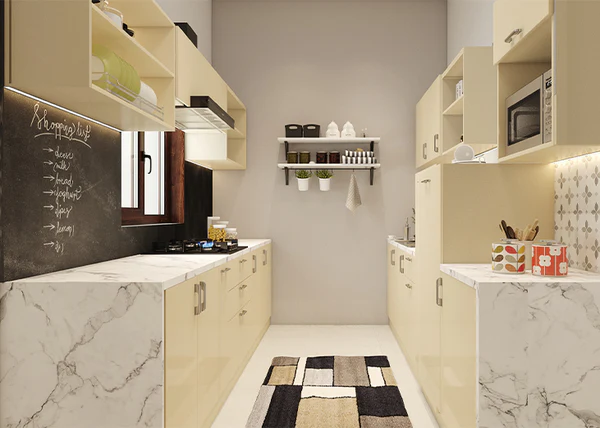
RTA means ready-to-assemble. In export furniture, RTA kitchen cabinets are usually supplied in flat-pack format for more efficient shipping and warehousing, then assembled at destination or on site.
Your kitchen page explicitly lists flat-pack RTA kitchen furniture as part of the product range, while the homepage positions the factory as a flat-pack furniture manufacturer in China with export-standard flat-pack packaging and supply for global buyers and projects.
RTA cabinets are popular in many B2B channels because they can reduce cube volume, improve container utilization, and make inventory handling more practical. They are especially common in:
- wholesale programs
- e-commerce-adjacent furniture supply
- standardized apartment projects
- budget-to-midmarket kitchen distribution
- dealer programs that assemble locally
Why RTA Cabinets Appeal to Buyers
- better freight efficiency
- easier warehouse storage
- scalable volume purchasing
- easier mixed-SKU container loading
- practical for repeatable standard sizes
3) Cost Comparison: Which Option Is More Competitive?
Cost is usually the first comparison point, but B2B buyers should not focus only on unit price.
Direct Product Cost
In most cases, RTA kitchen cabinets are more competitive on entry-level and mid-market pricing because designs are often standardized, production is easier to scale, and shipping efficiency is better.
Custom kitchen cabinets usually cost more because they require more engineering review, more finish coordination, more SKU variation, and sometimes more complex packaging or hardware selection.
Total Landed Cost
However, the lower factory price of RTA cabinets does not always mean lower total cost. Buyers also need to consider:
- on-site assembly labor
- installation time
- error risk during assembly
- local contractor skill level
- spare parts management
- post-sale service complexity
For some apartment or hospitality projects, semi-custom or custom cabinet systems can reduce expensive on-site rework if they fit the layout better from the start.
Commercial Reality
For price-sensitive wholesale markets, RTA often wins.
For higher-value project markets, custom can win because the layout and finish match is better.
4) Shipping, Warehousing, and Packaging Differences
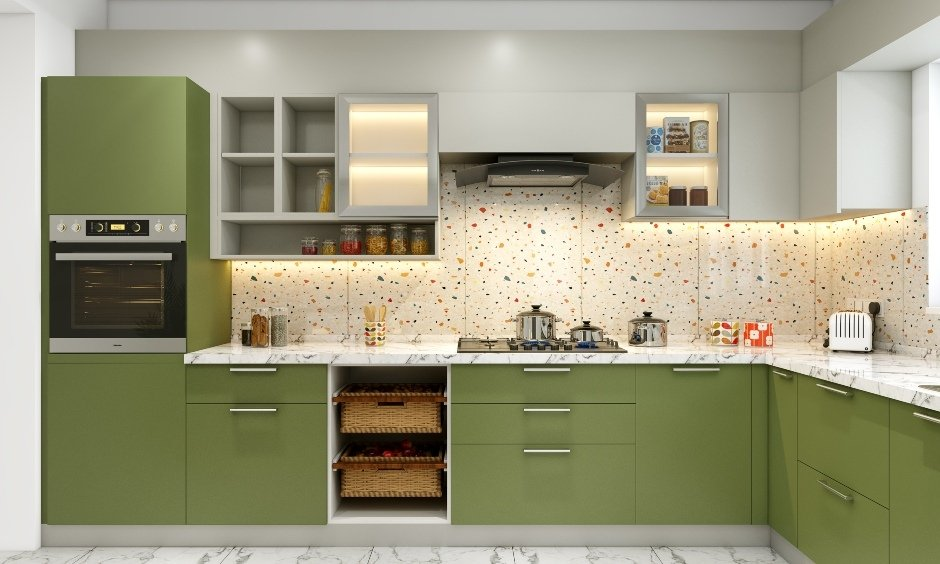
This is one of the biggest practical differences between the two categories.
Your homepage emphasizes export-standard flat-pack packaging designed to reduce damage in long-distance transportation, and your kitchen page confirms export-ready packaging for kitchen products.
RTA Cabinets: Shipping Advantages
RTA kitchen cabinets are usually better for:
- container efficiency
- lower freight cost per unit
- easier stacking and warehousing
- mixed model shipment planning
- importer inventory turnover
Because the cabinets ship flat, they generally occupy less space than pre-assembled or highly customized bulky units.
Custom Cabinets: Shipping Considerations
Custom cabinets can still be flat-packed, but as customization increases, packaging may become more complex. More varied carton sizes, more SKU codes, and more project-specific component control may be needed.
Packaging Questions Buyers Should Ask
- Are cartons reinforced for export?
- Are hardware kits labeled by item?
- Are assembly instructions included?
- Can project cartons be marked by room or unit type?
- Are edge and corner protections used?
- Are spare parts included for installation teams?
For buyers dealing with international shipments, the ICC’s official Incoterms 2020 rules are a useful reference when defining transport responsibility, risk transfer, and delivery terms in the sales contract.
If wood packaging material is used anywhere in the logistics chain, the International Plant Protection Convention maintains the official standards framework for phytosanitary measures, including ISPM standards relevant to global trade.
5) Installation and Assembly Considerations
Installation is where many buyers underestimate the difference between custom and RTA programs.
RTA Cabinets
RTA cabinets are designed for assembly after arrival. This makes them practical for many importers and project buyers, but it also means:
- assembly labor is required at destination
- installation teams need clear instructions
- drilling accuracy and hardware completeness are critical
- mistakes in carton identification can slow the job
Custom Cabinets
Custom kitchen cabinets may also be shipped knocked down, but they are usually more closely matched to a specific layout. That can reduce site modification if the development work was done correctly in advance.
Which Is Better for Projects?
For a contractor with organized installation crews, RTA may be highly efficient.
For a project with irregular layouts or tighter fit requirements, custom cabinets may reduce installation issues.
This is particularly relevant for:
- serviced apartments
- rental housing rollouts
- hotel kitchenette zones
- urban projects with limited space
- markets where wall conditions are less predictable
6) Which Markets Fit Custom Cabinets Better?
Custom kitchen cabinets are usually stronger in markets where layout fit, finish variety, and brand differentiation matter more than pure entry-level price.
Best-Fit Markets for Custom Cabinets
1. Apartment developers with varied unit types
Studios, one-bedroom units, and two-bedroom layouts often need size adaptation and smarter storage planning.
2. Premium importers and showrooms
These buyers may need more finish options, more flexible dimensions, and better collection differentiation.
3. Private-label brands
Custom cabinets support stronger branding through unique product configuration, packaging, and finish direction.
4. Hospitality and serviced-living projects
Where kitchenettes or compact kitchens need to fit specific room layouts and design standards.
Your homepage explicitly says the factory supplies products for apartments, hotels, and residential projects, while the OEM & ODM page says it supports apartments, homes, and commercial properties, focusing on functional, space-saving furniture for modern living environments.
Strategic Advantage
Custom cabinets help buyers avoid becoming interchangeable with other sellers carrying the same standard cabinet boxes.
7) Which Markets Fit RTA Cabinets Better?
RTA kitchen cabinets are usually the better choice where cost efficiency, flat-pack logistics, fast inventory turnover, and standardization are the main drivers.
Best-Fit Markets for RTA Cabinets
1. Wholesale cabinet distribution
Standard sizes and carton efficiency make RTA practical for repeat bulk orders.
2. Budget apartment furnishing
Projects with repeat unit types can often gain strong value from flat-pack kitchen programs.
3. Importers with local assembly capacity
If the buyer has trained installers or warehouse assembly support, RTA becomes even more attractive.
4. Dealers serving mid-market renovation demand
RTA cabinets often work well in price-conscious renovation channels.
Because your kitchen page already includes modular kitchen storage systems, flat-pack RTA kitchen furniture, and sample and bulk production services, the product line is well positioned for this segment.
Strategic Advantage
RTA cabinets are often easier to scale across multiple shipments and stock-based programs.
8) Materials, Compliance, and Durability
Material choice matters in both cabinet types, but it becomes even more important when buyers compare value tiers.
Your kitchen page says the kitchen range uses materials such as MDF, plywood, solid wood, and engineered boards, while the homepage highlights MDF, particle board, plywood, and engineered panels as core panel options.
Common Material Choices
MDF
Useful for smooth finishes and many painted or laminated cabinet applications.
Particle Board / Engineered Boards
Often used in cost-efficient flat-pack cabinet programs.
Plywood
Frequently preferred where stronger structure or improved screw-holding is needed.
Compliance and Market Access
For many export destinations, buyers also ask about composite wood compliance. The U.S. EPA states that composite wood products such as hardwood plywood, MDF, and particleboard, as well as finished goods containing them, fall under TSCA Title VI formaldehyde standards.
If your customers care about responsible sourcing, FSC explains that chain of custody certification verifies forest-based materials along the path from forest to finished goods.
Practical Advice
For B2B buyers, the cabinet decision should include:
- board type
- board thickness
- moisture considerations
- finish durability
- hardware level
- compliance requirement by destination market
9) MOQ, Lead Time, and Customization Workflow
Commercial structure is one more reason why buyers compare custom and RTA differently.
Your homepage states a minimum order quantity of 1 container, and also promises free quotation within 24 hours. The kitchen page adds sample and bulk production services, while the OEM & ODM page describes customization in design, material, finish, hardware, and dimensions.
MOQ
RTA kitchen cabinets often suit buyers who want more standardized repeat orders.
Custom kitchen cabinets may require more discussion around:
- SKU-level MOQ
- finish MOQ
- sample cost
- project mix within one container
Lead Time
RTA can sometimes move faster when designs are standardized.
Custom cabinets may need extra time for:
- drawing confirmation
- finish matching
- sample approval
- packaging approval
- project coding and labeling
Typical Customization Process
- Buyer sends layout, BOQ, drawings, or reference photos
- Factory reviews dimensions, materials, and hardware
- Sample or technical confirmation
- Packaging and labeling alignment
- Bulk production
- QC and loading
This process is particularly relevant for apartment projects, contractor orders, and OEM kitchen brands that need a reliable development-to-production workflow.
For broader trade support and export due diligence, the International Trade Administration is also a credible reference point for international business and trade information.
10) Final Recommendation for B2B Buyers
So which is better: custom kitchen cabinets or RTA cabinets?
The answer depends on your market.
Choose Custom Kitchen Cabinets If:
- your market values differentiation
- your projects have non-standard layouts
- you need private labeling or brand identity
- you want higher-value apartment or hospitality fit-outs
- finish flexibility is important
- layout accuracy matters more than simple stock turnover
Choose RTA Kitchen Cabinets If:
- your market is price-sensitive
- shipping efficiency is a top priority
- you manage standard-size inventory
- your installation team can handle assembly efficiently
- you need bulk repeat purchasing with simpler SKU control
- your customers want practical mid-market solutions
For Many B2B Buyers, the Best Answer Is a Hybrid Strategy
A growing number of importers and project buyers combine both:
- RTA lines for standard, price-sensitive programs
- custom lines for projects, premium buyers, or differentiated collections
That hybrid model often allows distributors and developers to cover more demand segments without overcommitting to one sourcing structure.
Conclusion
For professional buyers, the comparison between custom kitchen cabinets and RTA cabinets should never be reduced to “which one is cheaper.” The better question is: which cabinet system fits your channel, project type, shipping model, and target customer better?
RTA cabinets are often the stronger choice for wholesale, flat-pack distribution, and standardized apartment programs. Custom kitchen cabinets are usually better when project layouts, finish direction, private-label requirements, or market differentiation play a bigger role.
Because your site already positions the business around custom kitchen cabinets, modular kitchen systems, flat-pack RTA kitchen furniture, OEM & ODM development, export packaging, and bulk production, this article supports both your SEO structure and your real sales conversation.
CTA
Tell us your target market and we’ll recommend the best cabinet solution for your business.
Send us your kitchen layout, product list, drawings, finish requirements, or reference images, and our team can suggest the right direction for custom kitchen cabinets, RTA kitchen cabinets, or a mixed OEM/ODM program for wholesale, apartment, hotel, or project supply.
Recommended internal link: Kitchen Furniture page.
Naturally Embedded Authority Outbound References Used in the Article
These are already woven naturally into the article and suitable for publication:
- International Trade Administration
- U.S. EPA – TSCA Title VI composite wood products
- FSC – Chain of Custody certification
- ICC – Incoterms 2020
- IPPC – international phytosanitary standards / ISPM framework
Frequently Asked Questions
Are custom kitchen cabinets always more expensive than RTA cabinets?
Usually yes at factory level, but not always in total project cost. Custom cabinets may reduce site rework, better fit layouts, and support higher-value market positioning.
Are RTA kitchen cabinets good for apartment projects?
Yes. RTA cabinets are often a strong choice for standardized apartment layouts, rental units, and bulk furnishing programs because they are easier to ship and store.
Can a factory offer both custom kitchen cabinets and RTA cabinets?
Yes. Your kitchen page already shows both custom kitchen cabinets and flat-pack RTA kitchen furniture in the product range.
What materials are commonly used in export kitchen cabinets?
Common materials include MDF, plywood, particle board, solid wood components, and engineered boards, depending on the price point and market requirements.
What should B2B buyers ask before placing a cabinet order?
Ask about board material, hardware, MOQ, lead time, packaging, sample policy, compliance, carton marking, and whether the cabinets are better suited to wholesale stock or project-based installation.