
Australia’s furniture buyers don’t just “pick a nice design.” You’re balancing compliance and landed cost. You also consider damage rate, assembly time, and customer expectations. This applies whether you’re supplying e-commerce, national retail, or build-to-rent / hotel / student accommodation projects.
This guide is written for Australian B2B buyers (importers, wholesalers, retailers, project specifiers, and brand owners). They want a clear way to source bookcase, book shelf, and book shelving products with fewer surprises. This is especially relevant around anti-topple requirements, flat-pack (RTA) packaging, and OEM/ODM execution. Australia now has a mandatory information standard for toppling furniture. It comes into force from 4 May 2025. This standard requires warnings across labels, manuals, and point-of-sale materials for covered items. ACCC Product Safety+1
Table of Contents
- Why one “bookcase” keyword attracts very different buyers
- Bookcase vs Bookshelf vs Book Shelving (definitions + use cases)
- Step 1 — Size & capacity that actually sells in Australia
- Step 2 — Materials: plywood vs MDF vs particleboard (AU buyer priorities)
- Step 3 — Strength & load: making shelves that don’t sag
- Step 4 — Safety & compliance: anti-topple warnings, fixing kits, instructions
- Step 5 — RTA/flat pack packaging: cutting damage rates in transit
- Step 6 — Assembly experience: reduce returns and bad reviews
- Step 7 — Styles & trends: what moves in AU retail + projects
- Step 8 — Channel fit: e-com vs retail vs commercial projects
- Step 9 — OEM/ODM sourcing checklist (what to ask your factory)
- Step 10 — QC points that protect your margin
- Step 11 — AU import due diligence for timber-based products
- FAQs (plus copy-ready FAQ schema)
- Next steps (RFQ template & CTA)
1) Why one “bookcase” keyword attracts very different buyers
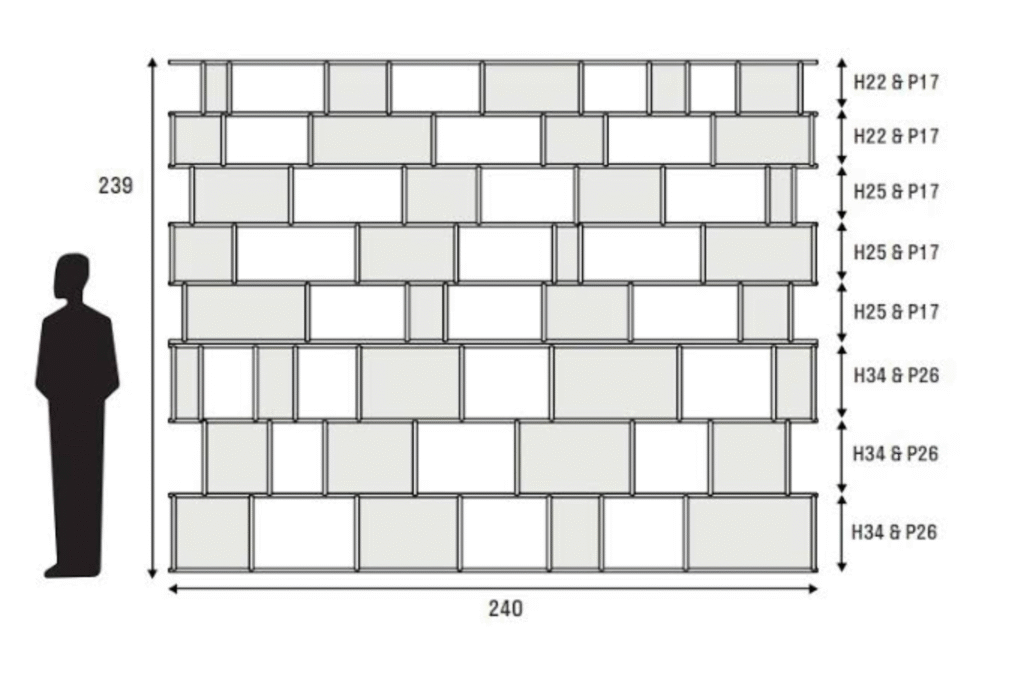
In Australia, “bookcase” searches can mean:
- E-commerce sellers competing against price anchors like amazon bookcases or marketplace-style listings, where carton damage and assembly complaints drive refunds.
- Retail buyers building ranges in standard colourways (e.g., white wood bookcase, black bookcases) with predictable packaging dimensions and planogram consistency.
- Project buyers (hotels, serviced apartments, student accommodation) who want repeatable specs, predictable lead times, and a reliable spare parts process.
When the product type is wrong, the cost shows up fast:
- Higher return rate (incorrect size, unstable, hard to assemble)
- Higher damage rate (corners crushed, scratched panels, missing hardware)
- More negative reviews (sagging shelves, poor instructions)
- Project delays and rework (site schedule, defect rectification)
Australia’s regulatory and consumer expectations can make “good enough” risky—especially in safety warnings for toppling furniture. ACCC Product Safety+1
2) Bookcase vs Bookshelf vs Book Shelving (definitions + use cases)
Bookcase (freestanding cabinet-style storage)
A bookcase is typically a freestanding unit (often tall) designed to store books and décor. Examples include a 5 tier bookcase and a 6 shelf bookcase. They also include a wide bookcase or an open bookcase used for living rooms and home offices.
Best for:
- Living rooms, studies, kids’ rooms (with safety kit)
- Retail ranges and repeatable SKUs
- Projects needing standardized, stackable cartons
Bookshelf / Book shelf (single-unit shelving)
In common retail language, “bookshelf” (or “book shelf”) often refers to smaller, simpler units—still freestanding but lighter and more price-sensitive.
Best for:
- Entry-level ranges, promo lines
- Starter apartments, rentals
- Buyers who need strong margin at a sharp RRP
Book shelving (systems, wall shelves, modular runs)
“Book shelving” often implies a system: modular cubes, wall-mounted units, or built-in style runs. This includes floating shelf bookcase looks, or shelf systems used as dividers.
Best for:
- Space-saving and design-led collections
- Fit-outs (office, hotel suites)
- Custom layouts via OEM/ODM
3) Step 1 — Size & capacity that actually sells in Australia
If you want fewer returns and fewer “smaller than expected” reviews, lock sizing early.
Practical size ranges (metric-first, AU-friendly)
- Depth:
- 250–300 mm works for paperback books + décor
- 300–350 mm fits many hardbacks + A4 binders better (office use)
- Width:
- Narrow: 300–450 mm (small apartments, corners)
- Standard: 600–800 mm (main retail volume)
- Wide bookcase: 900–1200 mm (hero pieces, higher freight risk)
- Height:
- 1200–1800 mm common for home use
- 1800 mm increases toppling risk and carton handling risk
Shelf spacing (what customers actually store)
- Mixed storage sells best: adjustable shelves + a few fixed shelves for rigidity.
- A4 binders: plan for ~330 mm clear height in at least one bay.
Back panel: yes or no?
- With back panel: improves stability + reduces racking, feels “solid,” better for tall units.
- Open back: cheaper and lighter, but can feel flimsy and increase wobble complaints—especially for tall open bookcase designs.
4) Step 2 — Materials: plywood vs MDF vs particleboard (AU buyer priorities)
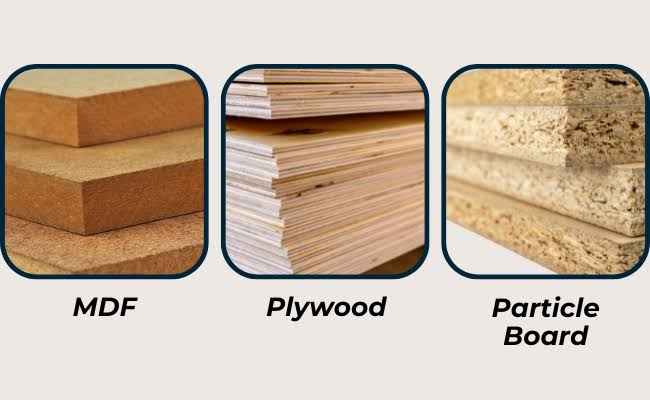
Australian buyers often compare materials through three lenses: durability, emissions / perception, and price.
Plywood
- Stronger screw holding and better impact resistance than many low-grade boards.
- Good for higher-end ranges, project furniture, or SKUs that take more handling.
MDF
- Smooth surface for paint and wraps; consistent panels.
- Heavier; edges require good sealing/banding to avoid swelling in humid conditions.
Particleboard
- Most cost-effective for high-volume entry ranges.
- Needs strong edge banding and sensible shelf spans to avoid sagging.
Where compliance fits in:
In AU/NZ, formaldehyde emission testing for wood-based panels is common. It is usually referenced via standards such as AS/NZS 4266.16 (test method for formaldehyde emission), which buyers may request evidence for. 标准澳大利亚商店
5) Step 3 — Strength & load: making shelves that don’t sag
Shelf sag is one of the fastest ways to earn negative reviews.
What actually controls shelf load
- Shelf span (width between supports)
- Shelf thickness
- Board density / stiffness
- Edge banding quality and shelf profile
- Connection method (cam locks, dowels, confirmat screws, brackets)
B2B “spec sheet” you should demand
Ask your supplier to state:
- Max recommended UDL (uniformly distributed load) per shelf (e.g., “X kg evenly distributed”)
- Shelf thickness and material
- Span limits for that thickness
- Whether a centre divider is required for wide units
Begin by implementing a shelf-span strategy. This is important when sourcing a 6 shelf bookcase or room essentials 5 shelf bookcase style at entry price points. This step helps in achieving stability. It also ensures optimal performance. This approach ensures stability and optimal performance. Doing so ensures stability and optimal performance. Insist on using a shelf-span strategy. Use centre support, thicker shelves, or shorter bays. Do not rely on customers “not overloading it.”
6) Step 4 — Safety & compliance for Australia (anti-topple warnings + fixings)
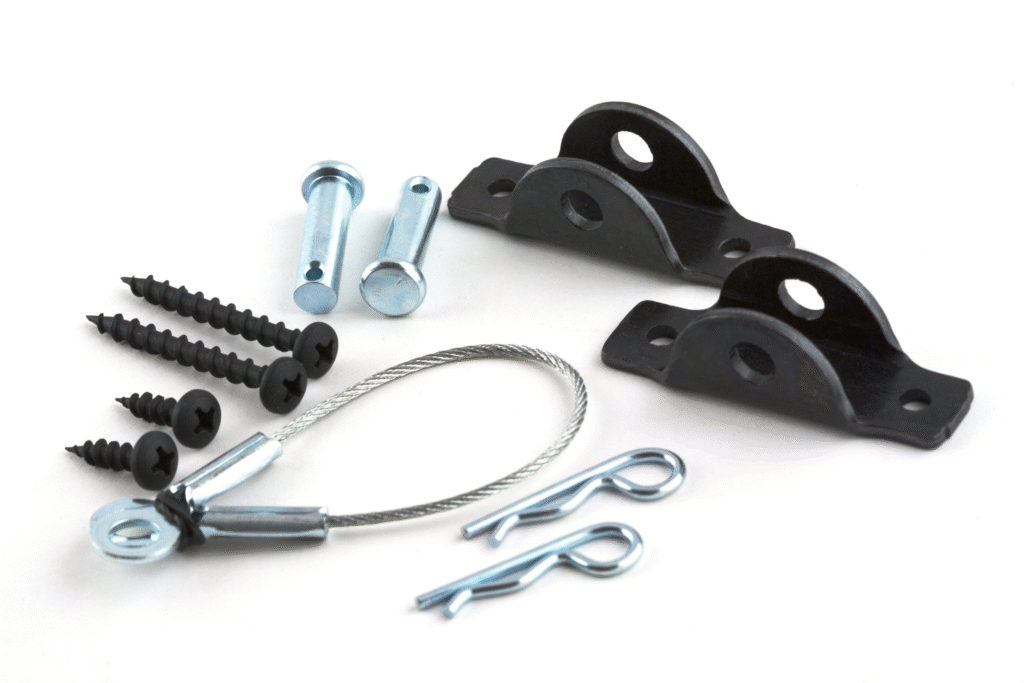
Australia has moved from “nice to have” to formal requirements around toppling furniture warnings.
Toppling furniture mandatory information standard (AU)
A mandatory information standard for toppling furniture came into effect on 4 May 2025. It requires permanent warning labels and warning information at point of sale. This applies to manuals for furniture covered by the standard. ACCC Product Safety+1
What this means for B2B buyers:
- You’ll want packaging artwork files that include the required warnings
- Instruction manuals should include anchoring steps and safety language
- Online product listings should carry the warnings where required
Practical product safety steps that reduce risk
- Include an anti-tip kit as standard (bracket + strap + screws)
- Provide wall-type guidance (plasterboard vs masonry)
- Make drawers and doors less “pull-forward” heavy
- Add a wider plinth or stabilising base where design allows
If you sell to families, childcare, student accommodation, or furnished apartments, safety messaging isn’t optional—it’s brand protection. ACCC Product Safety+1
7) Step 5 — RTA / flat pack packaging: how to lower damage rates
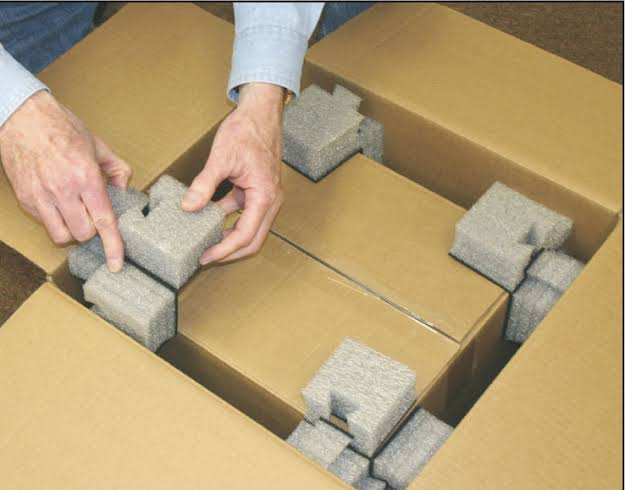
Australia is unforgiving on freight costs. If your cartons arrive damaged, your margin disappears.
Packaging features that move the needle
- Strong corner protection (EPE or moulded pulp)
- Honeycomb or rigid paper edge guards
- Scratch-resistant film on high-gloss / dark panels (black corner bookcase is especially prone)
- Hardware separated, labelled, and taped inside carton (stop “missing screws” claims)
- Carton drop-tested to an agreed protocol (many buyers reference ISTA procedures) 国际安全运输协会+1
Why ISTA matters for flat-pack
ISTA provides widely used distribution test procedures and selection guidelines. You don’t need to run a full lab program. Referencing ISTA-style handling conditions is a useful common language between buyer, factory, and 3PL. 国际安全运输协会+1
8) Step 6 — Assembly experience: the hidden profit lever
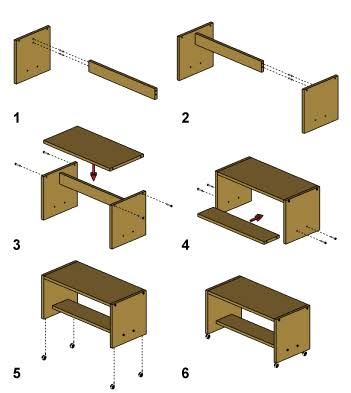
For e-commerce and retail, assembly friction drives:
- customer support tickets
- returns (“too hard to assemble”)
- bad reviews (“holes don’t line up”)
What good looks like (for AU consumers)
- Clear step-by-step manual with part numbering
- QR code to a short assembly video (reduces “how do I…” emails)
- Pre-sorted hardware bags (“A, B, C…”)
- Tighter drilling tolerances (cam locks aligned, dowels not forcing)
Set an internal target:
- Solo assembly under 45–60 minutes for common SKUs
- Two-person assembly for very wide/tall units (state clearly)
9) Step 7 — Styles & trends: what sells in Australia right now
Australian buyers lean practical + clean:
- Modern minimalist (white, oak, black)
- Geometric and “feature” shapes (e.g., round bookcase, revolving bookcase as statement SKUs)
- Space-saving: corner units (searches like billy corner bookcase stay popular as a reference point)
- Mixed-function pieces: tv stand with bookcase bundles that “solve a room”
“Decorability” helps sell
Keywords like bookcase decor are not fluff—customers want shelving they can style. Provide lifestyle photography guidance (plants, baskets, neutral ceramics), and your conversion improves.
10) Step 8 — Channel fit: e-com vs retail vs projects
E-commerce (damage + assembly rules everything)
- Prefer fewer parts, stronger packaging, repeatable cartons
- Avoid fragile finishes unless you overprotect
- Include spare hardware + clear customer support path
Retail (range discipline)
- Consistent colours and handle styles across multiple SKUs
- Stable supply and identical batches
- Easy-to-understand spec cards (depth/width/height in mm)
Projects (hotels, apartments, student accommodation)
- Confirm durability expectations: edge impact, cleaning chemicals, scuff resistance
- Confirm replacement parts lead time and batch tracking
- Confirm installation / fixing approach (especially tall units)
11) Step 9 — OEM/ODM sourcing checklist (questions AU buyers should ask)
When you request quotes, include:
- Target market (Australia), channel (retail/e-com/project), and estimated annual volume
- Preferred materials (plywood/MDF/particleboard) and finish (melamine/veneer/paint/laminate)
- Compliance requirements (toppling furniture warnings where applicable; manuals; POS assets) ACCC Product Safety+1
- Packaging requirements (drop testing approach; corner protection; spare parts) 国际安全运输协会+1
- Assembly design targets (tools required, time, part count)
- Spare parts policy (hardware, panels, lead times)
- QC plan (incoming, in-process, pre-shipment inspection)
Where PlywoodMFR / Starwood fits (About Us alignment)
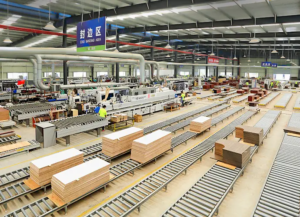
Starwood (PlywoodMFR) is a flat-pack furniture manufacturer. They offer end-to-end OEM/ODM solutions, flexible order quantities, and logistics support. They emphasize quality control and export packaging. Flat-Pack Furniture Manufacturer+2Flat-Pack Furniture Manufacturer+2
12) Step 10 — QC points that protect your margin
Don’t just “inspect at the end.” Put QC gates where defects are cheap to fix:
- Incoming materials: board thickness, laminate surface, edge banding roll consistency
- Drilling accuracy: cam holes alignment (common cause of assembly failure)
- Edge banding: peel resistance, corners, glue line
- Carton audit: corner guards present, hardware kit complete, label artwork correct
- Pre-shipment sample build: one carton pulled and assembled to confirm fit
13) Step 11 — AU import due diligence for timber-based products
Australian importers of regulated timber products have due diligence obligations under Australia’s illegal logging laws. These include the Illegal Logging Prohibition Act 2012 and updated rules. Government guidance and toolkits are available to help importers meet requirements. 农业部+2联邦法律登记处+2
For B2B buyers, this connects directly to:
- traceable timber sourcing documentation
- chain-of-custody certifications (where applicable)
- supplier risk assessment and record keeping
FAQs (Australia-focused)
What is the difference between a bookcase and a bookshelf?
A bookcase usually refers to a freestanding storage unit. This is often a taller, cabinet-like unit. In contrast, a bookshelf/book shelf is commonly a smaller, simpler freestanding unit. Book shelving refers to modular systems designed to run across a wall. It can also act as a room divider.
What depth is best for books and binders?
For general books and décor, 250–300 mm depth works well. For office A4 binders, aim closer to 300–350 mm.
How much weight can each shelf hold?
It depends on span, thickness, and material. Ask your supplier for a tested or engineered shelf load rating and design around realistic customer use.
Do I need anti-tip hardware in Australia?
For tall freestanding storage, anti-tip hardware is strongly recommended. Australia has mandatory warning requirements for covered toppling furniture categories starting from 4 May 2025. ACCC Product Safety+1
Plywood vs MDF: which is better for a bookcase?
Plywood generally offers better impact resistance and screw holding; MDF offers smooth paint-ready surfaces. The “better” choice depends on price point, finish, and expected usage.
How do I reduce shipping damage for flat-pack bookcases?
Use reinforced corners, scratch film, separated hardware kits, and a packaging test plan (many buyers reference ISTA procedures and guidelines). 国际安全运输协会+1
What’s a typical MOQ and lead time for OEM/ODM?
It varies by design complexity, finishes, and packaging. Ask your manufacturer for MOQ by SKU, sampling timeline, and production lead time aligned to container schedules.
Next steps (CTA for AU buyers)
If you’re planning a bookcase range for Australia—whether it’s a black corner bookcase, a minimalist white wood bookcase, or a project-ready tv stand with bookcase set—send:
- Provide target dimensions (mm), target RRP, and colour/finish. Indicate the channel (retail/e-com/project). Include the forecast volume. Then, request a quotation with a packaging proposal. Ensure compliance-ready artwork sets are included.
Starwood (PlywoodMFR) highlights OEM/ODM support including design/prototyping, material options, QC and packaging/logistics for export programs. Flat-Pack Furniture Manufacturer+2Flat-Pack Furniture Manufacturer+2
For Australia-specific safety requirements, refer to the ACCC Product Safety guidance. The guidance covers the Toppling furniture mandatory information standard (in force from 4 May 2025). ACCC Product Safety – Toppling furniture mandatory standard.
To understand the importance of these warnings, refer to the ACCC media release. It explains what suppliers must provide: ACCC – Mandatory information standard for toppling furniture.
If you import timber-based furniture into Australia, you must understand your responsibilities. The Department of Agriculture, Fisheries and Forestry explains Australia’s illegal logging laws. Importer responsibilities are detailed here: DAFF – Importing and processing timber products (illegal logging).
For practical compliance steps, the DAFF provides importer due diligence guidance: DAFF – Due diligence for importers.
Packaging performance is commonly discussed using ISTA procedures. Refer to ISTA’s official overview: ISTA – Test Procedures and ISTA – Testing Guidelines.
For responsible wood sourcing references, see: FSC – Furniture and PEFC – Furniture.
For quality management system context (often requested in supplier qualification), see ISO’s overview of ISO 9001: ISO – ISO 9001:2015.