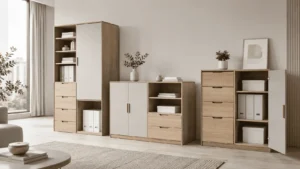
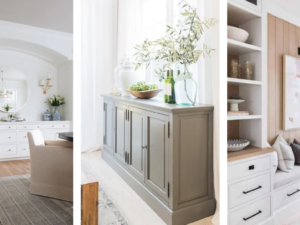
A sideboard buffet is one of the most versatile furniture categories in dining and hospitality spaces. It is commonly used for storage, display, and serving, but for professional buyers, it also represents an important product line with strong demand across residential, hospitality, apartment, and project-based markets.
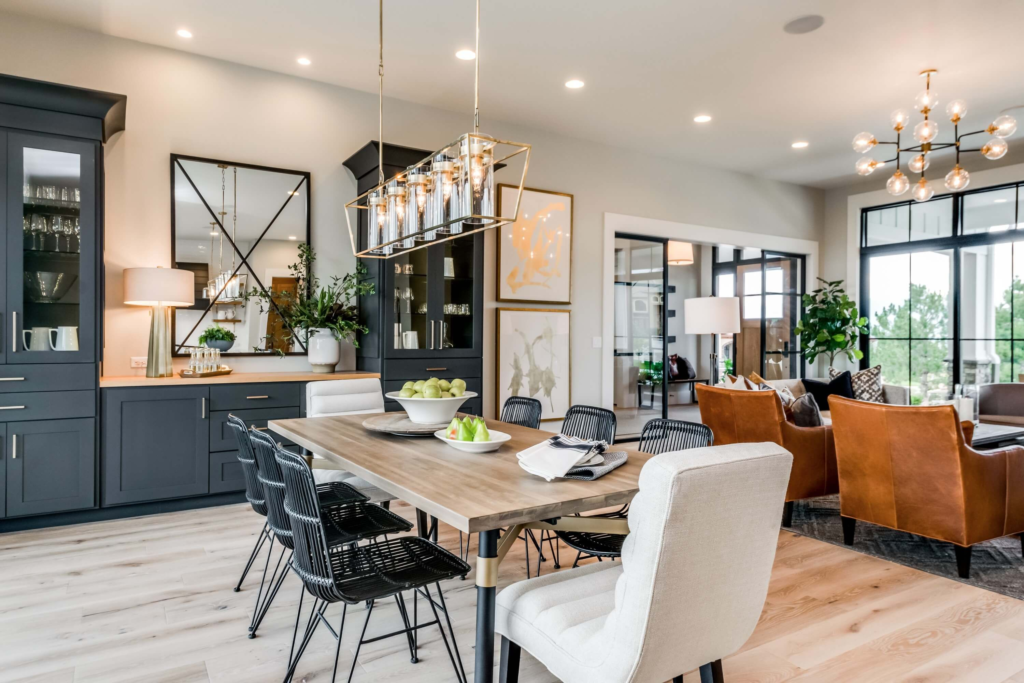
For importers, wholesalers, furniture retailers, hotel contractors, and apartment developers, understanding this category goes beyond simple product naming. Buyers need to evaluate dimensions, storage layout, materials, compliance, customization options, finish consistency, and packaging performance before moving into container orders or project supply.
In simple terms, a sideboard buffet is a low-profile storage cabinet, usually placed along a dining room wall, used to store tableware, linens, serving accessories, and decorative items. In modern furniture markets, it often overlaps with buffet cabinets, credenzas, and storage consoles, but the intended placement, proportions, and styling details still matter when positioning the product for different buyers.
As a panel furniture export manufacturer, we see sideboard buffet demand coming from more than traditional home furniture channels. Today, the category is highly relevant for furnished apartments, hospitality projects, dining collections, and OEM/ODM private label programs. For B2B buyers, the right model is not just attractive on a product page. It must also be practical to ship, easy to specify, and suitable for the end-use environment.
Table of Contents
1. What is a sideboard buffet
2. Sideboard buffet vs cabinet: what is the difference
3. Why sideboard buffets are popular in B2B projects
4. 9 expert buying tips for professional furniture buyers
5. Materials, compliance, and sustainability checks
6. OEM and ODM customization options
7. Common buyer mistakes to avoid
8. Final thoughts
9. FAQ
What Is a Sideboard Buffet
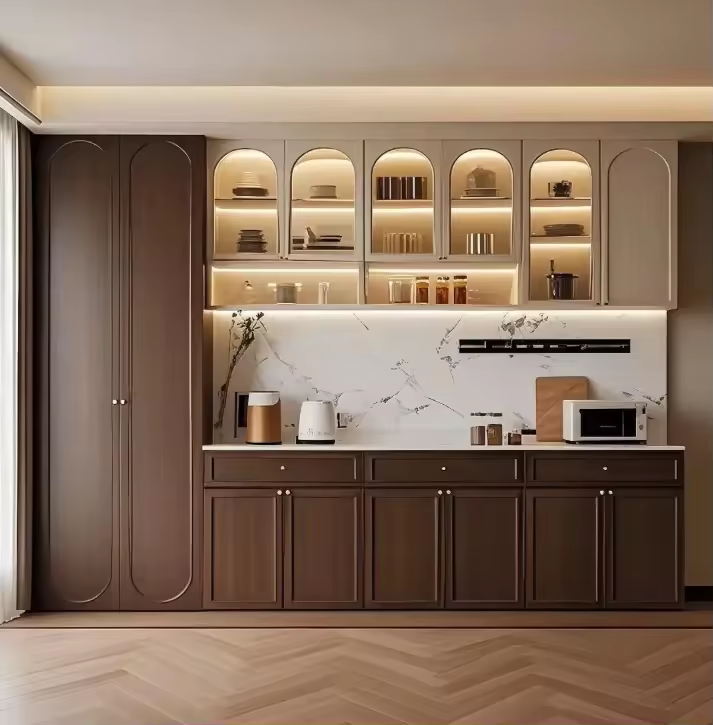
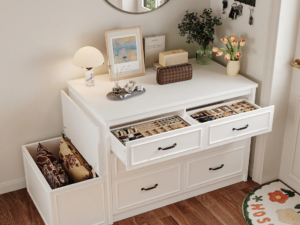
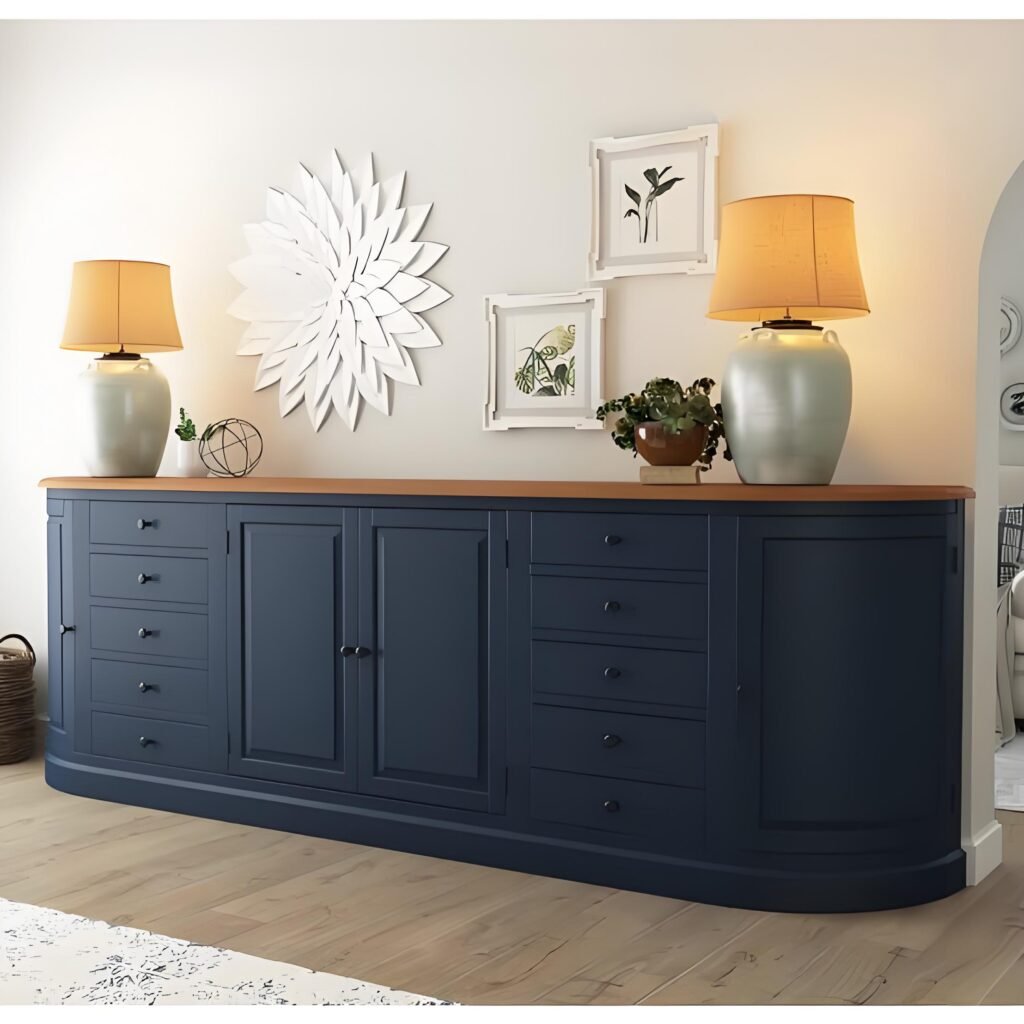
A sideboard buffet is typically a long, waist-height storage cabinet designed for dining-related use. Most models include a combination of drawers, hinged doors, or shelves. The top surface is often used for serving food, displaying decor, or supporting mirrors, artwork, or lighting.
In the retail market, the terms sideboard and buffet are often used interchangeably. In commercial sourcing, however, buyers usually differentiate products by function, style language, and target application. A sideboard buffet intended for a modern apartment project may prioritize compact depth and neutral finishes, while a hotel buffet cabinet may require more robust hardware, stricter finish consistency, and commercial-grade packaging.
Because many sideboard buffet products are made with engineered wood construction, material compliance is increasingly relevant to buyers. In the U.S., EPA TSCA Title VI addresses formaldehyde emission standards for composite wood products, while California has its own composite wood requirements through CARB. These frameworks are particularly important when sourcing hardwood plywood, particleboard, or MDF-based furniture for regulated markets. US EPA+2加州空气资源委员会+2
Sideboard Buffet vs Cabinet: What Is the Difference
This is one of the most common questions from buyers and end customers.
A cabinet is a broad furniture term. It can describe storage furniture in kitchens, offices, living rooms, bedrooms, bathrooms, or dining spaces. A sideboard buffet is more specific. It usually refers to a low, horizontal storage piece designed for dining room placement and serving-related use.
Here is the practical distinction for B2B positioning:
A general cabinet can be tall or compact, wall-mounted or freestanding, and intended for many storage purposes.
A sideboard buffet is usually wider than it is tall, placed against a wall, and designed to support both storage and tabletop display.
A buffet cabinet often emphasizes serving functionality and dining room utility.
This distinction matters in SEO and product merchandising because buyers search by use case. Someone sourcing a “buffet cabinet for hotel dining room” has different purchase intent from someone browsing for a general storage cabinet.
Why Sideboard Buffets Are Popular in B2B Projects
Professional buyers like this category because it performs well across multiple channels.
For furniture retailers, sideboard buffets are high-visual-impact products that help complete dining room collections.
For apartment developers and furnished rental programs, they add practical storage while supporting a finished interior look.
For hotels and hospitality buyers, they can be used in suites, dining areas, service zones, and public spaces where concealed storage is needed.
For OEM and ODM clients, the structure is flexible enough for customization in dimensions, finish colors, door styles, leg options, and packaging.
From a sourcing standpoint, sideboard buffets are also attractive because they can be developed in multiple market tiers, from affordable flat-pack models to premium veneer-finished collections. Sustainability and standards also matter more in this segment than before. FSC positions its certification as a leading system for responsible forestry and chain of custody, while BIFMA remains a recognized authority for furniture safety, performance, and sustainability standards in commercial environments. BIFMA+3森林管理委员会+3森林管理委员会+3
9 Expert Buying Tips for B2B Furniture Buyers
1. Define the end-use market first
Before comparing designs, clarify whether the target market is retail, e-commerce, hospitality, apartment, or wholesale distribution.
Retail buyers usually prioritize style, trend appeal, and finish variety.
Hospitality buyers focus more on durability, consistency, and project coordination.
Apartment buyers often need compact dimensions, neutral styling, and repeatable supply.
Online sellers care deeply about knock-down structure, carton size, and freight efficiency.
Without a clear end-use definition, buyers often select a design that looks attractive but performs poorly in the real sales channel.
2. Check dimensions against room function
A sideboard buffet should fit the intended wall space while leaving enough room for circulation. Common buyer issues include excessive depth for smaller dining rooms, insufficient internal volume, or wrong top height for serving functionality.
For apartment and hotel projects, narrow-depth models are often more practical. For larger dining rooms and executive suites, wide cabinets with stronger visual presence are easier to position.
Always review width, depth, height, leg clearance, internal shelf arrangement, and carton dimensions at the same time.
3. Evaluate storage layout, not just appearance
Many buyers focus too heavily on front design and ignore internal usability.
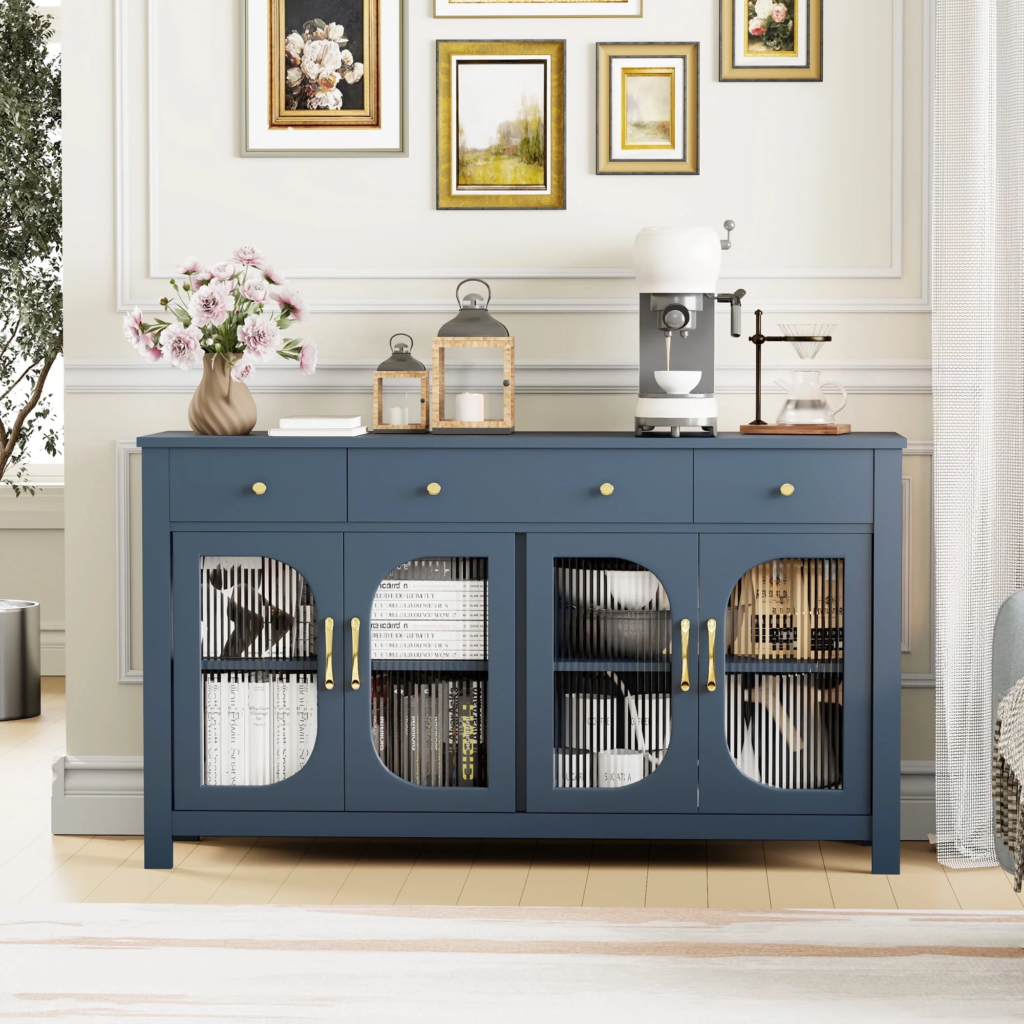
A commercially successful sideboard buffet should have a practical mix of storage zones. Drawers work well for cutlery, linens, and accessories. Closed cabinets are better for dinnerware or larger service items. Adjustable shelving improves flexibility for different end users.
The most successful models usually balance visual simplicity with strong everyday utility.
4. Review material construction carefully
For export furniture, materials determine durability, finish performance, and price position.
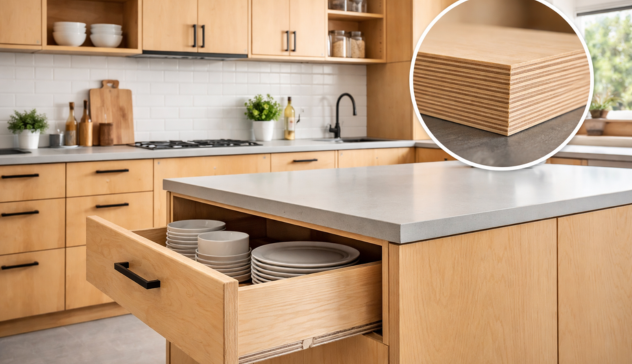
Plywood sideboard buffets are often valued for dimensional stability and structural reliability. MDF may support smooth painted finishes. Particleboard can be cost-effective for certain markets when designed correctly. Veneer and melamine selections influence both appearance and maintenance expectations.
Buyers should request full construction details, including panel type, thickness, edge banding method, hardware specification, and surface finish process.
5. Confirm compliance requirements for your destination market
This is essential for engineered wood furniture.
The EPA’s TSCA Title VI program regulates formaldehyde emission standards for composite wood products in the U.S., and CARB also regulates composite wood products and finished goods sold or supplied in California. Buyers targeting regulated markets should verify that relevant materials and finished products meet applicable requirements before order confirmation. 加州空气资源委员会+3US EPA+3US EPA+3
This is especially important for importers supplying chain retailers, contract projects, or public-facing commercial environments where documentation is part of the approval process.
6. Ask about OEM and ODM flexibility
For many B2B programs, the baseline design is only the starting point.
A strong manufacturer should be able to support practical customization such as:
door pattern changes
handle replacement
custom finish colors
dimension adjustments
leg material changes
internal shelf revisions
private label packaging
instruction manual customization
OEM and ODM support is especially important for importers building exclusive product lines or hospitality buyers trying to align furniture with interior design concepts.
7. Inspect hardware and opening performance
Handles, hinges, drawer slides, and leveling details directly affect perceived quality.
Even if the exterior styling is strong, poor hardware selection can lead to complaints, installation issues, or short product life. Soft-close systems, stable drawer movement, clean alignment, and durable hinge performance are small details that make a major difference in buyer satisfaction.
For commercial buyers, hardware consistency across production runs matters just as much as the initial sample quality.
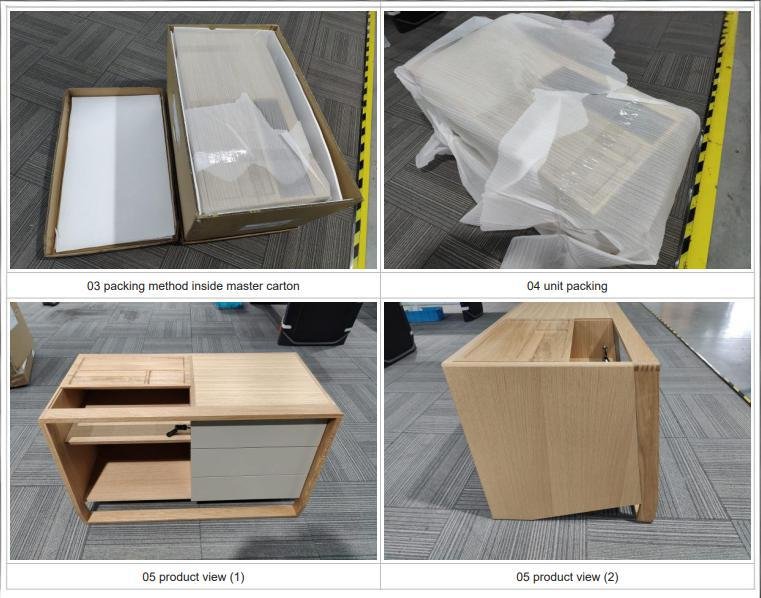
8. Review packaging for export risk
A sideboard buffet may look excellent in the showroom and still fail in transit.
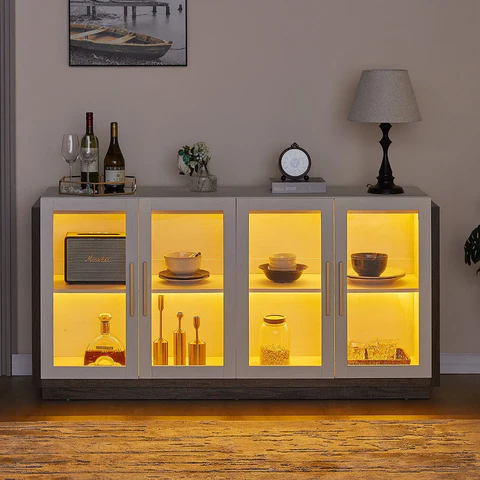
For export orders, buyers should confirm corner protection, internal cushioning, drop-test-oriented carton design, moisture protection, hardware packing, and labeling clarity. This is particularly important for long cabinets with finished top panels, fluted surfaces, or fragile leg structures.
A good supplier should provide packaging photos, carton dimensions, loading plans, and damage-reduction logic, not just a product quotation.
9. Choose a supplier that understands project communication
A reliable manufacturer does more than make furniture. It helps buyers control risk.
Professional buyers should look for suppliers that can provide:
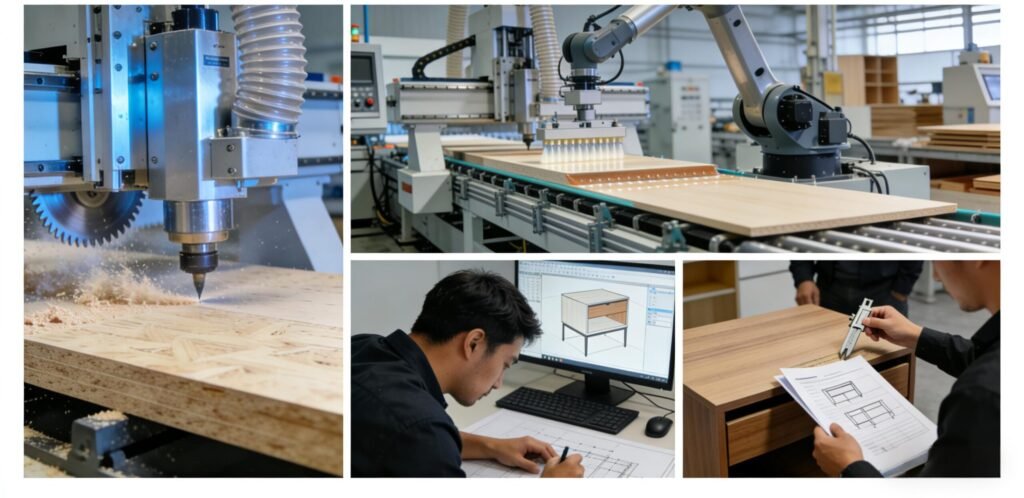
clear shop drawings
material specifications
sample support
stable lead times
inspection cooperation
bulk production consistency
fast communication during revisions
For hotel and apartment projects, this communication capability is often as important as the product itself.
Materials, Compliance, and Sustainability Checks
For many international buyers, engineered wood furniture now requires a combination of cost control, compliance awareness, and sustainability positioning.
If your customer base includes North America, it is wise to understand composite wood compliance expectations. EPA explains the formaldehyde emission standards for composite wood products under TSCA Title VI, and CARB details how its program applies to hardwood plywood, particleboard, MDF, and finished goods that contain those materials. US EPA+2加州空气资源委员会+2
If sustainability is part of your buyer pitch, FSC is one of the most recognized references for responsible forest management and certified supply chains. For contract and commercial environments, BIFMA and LEVEL by BIFMA are also useful benchmarks when discussing sustainability and product assessment in the built environment. BIFMA Level+4森林管理委员会+4森林管理委员会+4
For many OEM buyers, the ideal product is not the cheapest cabinet. It is the one that meets market expectations, clears documentation review, and maintains acceptable margins over repeated orders.
OEM and ODM Customization Options
As a board furniture export manufacturer, we often see buyers request custom programs instead of simple standard-product purchases.
Typical customization requests for sideboard buffet projects include:
custom widths for apartment layouts
special finish colors for branded collections
metal or wood base variations
different door textures or fluted details
adjusted shelf counts
project-specific packaging marks
mail-order safe packaging upgrades
logo, label, and manual changes
For hospitality and furnished apartment projects, consistency matters more than one-off sample appearance. Buyers should check whether the supplier can repeat the same finish tone, hardware quality, and assembly accuracy across bulk production.
Common Buyer Mistakes to Avoid
One common mistake is buying only from photos. A sideboard buffet may look premium online but still have weak structure, poor edge finishing, or impractical internal storage.
Another mistake is ignoring destination-market compliance until late in the process. This can delay approvals and shipments.
A third mistake is focusing only on FOB price. In reality, damage rates, poor packaging, inconsistent color matching, and weak communication can cost far more than a small unit price difference.
The best buyers compare the full sourcing picture: materials, compliance, hardware, packaging, lead time, customization support, and long-term production reliability.
Final Thoughts
So, what is a sideboard buffet?
It is a low-profile dining storage cabinet, but for professional buyers it is also a highly flexible product category with strong application across retail, e-commerce, hospitality, apartments, and OEM furniture programs.
If you are sourcing for B2B use, do not evaluate a sideboard buffet only by style. Review the structure, dimensions, storage configuration, material composition, compliance pathway, packaging design, and supplier communication process.
The right sideboard buffet should do three things well:
fit the target market
perform reliably in real use
support efficient, scalable supply
For importers, wholesalers, hotel contractors, and apartment project buyers, that is what turns a good-looking cabinet into a successful commercial product.
If you are developing a new dining room furniture line or planning a hotel or apartment furnishing program, contact our team for sideboard buffet recommendations, OEM/ODM options, and factory-direct support.
FAQ
What is a sideboard buffet used for
A sideboard buffet is used to store dining essentials such as plates, glassware, serving pieces, linens, and accessories. In many interiors, it also serves as a display and serving surface.
Is a sideboard buffet the same as a cabinet
Not exactly. A cabinet is a broad term for storage furniture, while a sideboard buffet is usually a low, wide cabinet designed mainly for dining room use.
What materials are best for a sideboard buffet
That depends on the target market. Plywood is often preferred for structural stability, MDF is commonly used for painted surfaces, and veneer or melamine selections help define appearance and cost position.
Are sideboard buffets suitable for hotels and apartments
Yes. They are widely used in hospitality suites, serviced apartments, and furnished residential projects because they combine storage function with decorative value.
What should OEM buyers check before ordering
OEM buyers should check dimensions, materials, finish consistency, hardware, packaging, compliance documentation, customization options, and production lead time.
Need help choosing the right sideboard buffet style for your project? Contact us for product recommendations, OEM/ODM support, and factory pricing.