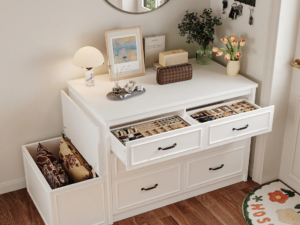

Thin Bedside Drawers or Big Nightstand? How Storage Design Impacts Conversion
Storage is no longer a secondary feature in bedside cabinets. In most export markets, the bedside unit is expected to do more than hold a lamp. It must store charging cables, reading glasses, medicine, books, earbuds, tissues, and small personal items while staying visually compact. Current retail listings show strong demand for charging integration. Drawer storage and open shelf combinations are also popular. Official sleep guidance still recommends reducing device clutter around the bed. Creating a more orderly sleep environment is encouraged. For manufacturers and buyers, that means storage design is directly tied to both conversion and product positioning. Wayfair+4Sleep Foundation+4National Sleep Foundation+4
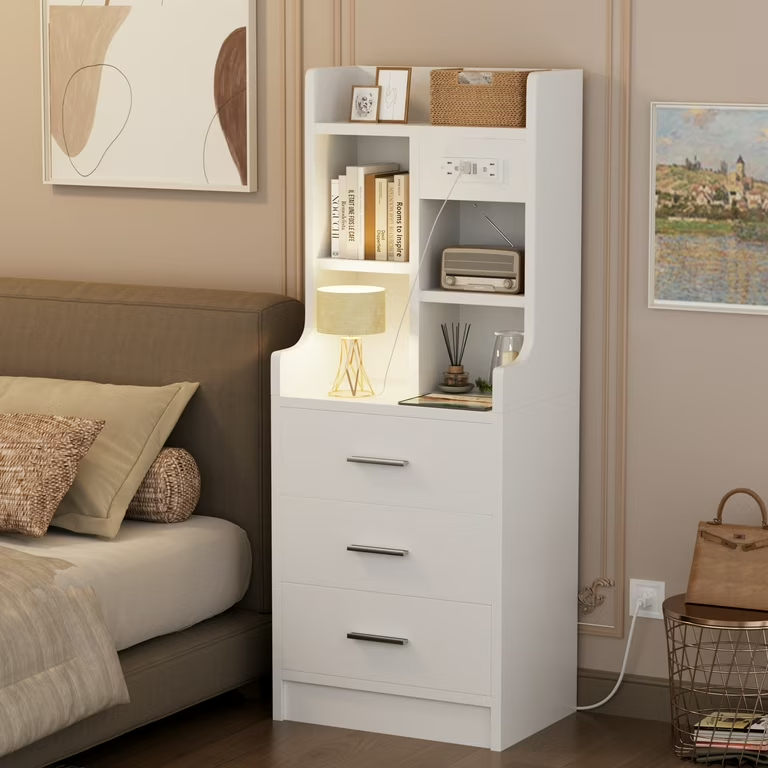
For B2B buyers, the question is not simply whether a big nightstand sells better than thin bedside drawers. The real question is which storage configuration performs best for the intended channel. A compact dorm nightstand serves a different use case from a hotel guestroom unit. It also differs from a kids’ room cabinet. Additionally, it varies from an apartment-ready bedroom side table with drawers. That is why OEM and ODM development should begin with usage scenarios, not with styling alone.
At Starwood, the broader product direction already aligns with this logic. The company presents itself as a China-based flat-pack furniture manufacturer. It focuses on export-ready OEM/ODM panel furniture. This includes bedroom furniture, cabinets, and storage systems for global buyers. The site also emphasizes flexible MOQ, private label support, and bedroom furniture solutions tailored for B2B projects. Flat-Pack Furniture Manufacturer+3Flat-Pack Furniture Manufacturer+3Flat-Pack Furniture Manufacturer+3
This article examines how storage design changes conversion performance. It also explains how buyers can specify the right structure for retail, hospitality, and residential projects.
Table of Contents
- Why Storage Design Now Shapes Nightstand Conversion
- Real User Scenarios: What People Actually Store Beside the Bed
- Bedroom Side Tables with Drawers: Drawer Count, Depth, and Runner Choice
- Thin Bedside Drawers: Tall and Narrow vs Wide and Low
- Dorm, Kids’ Room, Guest Room, Hotel, and Apartment: Storage Needs Are Not the Same
- How Factories Balance Strength, Cost, and Flat-Pack Efficiency
- What “Best Nightstands” Reviews Usually Reward
- How to Adjust Storage Design by Target Market
- Final Buying Recommendations
- FAQ
1. Why Storage Design Now Shapes Nightstand Conversion
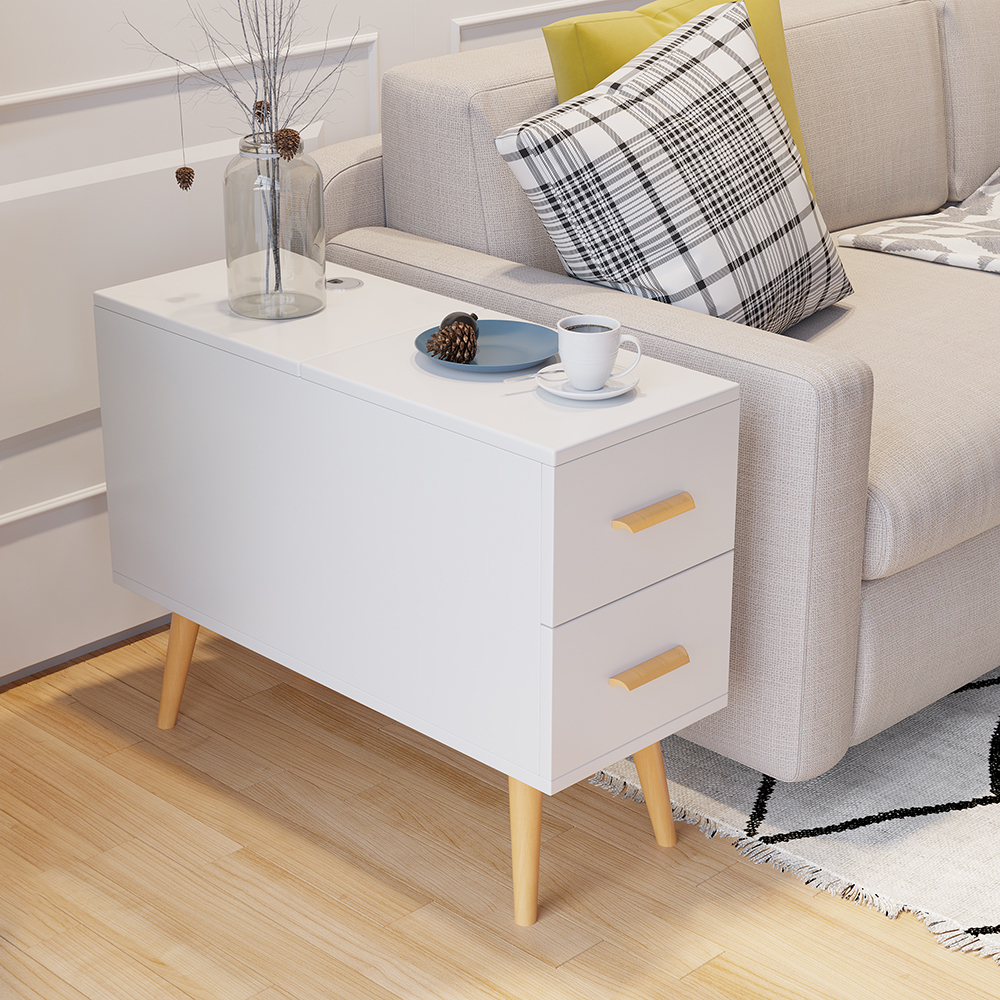
The most successful nightstands bedside tables are not chosen only by look. They win because they solve everyday storage friction. Retail platforms are increasingly offering models with drawers, open shelves, USB ports, or charging stations. Mainstream retailers focus on small-footprint storage and white bedside table formats for compact bedrooms. This reflects a simple shift: buyers want bedside furniture that reduces clutter and improves use value without increasing room density. Target+4宜家+4IKEA+4
For B2B sellers, this has three implications.
First, storage design affects click-through and conversion because it changes how easy the value proposition is to communicate. A plain cube looks generic. A product with “2 drawers + open shelf + charging-ready cable path” is immediately more specific.
Second, storage design affects margin. Adding one drawer may increase hardware cost. It can increase assembly time and packaging complexity as well. However, it can also move the product from “commodity” to “better-tier” positioning.
Third, storage design affects channel fit. A retail-ready bedroom stand for e-commerce may prioritize compact carton size. It may also prioritize simple assembly. In contrast, a hotel project may require more robust drawer runners, anti-tip considerations, and damage-resistant surfaces.
In other words, storage is not an accessory feature. It is a commercial specification.
2. Real User Scenarios: What People Actually Store Beside the Bed
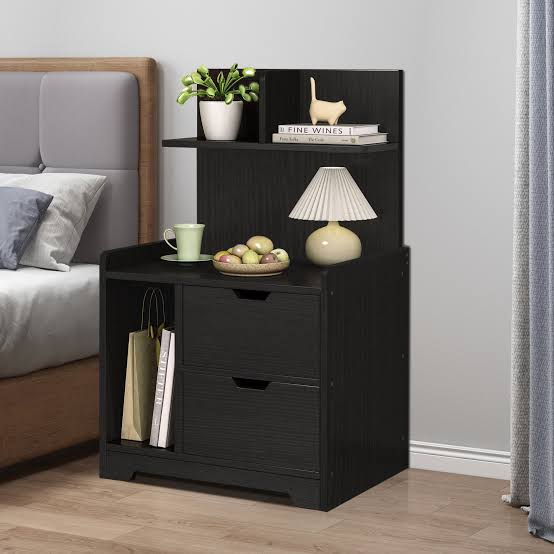
A nightstand converts when its storage logic matches what users reach for before sleep and after waking. That sounds obvious, but many products fail because they are styled correctly and engineered poorly.
Chargers and phones
People commonly keep phones and charging cables by the bed. Sleep-health organizations recommend moving electronics away from the sleep zone. They also advise at least organizing them more deliberately. That creates a design tension. Consumers still want charging convenience, but they also respond well to furniture that hides cable clutter. For OEM buyers, this means cable management and back-panel cutouts. A top drawer that does not interfere with plugs can be meaningful conversion features. Sleep Foundation+1
Books, glasses, tissues, and medication
These are classic drawer items. They do not need large volume, but they do need easy retrieval. A shallow top drawer is often more useful than one oversized cavity. It prevents small items from disappearing into unused space.
Decorative objects
The keyword bedside table decor remains relevant. Many buyers still want styling flexibility. Options include a lamp, clock, framed photo, candle, diffuser, or a small vase. That means the top surface must remain usable even when storage is added below.
Hidden vs visible storage
An open shelf is useful for books or baskets, but a drawer is better for privacy. In conversion terms, open storage supports styling and lifestyle imagery; closed storage supports organization and perceived quality. Good product development typically combines both.
For project buyers, the key lesson is this: do not treat “storage” as a single function. It is a cluster of use cases that should be mapped into drawer hierarchy, open space, and top surface area.
3. Bedroom Side Tables with Drawers: Drawer Count, Depth, and Runner Choice
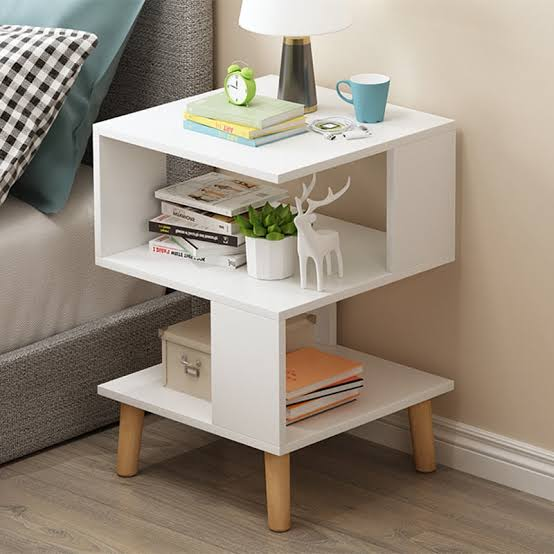
Among all bedside formats, bedroom side tables with drawers stand out for their commercial flexibility. They serve both retail and project channels.
One drawer
A one-drawer configuration is cost-efficient and visually light. It works well in Scandinavian, Japandi, or minimalist programs where open space matters. It also packs efficiently in flat-pack cartons.
Best use:
- entry-level retail
- guest room projects
- compact apartments
- bedside tables thin collections
Weakness:
- limited organization
- weaker premium perception
- lower private-storage capacity
Two drawers
Two drawers remain the safest all-round commercial format. They support everyday storage without making the unit look bulky. They also suit both modern and transitional styling, from beige nightstand programs to black modern nightstand collections.
Best use:
- mainstream retail
- hotel and serviced apartment rooms
- OEM catalog lines
- set-of-two nightstand programs
Commercial advantage:
- easiest to merchandise as “practical + neat”
- familiar to consumers
- balanced structure for panel furniture
Three drawers
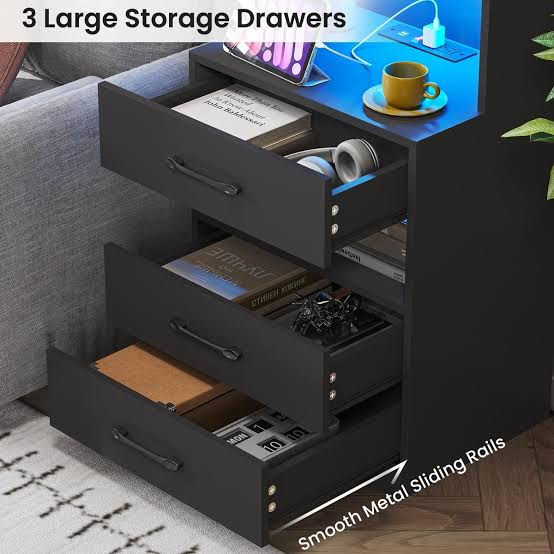
Three drawers can work, but only if the proportions stay disciplined. In many cases, the third drawer pushes the unit toward a small chest rather than a true bedside product. This may help if the market likes a big nightstand, but it can hurt conversion in smaller bedrooms.
Best use:
- larger master bedrooms
- premium residential projects
- markets where extra bedside storage is valued
- some mid century nightstands programs with taller silhouettes
Risk:
- visually heavy
- tip-over risk increases if dimensions and ballast are not controlled
- more hardware cost and more assembly steps

Drawer depth
Many factories over-engineer drawer depth because they assume “deeper is better.” In practice, overly deep drawers waste material and make small items harder to find. For bedside use, functional zoning matters more than maximum volume.
A useful commercial rule is:
- top drawer = shallow, organized essentials
- lower drawer = deeper, flexible storage
- open shelf = books, baskets, devices, decor
Runner choice
Hardware affects perceived quality more than many importers initially expect.
Roller runners
Lower cost, acceptable for entry-level programs, but less refined in motion and durability.
Ball-bearing runners
Smoother feel, stronger extension, more appropriate for better-tier retail and project use.
Soft-close systems
Premium perception, especially relevant for hotel, apartment, and higher-end private label programs.
When buyers compare two similar products online, the drawer action often becomes a hidden decision driver. It may not appear in the hero image, but it shapes reviews, repeat purchases, and claim rates.
4. Thin Bedside Drawers: Tall and Narrow vs Wide and Low
The keyword thin bedside drawers highlights an important design problem. How far can you reduce width before storage performance breaks down?
Tall and narrow
A tall, narrow bedside cabinet saves footprint and works well in compact bedrooms, student housing, and narrow guest rooms. It can also match the current demand for slim-space furniture.
Advantages:
- small footprint
- better fit beside compact beds
- strong visual suitability for urban apartments
- efficient for dorm nightstand programs
Disadvantages:
- reduced top surface
- less stable if height-to-depth ratio is too aggressive
- drawer width becomes limiting for books and larger devices
Commercially, tall and narrow works when the product is clearly positioned as a space-saving solution.
Wide and low
A wider, lower bedside unit feels calmer and more premium. It also gives more room for lamps, decor, and easy-access storage.
Advantages:
- larger top usable area
- better visual balance
- easier to style in photos
- suits big nightstand and premium bedroom programs
Disadvantages:
- consumes more floor area
- larger carton
- may look oversized in small apartments or dorms
Which one converts better
Neither wins universally. The correct answer depends on the room type and the merchandising angle.
Choose thin bedside drawers when the story is:
- compact living
- small-space optimization
- student or urban apartment use
- White or light neutral collections are designed to save space. These include bedside tables in the ikea white style. The message is ‘small but useful.’ IKEA’s current bedside content explicitly emphasizes small-space fit, nearby access, and models with hidden storage. 宜家+2IKEA+2
Choose a big nightstand when the story is:
- luxury bedroom
- high-storage living
- hotel suite or larger apartment
- stronger decorative presence
For OEM development, it is often better to build one platform with two width options. This approach is preferable to forcing one format across all channels.
5. Dorm, Kids’ Room, Guest Room, Hotel, and Apartment: Storage Needs Are Not the Same
Dorm nightstand
A dorm nightstand must earn its footprint. The user often needs phone charging, open access, and low-cost durability. Drawers can be lighter-duty if the price target is strict, but cable management and anti-wobble construction matter more.
Recommended configuration:
- one drawer + one open shelf
- compact width
- easy-clean melamine finish
- flat-pack friendly hardware
Kids’ room
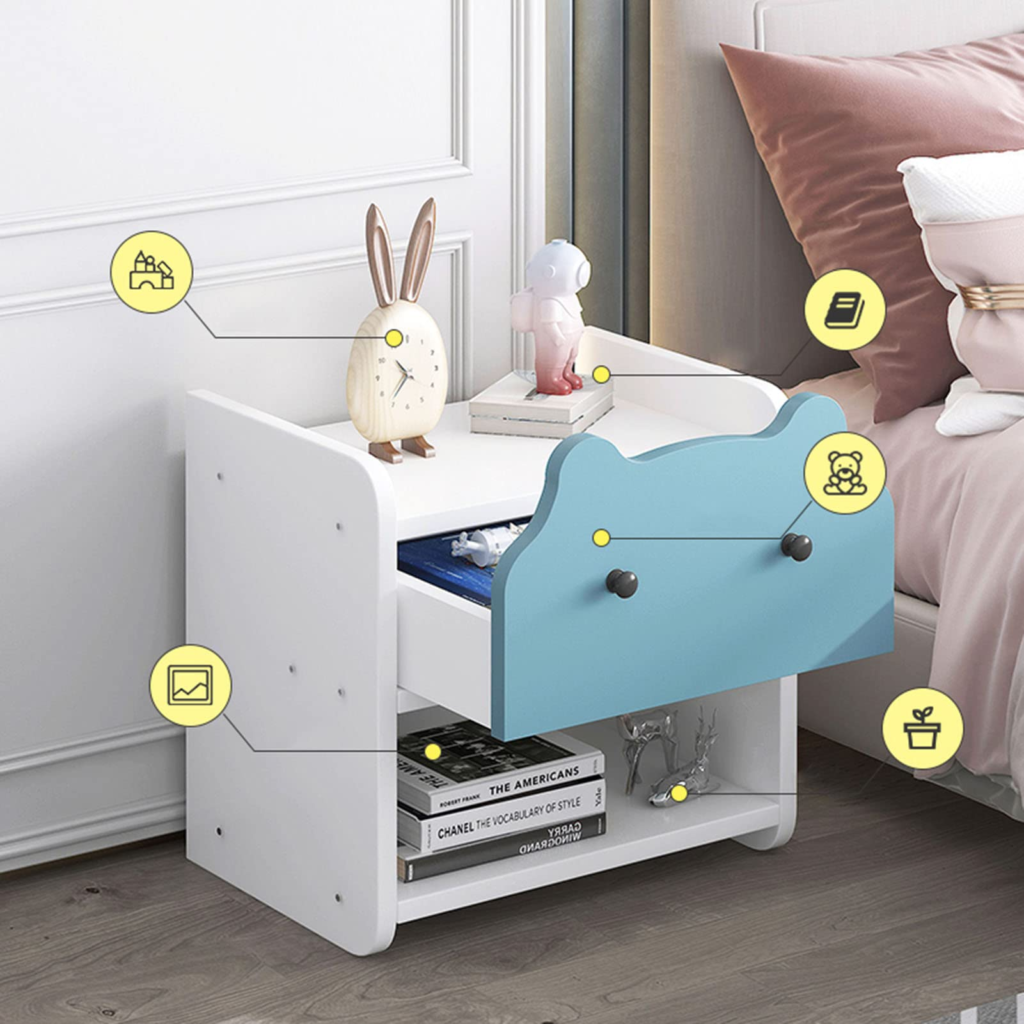
For children’s rooms, safety and stability become more important. In the US market, furniture tip-over prevention is a material compliance consideration, not just a marketing phrase. The CPSC’s Anchor It campaign remains a critical reference for case goods, and U.S. safety attention to furniture stability has increased in recent years. U.S. Consumer Product Safety Commission+2Anchor It+2
Recommended configuration:
- lower center of gravity
- limited full extension on upper-heavy designs
- rounded edge treatment where possible
- clear wall-anchoring instructions
Guest room
Guest rooms usually do not need maximum storage. They need clarity. One or two drawers are enough. The drawer should open smoothly. The top surface should support a lamp and personal item. The overall product should feel intuitive.
Hotel room
Hotels and serviced apartments require more durable specifications. Nightstands are touched every day, often dragged slightly, cleaned frequently, and used by guests unfamiliar with the product. Structure, edging, runner durability, and finish consistency become commercial priorities.
Recommended configuration:
- two drawers
- robust runners
- impact-resistant edging
- coordinated cable or power strategy
- damage-tolerant finish
Apartment and build-to-rent
Apartment projects need the best balance of cost, appearance, and longevity. This is where bedroom side tables with drawers usually outperform open-only units. Residents want hidden storage, and operators want a product that looks organized in staged photography.
Recommended configuration:
- two drawers or one drawer + shelf
- balanced carton size
- interchangeable finishes across bedroom collections
- easy replacement or replenishment in future phases
6. How Factories Balance Strength, Cost, and Flat-Pack Efficiency
Storage design affects not only marketability but also manufacturability.
As a panel furniture exporter, a factory must solve four issues at once:
- structural stability
- carton efficiency
- hardware cost
- assembly complexity
That is why the best OEM/ODM nightstand programs are usually platform-based rather than fully custom in every dimension.
Panel selection
Factories producing bedside cabinets in MDF, particleboard, plywood, or melamine-faced boards must balance finish quality, machining precision, and emission compliance. In the U.S. market, composite wood products must follow EPA formaldehyde emission standards. These are outlined under TSCA Title VI and are directly relevant for bedroom case goods. US EPA+1
Stability
A narrow tall bedside unit may look attractive in renders but become unstable in real use. Buyers should evaluate:
- base depth
- drawer extension limits
- back panel rigidity
- anti-tip provisions where required
Safety is especially important when the product format starts resembling a slim chest rather than a low bedside table. Official U.S. guidance on anchoring furniture remains highly relevant in family-oriented markets. U.S. Consumer Product Safety Commission+1
Hardware rationalization
Factories can protect cost by standardizing:
- one runner family across several SKUs
- common side panel drilling
- shared drawer box dimensions
- common handle spacing across product lines
Flat-pack logic
A storage-rich design only succeeds commercially if it still packs well. Oversized assembled volumes raise freight cost. Overcomplicated knock-down structures raise installation complaints. The most efficient export programs keep the product visually differentiated while preserving repetitive production logic.
This is the real OEM advantage: not merely offering customization, but offering controlled customization.
7. What “Best Nightstands” Reviews Usually Reward
Across current mass-market retail listings, several feature clusters reoccur frequently. These include drawers, open shelves, USB or outlet integration, charging stations, and compact footprints. Current Wayfair, Target, and Walmart listings reveal popular nightstand styles. These styles feature charging capabilities, multiple drawers, and open storage. Target+4Wayfair+4Walmart.com+4
From a conversion standpoint, the evaluation points behind best nightstands usually include the following:
1. Usable storage, not just stated storage
Consumers notice whether drawers actually hold real objects, not just whether the specification says “2 drawers.”
2. Smooth opening and closing
Bad runner feel immediately lowers perceived value.
3. Charging convenience
The market clearly rewards nightstands that address device storage and charging, even if the execution varies by price tier. Wayfair+2Walmart.com+2
4. Size fit
A product that is visually attractive but too wide for compact rooms loses potential buyers.
5. Easy assembly
Especially for e-commerce and flat-pack channels, assembly frustration can erase otherwise strong design value.
6. Sturdiness
A wobbly bedside unit gets punished in reviews. Stability is one of the fastest ways to protect conversion after launch.
7. Finish relevance
Color remains an important conversion filter. Beige nightstand, blue bedside cabinets, black modern nightstand, and colorful nightstands all map to different merchandising strategies. Neutrals usually win broader volume; color variants help niche visibility and collection differentiation.
8. Style recognizability
Search-friendly styles such as mid century nightstands or minimalist white formats give buyers a familiar frame. Recognizable style language helps products surface in search and reduces hesitation.
For B2B exporters, the message is practical: most review pain points are engineering and merchandising issues, not trend issues.
8. How to Adjust Storage Design by Target Market
North America
North American buyers often reward feature-rich, practical furniture. Drawer storage, charging integration, easy assembly, and low-clutter organization perform well. Compliance communication also matters, including anchoring guidance and low-emission materials. U.S. Consumer Product Safety Commission+2US EPA+2
Recommended mix:
- 2-drawer mainstream model
- charging-ready variant
- family-market stable version
- neutral colors plus black walnut option
Europe
European markets often reward compactness, clean design, and space efficiency. Slim bedside formats, light neutrals, and visually lighter silhouettes can convert well, especially in apartments and urban bedrooms.
Recommended mix:
- bedside tables thin
- 1 drawer + open niche
- oak, beige, white, or muted colorway
- smaller footprint, better finish detailing
Middle East
Larger bedroom footprints often allow more decorative bedside formats. A big nightstand or wider two-drawer unit can carry more visual weight and coordinate with larger beds and headboards.
Recommended mix:
- wider format
- drawer-focused design
- premium-look finish package
- coordinated collection styling
Hospitality and serviced apartments
Function, housekeeping durability, and replacement consistency matter more than trend novelty.
Recommended mix:
- 2 drawers
- durable runner spec
- scratch-resistant surfaces
- easy-clean front profile
- standardized dimensions for replenishment
Student housing and build-to-rent
Cost, footprint, and abuse tolerance dominate.
Recommended mix:
- slim body
- one drawer + open shelf
- reinforced KD fittings
- low-maintenance finish
- carton efficiency
9. Final Buying Recommendations
If the goal is broad retail volume, start with a two-drawer bedside cabinet. It is the safest structure for conversion, specification control, and visual balance.
If the goal is compact-space merchandising, develop a slim platform around thin bedside drawers and communicate space-saving value clearly.
If the goal is project furniture for hotel or apartment programs, prioritize runner durability. Focus on surface resistance. Ensure stable proportions are more important than decorative complexity.
If the goal is higher-ticket residential programs, a wider big nightstand with two deep drawers may support stronger perceived value.
Most importantly, do not design nightstands in isolation. Build them as part of a bedroom system. Matching finishes, shared hardware, and common construction logic improve sourcing efficiency and strengthen OEM differentiation.
For buyers looking for export-ready panel furniture, this is where an experienced flat-pack manufacturer adds value. They do so by turning styling intent into a commercially disciplined storage structure. Starwood’s positioning around OEM/ODM, bedroom furniture, and project-ready panel furniture is consistent with that kind of development approach. Flat-Pack Furniture Manufacturer+3Flat-Pack Furniture Manufacturer+3Flat-Pack Furniture Manufacturer+3
Conclusion
Storage design changes conversion because it changes everyday usefulness. The winning bedside cabinet is not always the biggest one, nor the slimmest one. It is the model whose drawer count, depth, footprint, hardware, and merchandising story match the target buyer.
That is the real answer to the question “Thin Bedside Drawers or Big Nightstand?”
Conversion improves when storage is specified by user scenario, channel logic, and project type.
For OEM/ODM buyers, that means the most profitable bedside program is rarely a one-size-fits-all SKU. It is a structured range: slim, standard, and premium-width variants built on a rational production platform.
FAQ
What drawer configuration is best for bedside cabinets?
For most retail and project programs, two drawers are the most commercially balanced option. They provide enough hidden storage without making the unit too bulky.
Are thin bedside drawers good for small apartments?
Yes. Thin bedside drawers work well in compact bedrooms, dorms, and urban apartments, provided stability and usable top surface are maintained.
Is a big nightstand better for hotels or apartments?
A big nightstand can work well in premium apartments, suites, and larger bedrooms. Standard hotel guestrooms usually perform better with balanced two-drawer units. These units do not overwhelm the room.
What matters most in bedroom side tables with drawers?
The most important factors include usable drawer depth and runner quality. Structural stability and easy assembly are also crucial. The size should match the bed and room footprint.
Should OEM buyers add charging features to a bedroom stand?
In many markets, yes. Current retail listings show ongoing demand for charging-ready nightstands. The feature should be integrated cleanly and safely. It should not be added as a gimmick. Wayfair+2Walmart.com+2
What materials are most common for export bedside cabinets?
Panel furniture exporters commonly use MDF, particleboard, plywood, and melamine-faced boards. For U.S.-bound products, compliance with EPA composite wood emission standards is important. US EPA+1
About Us
Starwood Industry Co., Ltd. is a China-based OEM/ODM flat-pack furniture manufacturer founded in 2013. The company supplies export-ready panel furniture for global buyers. Its product lines include bedside cabinets, bedroom furniture, wardrobes, storage units, kitchen cabinets, and bathroom vanities. Starwood serves wholesalers, retailers, and project buyers. It combines CNC production, quality control, and flexible customization. These capabilities support both residential and commercial furniture programs. Visit plywoodmfr.com.