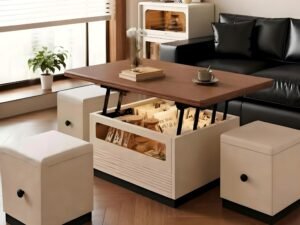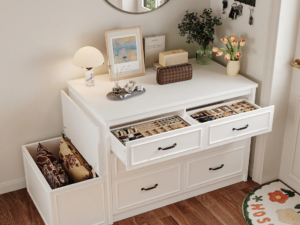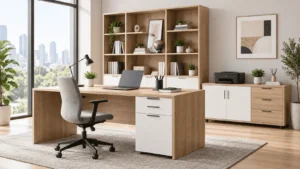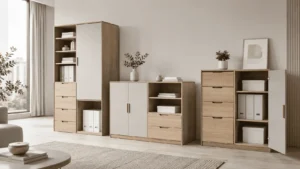
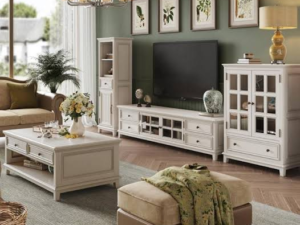
Sourcing OEM living room furniture is not the same as buying standard products from a wholesaler. For importers, project contractors, furniture brands, and hospitality buyers, OEM purchasing is a more strategic process. It involves technical evaluation, commercial planning, compliance awareness, quality control, and production management from the early design stage to final shipment.
For many B2B buyers, living room furniture is a key category because it shapes the visual identity, comfort, and perceived value of a residential or hospitality space. Sofas, coffee tables, TV stands, side tables, lounge chairs, and storage units are often central to apartment packages, hotel room concepts, serviced residences, and branded furniture collections. That is why choosing the right OEM supplier matters far more than simply comparing prices.

A professional OEM furniture manufacturer should do more than reproduce a reference image. The supplier should be able to understand structure, recommend materials, control cost, manage MOQs, protect goods during export, and maintain consistency across repeat orders. This is particularly important for buyers managing hotel rollouts, apartment projects, or private label programs that depend on stable quality and reliable scheduling.
This guide explains 9 essential facts buyers should understand before placing an order for OEM living room furniture. If you are evaluating a custom sofa supplier, developing private label furniture, or sourcing for a hotel or apartment project, these points will help you reduce risk and make better decisions.
Table of Contents
- What OEM living room furniture means in B2B sourcing
- Why OEM is the right fit for many buyers
- Application scenarios for hotel, apartment, and brand projects
- Material selection affects more than appearance
- MOQ should be discussed early and clearly
- Lead time depends on process, not just production
- Packaging is part of product quality
- Quality control must begin before final inspection
- The right OEM supplier should improve your buying process
- FAQ
- Conclusion
1. What OEM Living Room Furniture Means in B2B Sourcing
In furniture exporting, OEM usually means the factory manufactures products according to the buyer’s specifications, branding requirements, technical drawings, reference samples, or performance expectations. The buyer may provide a concept, a mood board, CAD drawings, size requirements, or a ready sample. The manufacturer then develops the product for sample approval and bulk production.
This model is widely used by importers, e-commerce brands, furniture distributors, apartment furnishers, and hotel project buyers because it allows greater control over design, dimensions, materials, packaging, and cost structure. Instead of choosing from a fixed catalog, buyers can create a product line that fits their own market.
For example, one buyer may want a compact fabric sofa for serviced apartments, while another may need veneer TV consoles and lounge chairs for hotel suites. Both projects can fall under OEM living room furniture, but the technical requirements, packaging methods, and order logic may be very different.
The key point is this: OEM is not only about customization. It is about converting your commercial objectives into repeatable manufacturing standards.
2. Why OEM Is the Right Fit for Many Buyers
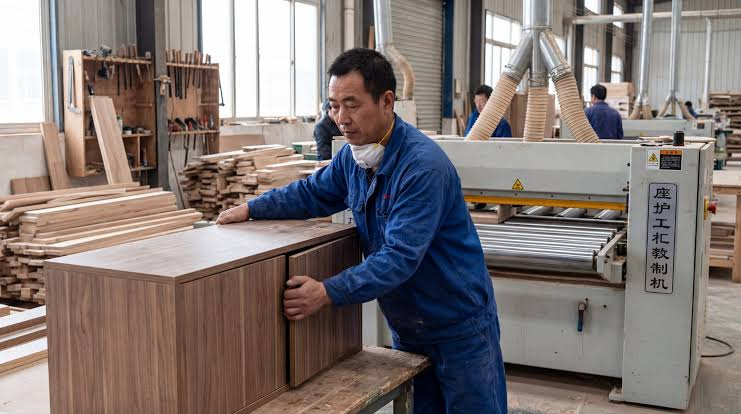
Many B2B customers choose OEM because standard wholesale products do not fully meet their market needs.
Private label furniture buyers
If you sell under your own brand, catalog products limit differentiation. OEM gives you the ability to control dimensions, styling, finish combinations, labels, and packaging. This helps you build stronger brand consistency across a living room collection.
Hotel and apartment project buyers
Project procurement often requires furniture that matches a defined interior concept, fits room dimensions, and arrives with coordinated packaging and labeling. Standard products may not suit the design intent, usage level, or installation sequence of a project.
Importers balancing design and cost
Some buyers already know the look they want, but the original reference product is too expensive. An experienced OEM supplier can optimize structure, materials, and packing configuration to support better landed cost without losing the intended appearance.
Long-term repeat purchasing
Once a sample is approved, OEM makes it easier to reorder products with the same construction logic, finish standards, and packaging rules. This is especially useful for repeat project programs and branded distribution.
3. Application Scenarios for Hotel, Apartment, and Brand Projects
OEM living room furniture is used in several practical B2B scenarios.
Hotel projects
Hotels often need sofas, lounge chairs, coffee tables, media units, and occasional tables that support a designed guest experience while remaining durable under frequent use. Buyers usually focus on finish consistency, upholstery performance, dimensional coordination, and dependable delivery.
Serviced apartments and rental units
Apartment furnishing programs often emphasize space efficiency, cost control, modularity, and installation speed. Buyers may prefer knock-down furniture, easy-to-clean upholstery, compact dimensions, and standardized product packages.
Branded furniture importers
Distributors and retailers using private label strategies need product exclusivity, consistent branding, and commercial flexibility. OEM helps these buyers build collections that look unified across multiple SKUs.
Public areas and lounge spaces
Lobby seating, reception furniture, and amenity-area products may require upgraded comfort, reinforced construction, and stronger packaging because of heavier commercial use.
These use cases share one common need: they require more than basic production. They require planning, coordination, and manufacturing discipline.
4. Material Selection Affects More Than Appearance
One of the most important decisions in OEM furniture development is material selection. Buyers should never approve a project only from photos or a general description.
Panel materials
For coffee tables, TV stands, sideboards, and storage pieces, common options include particle board, MDF, and plywood. Each has different cost, strength, machining performance, and finishing characteristics. Material choice also affects compliance requirements in many markets.
For buyers serving the U.S. market, the EPA explains that composite wood products and finished goods containing hardwood plywood, MDF, and particleboard are regulated under TSCA Title VI formaldehyde standards. California’s CARB composite wood program is also a widely recognized benchmark for emission compliance. These references are especially relevant when furniture includes composite wood panels or panel-based components.
Natural wording you can directly keep in the article:
When selecting panel-based furniture, buyers should confirm whether the supplier understands low-emission requirements for regulated markets. The U.S. EPA’s TSCA Title VI guidance and California CARB’s composite wood program are both important references for finished goods containing MDF, particleboard, or hardwood plywood.
Solid wood and veneer
For mid-range and premium products, buyers often use oak, ash, walnut veneer, or engineered veneer surfaces. It is important to confirm not only the wood species, but also veneer thickness, substrate type, stain consistency, and surface finishing performance.
Upholstery materials
For sofas and lounge chairs, upholstery directly affects maintenance, comfort, and brand positioning. Buyers should confirm whether the fabric is standard polyester, linen-look fabric, performance fabric, PU, genuine leather, or buyer-supplied material. For hospitality projects, abrasion resistance, cleanability, and color consistency are particularly important.
Foam and seating comfort
Foam density has a major effect on comfort and long-term resilience. Buyers should request clear seating specifications rather than relying on general statements such as “high-density foam.”
Responsible sourcing
If sustainability matters to your brand or client, chain-of-custody transparency is useful. FSC states that chain-of-custody certification verifies how forest-based materials are tracked along the supply chain into finished goods, which makes it highly relevant for furniture purchasing programs that emphasize responsible sourcing.
Natural wording you can keep:
If your brand promotes responsible sourcing, ask whether your supplier can support FSC chain-of-custody aligned materials for applicable products.
5. MOQ Should Be Discussed Early and Clearly
MOQ is often one of the first commercial questions buyers ask, but it is frequently misunderstood. MOQ is not determined by product type alone. It can be affected by material procurement, carton printing, finish setup, upholstery yield, hardware sourcing, and production efficiency.
For example, a standard panel TV stand based on an existing structure may have a lower MOQ than a fully customized sofa using buyer-nominated fabric and custom carton artwork.
Buyers should separate MOQ into at least three categories:
Product MOQ
What is the minimum quantity per SKU?
Finish or color MOQ
What is the minimum quantity per fabric color, veneer tone, or surface finish?
Trial order MOQ
Can the supplier support a mixed order, pilot project, or initial launch quantity before a full production run?
For hotel and apartment projects, MOQ may become more flexible if multiple furniture pieces are grouped into a larger project order. That is why it is important to discuss the total sourcing plan, not just one item in isolation.
A good supplier should explain MOQ logic clearly instead of giving only a simple number.
6. Lead Time Depends on Process, Not Just Production
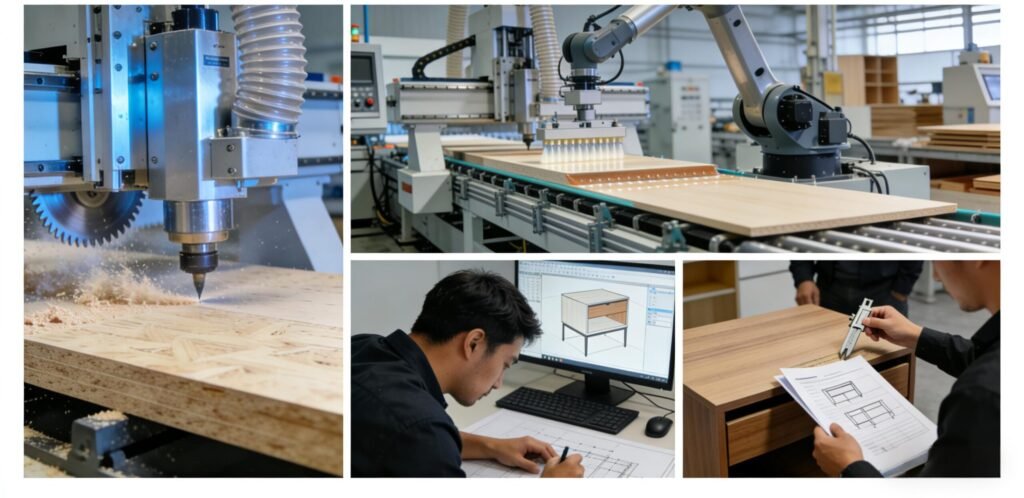
Many buyers ask for the “production lead time,” but OEM furniture lead time should be viewed as a complete process.
A realistic timeline often includes:
- requirement clarification
- quotation and drawing confirmation
- sample development
- material sourcing
- bulk production
- inspection
- packing
- container loading
- international transit
If you are sourcing OEM living room furniture for a hotel opening, apartment delivery deadline, or promotional launch, every stage matters.
What can affect lead time?
- new product development versus existing design adaptation
- standard materials versus custom materials
- buyer-supplied fabric
- finish approval speed
- order complexity
- production capacity
- packaging requirements
- inspection timing
This is why experienced buyers ask for milestone-based schedules rather than one general lead-time promise. A supplier who can break the process into clear steps is usually easier to work with on repeat business.
7. Packaging Is Part of Product Quality
For export orders, packaging should be treated as part of the product, not an afterthought. Poor packaging leads to transit damage, site confusion, warehouse inefficiency, and unexpected replacement costs.
Common packaging options for export furniture
- standard export cartons
- foam wrap and corner protection
- woven bags for legs or hardware
- KD packing for panel furniture
- palletized shipping where required
- printed cartons for retail or project identification
- carton marks with SKU, room code, or purchase order reference
Why packaging matters for apartment and hotel projects
Project deliveries often require room-by-room installation, phased unloading, or clear site coordination. Carton marks, assembly instructions, and grouped packaging can reduce installation mistakes and save time on site.
Why packaging matters for distributors
Distributors may need retail labeling, barcode systems, logo cartons, or mixed-container planning. In these cases, packaging directly affects downstream handling.
A capable supplier should discuss packaging at the quotation stage, especially when products are fragile, upholstered, knock-down, or intended for e-commerce or project installation.
8. Quality Control Must Begin Before Final Inspection

One of the most common sourcing mistakes is relying only on final inspection. In OEM furniture, quality consistency depends on process control from the beginning.
Pre-production review
Before bulk production starts, the factory should reconfirm approved drawings, finish swatches, hardware standards, carton requirements, and any special instructions. This is the stage where many preventable mistakes can still be corrected.
Inline inspection
During production, the team should check frame accuracy, panel machining quality, veneer matching, upholstery stitching, surface finish, and dimensional consistency.
Final inspection
Before shipment, finished goods should be checked for workmanship, measurements, labeling accuracy, packing completeness, and visible defects.
Loading supervision
For larger orders, loading review helps verify quantities, packing method, and container arrangement.
For commercial buyers, it is also useful to understand industry reference frameworks. BIFMA states that it develops and maintains furniture safety, performance, and sustainability standards, which makes it a useful reference point when discussing testing expectations and commercial furniture requirements.
Natural wording you can keep:
For project and commercial buyers, familiarity with recognized standards such as BIFMA can help when discussing durability, safety, and sustainability expectations with a manufacturer.
9. The Right OEM Supplier Should Improve Your Buying Process
Price matters, but it should not be the only reason to choose a supplier. The best OEM partner improves your whole sourcing process.
A strong manufacturer should be able to:
- understand drawings and reference samples
- identify risk points before sampling
- suggest material and structure alternatives
- explain cost drivers clearly
- manage samples professionally
- support export documentation and packaging
- maintain quality consistency
- communicate efficiently during production
- support repeat orders with traceable specifications
This is especially important for buyers handling private label furniture, hospitality projects, apartment furnishing programs, or multi-SKU living room collections. In these cases, the supplier is not simply making furniture. They are helping you build a repeatable supply chain.
When evaluating a supplier, ask practical questions:
- Can they engineer your concept, not just copy a photo?
- Can they balance quality and target cost?
- Can they explain MOQ and lead-time logic?
- Can they support export packing and labeling requirements?
- Can they maintain approved sample standards in bulk production?
If the answer is yes, the supplier is far more likely to become a dependable long-term partner.
When evaluating panel-based living room furniture for export markets, buyers should understand the compliance expectations for composite wood materials. The U.S. market commonly references the EPA’s TSCA Title VI guidance for composite wood products, while California buyers may also pay close attention to the CARB composite wood products program. For buyers with sustainability goals, the FSC chain-of-custody framework is a useful reference for responsible sourcing. In commercial furniture discussions, recognized industry benchmarks such as the BIFMA standards overview and BIFMA sustainability framework can also help buyers discuss product expectations more professionally. These sources are commonly used as references for compliance, sourcing transparency, and commercial furniture performance expectations. The EPA page covers TSCA Title VI composite wood rules for regulated panels and finished goods, CARB explains California’s composite wood emissions program, FSC explains chain-of-custody certification, and BIFMA outlines safety, performance, and sustainability standards for furniture.
Conclusion
Buying OEM living room furniture successfully requires more than finding a factory with competitive pricing. Buyers need a manufacturing partner that understands product development, material selection, MOQ planning, lead-time management, export packaging, and quality control.
Whether you are sourcing for a furniture brand, a distributor program, a hotel project, or an apartment installation, the best results come from a structured OEM process. Clear requirements, approved samples, defined packaging rules, and disciplined production control all help reduce risk and improve order consistency.
For professional buyers, OEM is not simply a purchasing method. It is a way to create products that better fit your market, your project, and your brand.
Planning an OEM furniture project? Send us your drawings, quantities, target materials, and packaging requirements for a fast quotation.
You can also explore our OEM/ODM services, browse our living room furniture collection, or visit our FAQ page for more sourcing information.