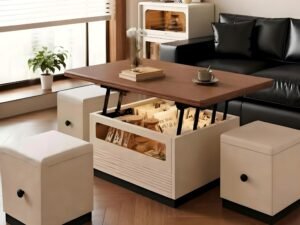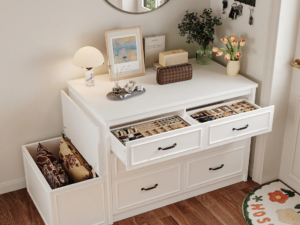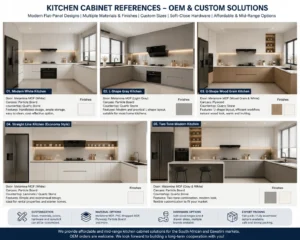

OEM Plywood Furniture Factory
For importers, contractors, hotel purchasing teams, apartment developers, and furniture brands, choosing the right OEM plywood furniture factory is not only about price. It is about whether the factory can consistently deliver the right product structure, compliance documents, project coordination, and export execution for large-volume B2B orders.
In commercial furnishing, plywood furniture remains one of the most practical choices because it balances structural stability, finish flexibility, cost control, and mass-production efficiency. Whether the requirement is for hotel guestrooms, serviced apartments, student housing, rental properties, or retail furniture programs, plywood can support a wide range of designs from modern flat-pack collections to fully assembled contract furniture.

A reliable OEM factory should do more than manufacture panels. It should help buyers solve project-level questions: Which plywood grade is suitable for hospitality? What finish performs better in high-turnover apartments? What MOQ is realistic for custom orders? How should products be packed for container loading and site installation? What certifications or compliance standards matter in export markets?
This guide explains what B2B buyers should look for when sourcing from a plywood furniture manufacturer, and how a capable OEM/ODM supplier can reduce procurement risk while improving product consistency and delivery performance.
Table of Contents
- Why B2B buyers choose an OEM plywood furniture factory
- Common application scenarios for plywood furniture
- Why plywood is suitable for commercial furniture projects
- Materials and construction options
- OEM vs. ODM: what buyers need to know
- Customization scope for project buyers
- MOQ expectations for bulk orders
- Production lead time and capacity planning
- Packaging standards for export furniture
- Compliance, sustainability, and buyer confidence
- Quality control process in plywood furniture manufacturing
- Typical OEM workflow from inquiry to shipment
- How to evaluate a plywood furniture supplier
- Why long-term buyers prefer structured OEM partners
- FAQ
- Conclusion and CTA
Why B2B Buyers Choose an OEM Plywood Furniture Factory
Many B2B buyers do not need off-the-shelf furniture. They need furniture that matches a project budget, room layout, material standard, brand language, and installation schedule. That is why OEM manufacturing is often the preferred approach.
An OEM plywood furniture factory allows buyers to customize dimensions, board thickness, finishes, hardware, packaging, and branding based on the end-use market. For hotel groups, this may mean standardized room furniture across multiple properties. For apartment developers, it may mean practical and durable casegoods for repeatable unit layouts. For furniture brands, it may mean turning a concept, technical drawing, or sample into a scalable product line.
Compared with small workshops or trading-only suppliers, a true manufacturing partner typically offers stronger control over production planning, raw material selection, quality checkpoints, and project communication. That matters when orders involve hundreds or thousands of units, mixed SKUs, or phased deliveries.
Common Application Scenarios for Plywood Furniture
Plywood furniture is widely used in B2B furnishing because it adapts well to both design-driven and cost-sensitive projects.
Hotel Furniture
Hotels often require coordinated furniture packages for guestrooms, public areas, suites, and staff spaces. Typical products include headboards, bedside tables, desks, TV units, wardrobes, luggage benches, vanities, and dining furniture. Buyers usually focus on finish consistency, durability, edge protection, and easy on-site installation.
Apartment Furniture
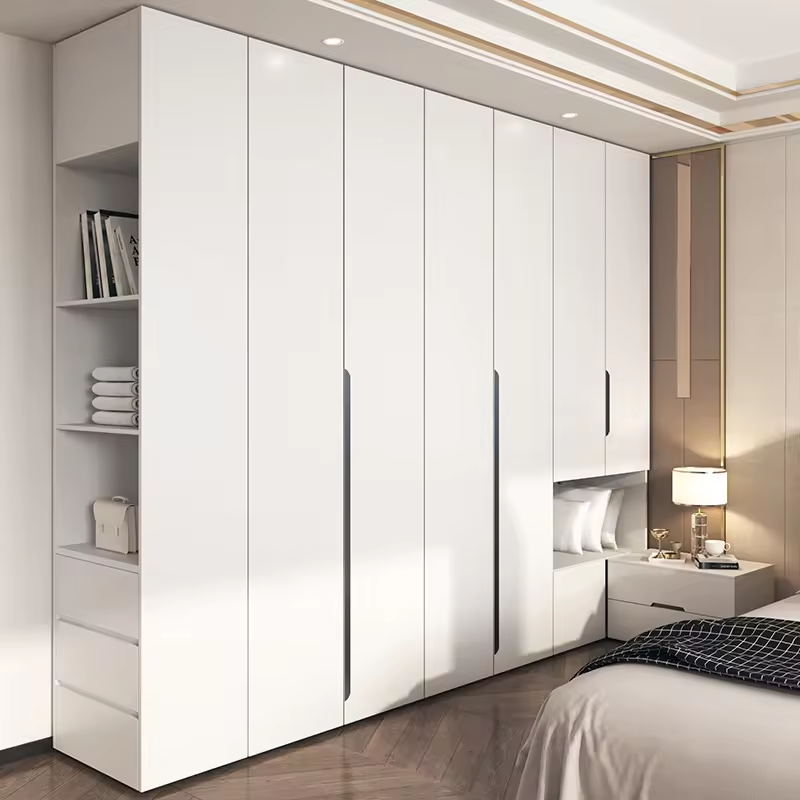
For apartments, serviced residences, and rental housing, buyers often prioritize functionality, stable supply, and optimized packaging. Wardrobes, kitchen cabinets, study desks, beds, shoe cabinets, dining tables, and storage units can all be developed in plywood structures with laminate, melamine, or veneer finishes.
Commercial and Institutional Projects
Plywood furniture is also widely used for offices, student accommodation, retail environments, and mixed-use developments. Its dimensional stability and surface flexibility make it suitable for both standardized and customized applications.
Brand and Wholesale Programs
Importers and furniture brands frequently work with OEM factories to launch private-label collections. In these cases, the supplier must support design confidentiality, repeated production, sample refinement, and packaging branded to the customer’s distribution model.
Why Plywood Is Suitable for Commercial Furniture Projects
For project buyers, plywood offers a strong balance of performance and manufacturing flexibility.
First, plywood is engineered by bonding multiple layers of veneer, which helps improve dimensional stability compared with many solid wood applications. This makes it practical for wardrobes, cabinets, tables, shelving, and panel-based furniture in climates where humidity variation affects product performance.
Second, plywood supports multiple finishing methods. Buyers can choose natural veneer, HPL, melamine-faced surfaces, paint systems, or decorative laminates depending on the design direction and target price point.
Third, plywood works well for both knock-down and assembled furniture. This is important for exporters serving container-efficient flat-pack programs as well as projects that require factory assembly before shipment.
Finally, plywood can be aligned with low-emission requirements when compliant materials are specified. In the U.S., composite wood products including hardwood plywood are regulated under EPA TSCA Title VI, which covers formaldehyde emission standards for applicable materials and finished goods. Buyers sourcing for the U.S. market often review this as part of supplier qualification.
Materials and Construction Options
Not all plywood furniture is built the same. Professional buyers should review material details early in the quotation stage.
Core Material
Depending on the product and market, factories may use hardwood plywood, birch plywood, eucalyptus plywood, poplar-core plywood, or other engineered boards combined with plywood structures. Material choice affects screw holding strength, weight, durability, and price.
Surface Finish
Common options include:
- Melamine paper finish for economical apartment programs
- HPL for higher wear resistance in hospitality and commercial settings
- Natural wood veneer for premium visual appeal
- PU or water-based painting systems for custom color programs
- Decorative laminate for modern project aesthetics
Edge Banding
High-quality edge banding is critical for furniture durability, especially in hotel and rental environments. Good edge sealing reduces chipping, improves appearance, and helps protect exposed panel edges.
Hardware
Project buyers should confirm hinge brands, drawer slides, connectors, adjustable feet, hanging rails, and anti-tip systems where relevant. Hardware consistency has a direct impact on installation time and after-sales performance.
Structural Design
A capable OEM factory should optimize joinery and panel engineering for the intended market. Flat-pack export furniture often requires robust KD fittings and clear assembly logic. Fully assembled products require stronger protective packaging and container space planning.
OEM vs. ODM: What Buyers Need to Know
B2B buyers often use the terms OEM and ODM interchangeably, but the working model is different.
OEM means the buyer provides the product concept, technical drawing, reference sample, or brand requirement, and the factory manufactures according to that specification.
ODM means the factory already has existing designs or engineering platforms that can be adapted for the buyer with changes to size, finish, packaging, logo, or hardware.
For many importers, the ideal supplier supports both. Some buyers want full design ownership. Others want to shorten development time by modifying factory-developed structures. In hospitality and apartment projects, a hybrid approach is common: standard carcass engineering with project-specific dimensions and finish customization.
Customization Scope for Project Buyers
A strong OEM plywood furniture factory should be able to customize more than appearance. True project support usually includes:
Dimension Customization
Room size and layout vary by property and market. The factory should adapt width, depth, height, storage layout, and installation constraints.
Material and Finish Matching
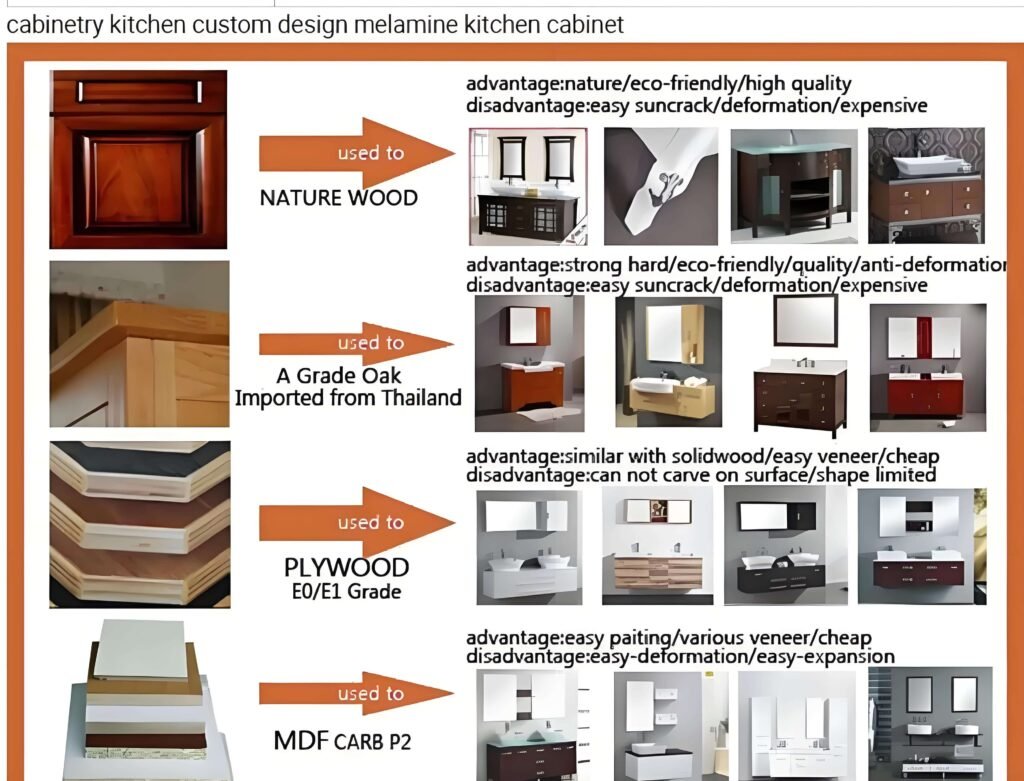
Buyers often need a finish collection coordinated across wardrobes, desks, cabinets, dining furniture, and occasional furniture. Sample approval should include board, edge, texture, gloss level, and color matching.
Hardware Specification
For projects, hardware should be selected based on usage frequency, service environment, and budget level.
Packaging Customization
Different buyers need different packaging logic. Retail channels may need branded cartons. Apartment projects may need unit-based labeling. Wholesale container programs may prioritize loading efficiency and damage prevention.
Branding and Documentation
Private-label clients may require branded labels, manuals, carton marks, QC records, and shipping marks aligned with their internal systems.
MOQ Expectations for Bulk Orders
MOQ in furniture manufacturing depends on product complexity, finish type, and whether the order uses standard materials or custom-developed components.
For B2B buyers, MOQ is usually not just one number. It may vary by SKU, finish, hardware combination, or packaging requirement. A standard product with existing material stock can often be quoted with a lower MOQ, while a customized hotel or apartment collection may require a higher starting quantity to make production efficient.
A practical OEM supplier should explain MOQ clearly during quoting instead of giving vague answers. Buyers should ask:
- Is MOQ per item, per finish, or per order?
- Can multiple SKUs be combined in one container?
- Can sample costs be credited into a mass order?
- Does MOQ change if standard hardware or standard finishes are used?
For long-term cooperation, some factories offer flexible pilot-run quantities before scaling into larger repeat orders.
Production Lead Time and Capacity Planning
Lead time is one of the most important issues for project buyers. Delays affect installation schedules, room turnover, cash flow, and launch timing.
In general, sample development takes less time when drawings are complete and finish references are clear. Mass production timing depends on raw material readiness, order volume, production schedule, and whether the order includes new tooling or packaging development.
For hotel and apartment projects, buyers should confirm:
- Sample lead time
- Material approval time
- Production lead time after deposit and sample confirmation
- Container booking window
- Peak season risks
- Partial shipment options for phased projects
A reliable OEM plywood furniture factory should also provide realistic capacity planning. Overpromising is one of the biggest risks in overseas sourcing. Buyers should prefer suppliers that communicate a workable production calendar rather than a sales-driven estimate.
Packaging Standards for Export Furniture
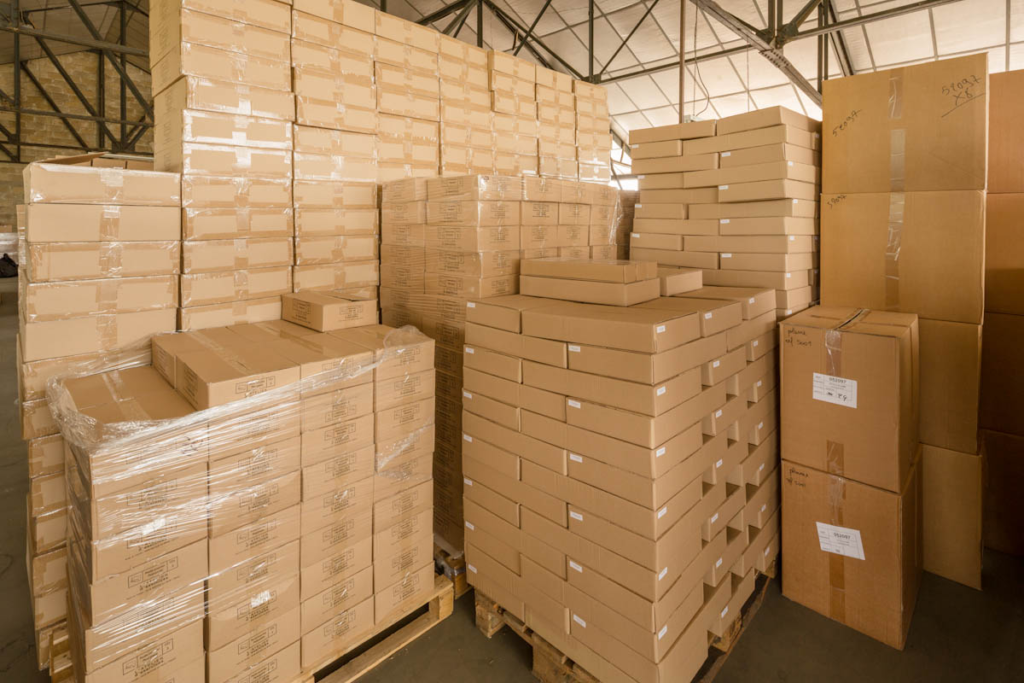
Export packaging is not a secondary issue. For many buyers, it is one of the key indicators of factory professionalism.
Good packaging reduces transportation damage, protects corners and edges, keeps hardware organized, and simplifies unloading and installation. Depending on the product, packaging may include foam sheets, poly bags, honeycomb board, corner protectors, carton reinforcement, palletization, or wooden supports where needed.
For international shipments using wood packaging materials, buyers may also pay attention to ISPM 15 requirements, which govern treatment and marking of wood packaging material used in international trade.
For importers into the U.S., wood and composite material sourcing can also intersect with Lacey Act declaration requirements depending on the product category and implementation scope. APHIS notes that additional imported wood-related products have been phased into declaration requirements, including certain products containing composite materials.
Common Packaging Expectations in B2B Orders
- Knock-down structure for container efficiency
- Item codes and carton labels for warehouse receiving
- Installation instructions for project sites
- Spare hardware packs
- Drop-test-conscious protection for distribution channels
- Clear shipping marks for mixed-SKU projects
Compliance, Sustainability, and Buyer Confidence
For serious buyers, compliance is part of risk management. A factory should understand which standards matter for the target market and be ready to support document review.
For wood-based furniture, buyers often ask about formaldehyde emissions, timber sourcing, sustainability, and performance expectations. In California, the CARB composite wood products program regulates formaldehyde emissions for hardwood plywood, particleboard, MDF, and finished goods containing them.
For environmentally conscious projects or brand positioning, buyers may also prefer factories that support responsibly sourced materials. FSC chain-of-custody certification is widely used to demonstrate that forest-based materials are tracked through the supply chain, and FSC specifically highlights its relevance for furniture manufacturers.
On the performance side, commercial buyers often refer to industry-recognized furniture standards. BIFMA maintains safety, performance, and sustainability standards relevant to furniture products, which can be helpful when buyers assess durability expectations for commercial environments.
These references matter because they show whether a supplier understands project-level compliance instead of only focusing on production cost.
Quality Control Process in Plywood Furniture Manufacturing
A dependable OEM plywood furniture factory should have a defined QC process, not just a final inspection before shipment.
Incoming Material Inspection
Raw boards, veneers, laminates, hardware, adhesives, and packaging materials should be checked against approved specifications.
In-Process Inspection
Panel cutting, drilling, edge banding, finishing, and assembly should be inspected during production. This helps catch dimension errors, finish defects, hardware mismatch, or structural issues before packing.
Pre-Packing Review
Before packing, the factory should verify appearance, function, labeling, and accessory completeness.
Final Inspection
For export orders, final inspection often includes carton marking review, quantity verification, workmanship checks, and random assembly testing where needed.
Documentation
Professional buyers often request sample approval records, production photos, packing lists, and inspection reports, especially for hotel and apartment projects.
Typical OEM Workflow From Inquiry to Shipment
A structured supplier usually follows a process like this:
1. Inquiry and Requirement Review
The buyer shares drawings, reference images, quantities, target market, required finishes, and delivery timing.
2. Technical Evaluation and Quotation
The factory reviews feasibility, materials, construction logic, MOQ, packaging method, and price structure.
3. Sample Development
Prototype or finish samples are produced for approval. At this stage, dimensions, materials, and structural details are refined.
4. Confirmation of Commercial Terms
Both sides confirm price, lead time, payment terms, packaging, labeling, and shipping method.
5. Mass Production
The factory schedules materials, production lines, and QC checkpoints based on approved samples.
6. Inspection and Packing
Finished products are inspected, packed, labeled, and prepared for shipment.
7. Shipping and After-Sales Support
The supplier provides export documents, container loading information, and post-delivery support for installation or quality feedback.
For B2B furniture sourcing, this workflow matters because it reduces misunderstanding and gives buyers traceable control points throughout the order.
How to Evaluate a Plywood Furniture Supplier
When comparing suppliers, buyers should look beyond the unit price.
Ask whether the factory can show:
- Real production capability, not only a catalog
- Experience in hotel, apartment, or contract furniture
- Stable raw material sourcing
- Clear QC checkpoints
- Export packaging experience
- OEM/ODM project references
- Communication speed and technical response quality
- Ability to support repeat orders and finish consistency
A low quote without engineering control often creates higher total cost later through defects, delays, packaging damage, or site installation problems.
Why Long-Term Buyers Prefer Structured OEM Partners
In repeat purchasing, the best supplier is usually not the cheapest initial quote. It is the one that can keep specifications stable, solve problems quickly, and support scaling.
For importers and project buyers, long-term value comes from:
- Stable product quality
- Predictable lead times
- Controlled packaging damage rate
- Better engineering suggestions
- More efficient repeat ordering
- Improved cost planning over time
A structured OEM plywood furniture factory becomes part of the buyer’s supply chain, not just a one-time vendor.
You can also explore our related product category here: Dining Room Furniture.
FAQ
What is an OEM plywood furniture factory?
An OEM plywood furniture factory manufactures furniture according to a buyer’s specifications, including design, dimensions, materials, finishes, hardware, packaging, and branding requirements.
What types of projects are suitable for plywood furniture?
Plywood furniture is widely used in hotels, apartments, serviced residences, rental housing, offices, student accommodation, and wholesale furniture programs.
Can plywood furniture be customized for hotel and apartment projects?
Yes. A professional manufacturer can customize dimensions, finishes, hardware, packaging, labeling, and structural details based on room layouts and project requirements.
What is the usual MOQ for custom plywood furniture?
MOQ depends on the product type, finish, and level of customization. In B2B furniture manufacturing, MOQ may be calculated per item, per finish, or per total order.
How long does OEM plywood furniture production take?
Lead time varies by order size, customization scope, and material readiness. Buyers should confirm sample timing, production schedule, and shipment planning before placing an order.
What compliance points should overseas buyers review?
Depending on the market, buyers may review formaldehyde emission compliance, responsible wood sourcing, furniture performance expectations, and packaging requirements for international shipment. Relevant references often include EPA TSCA Title VI, CARB, FSC, and BIFMA.
Conclusion
Choosing the right OEM plywood furniture factory means choosing a supplier that understands more than manufacturing. The right partner should understand commercial use, project schedules, export packaging, compliance expectations, and repeat-order consistency.
For B2B buyers in hospitality, apartment, and commercial furnishing, plywood furniture offers a practical solution that combines design flexibility, scalable production, and cost efficiency. But the success of the project depends on how well the supplier controls materials, engineering, packaging, and communication from sampling to shipment.
If you are looking for a reliable plywood furniture manufacturer for bulk orders, custom development, or OEM/ODM cooperation, work with a factory that can support your product requirements from design review to export delivery.
Request a quote now for bulk and custom orders.
Authoritative Industry References
For buyers evaluating OEM plywood furniture suppliers, the following industry resources may help with compliance review, material standards, sustainability assessment, and export packaging requirements.
EPA TSCA Title VI formaldehyde standards
Reference for formaldehyde emission standards for composite wood products in the U.S. market.
https://www.epa.gov/formaldehyde/formaldehyde-emission-standards-composite-wood-products
CARB composite wood products program
California compliance reference for composite wood products and formaldehyde emission requirements.
https://ww2.arb.ca.gov/our-work/programs/composite-wood-products-program
FSC furniture sourcing
Useful reference for buyers who want to understand responsible wood sourcing in furniture manufacturing.
https://fsc.org/en/businesses/furniture
FSC chain-of-custody certification
Guidance on supply chain traceability for certified wood-based materials.
https://fsc.org/en/chain-of-custody
BIFMA standards overview
General reference for commercial furniture safety and performance standards.
https://www.bifma.org/page/standardsoverview
BIFMA e3 sustainability standard
A recognized sustainability benchmark often used in commercial furniture evaluation.
https://www.bifma.org/page/e3-sustainability
IPPC guidance on ISPM 15 wood packaging
Important reference for international wood packaging material requirements in export shipments.
https://www.ippc.int/en/news/ippc-publishes-new-guide-on-wood-packaging-material/
USDA APHIS Lacey Act declaration guidance
Useful guidance for importers reviewing declaration requirements related to wood and plant-based products.
https://www.aphis.usda.gov/plant-imports/file-lacey-act-declaration
These references are provided for informational purposes and can help importers, project buyers, and sourcing teams better understand key standards when purchasing plywood furniture for hotels, apartments, and commercial projects.