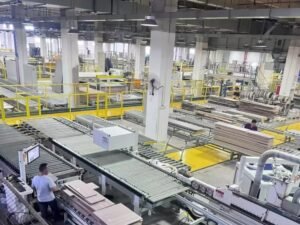
When B2B buyers search for a reliable flat pack furniture manufacturer in China, the real question is not only who can offer a lower price. The better question is: which factory can deliver stable quality, clear communication, export-safe packaging, and dependable production for repeat business.
For importers, wholesalers, e-commerce furniture brands, hotel contractors, apartment developers, and project procurement teams, the wrong supplier can create expensive problems. Delayed samples, inconsistent finishes, missing hardware, broken panels during shipping, or poor carton design can quickly turn a “competitive quote” into a costly sourcing mistake.
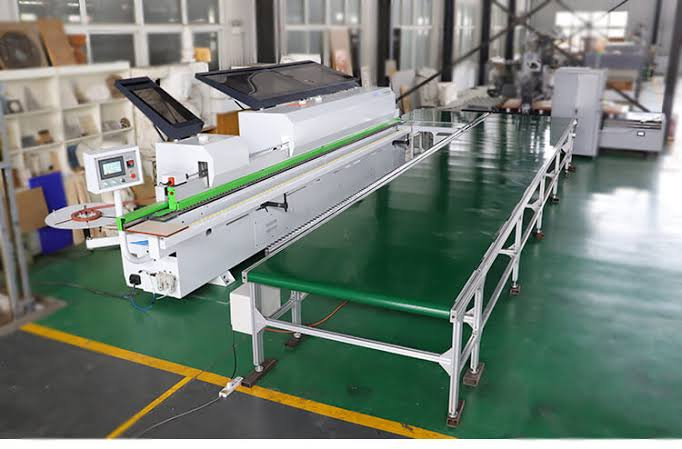
That is why experienced buyers evaluate more than catalog photos. They review the manufacturer’s actual product range, panel material options, OEM and ODM capability, packaging standards, project experience, lead-time control, and communication process before placing an order.
At Starwood, the current site positioning already highlights what serious overseas buyers care about most: OEM & ODM panel furniture manufacturing, export-standard flat-pack packaging, advanced CNC production, engineered panel materials, and product solutions for bedrooms, kitchens, living rooms, home offices, kids’ rooms, and space-saving applications. The company also states a minimum order quantity of 1 container, which is a practical starting point for many wholesale and project orders.
In this guide, we will walk through 12 smart checks that help buyers choose the right China furniture factory for wholesale supply, apartment furnishing, hotel procurement, and OEM/ODM furniture development.
Table of Contents
- Why reliability matters more than low price
- Check #1: Confirm the factory’s real product focus
- Check #2: Review OEM and ODM capability carefully
- Check #3: Understand panel materials and compliance expectations
- Check #4: Evaluate CNC and production capability
- Check #5: Check customization depth, not just “custom available”
- Check #6: Ask about MOQ, sample policy, and order structure
- Check #7: Verify lead time control and production planning
- Check #8: Inspect export packaging details
- Check #9: Review quality control process
- Check #10: Confirm project experience for hotels and apartments
- Check #11: Test communication speed and technical clarity
- Check #12: Review long-term partnership potential
- FAQ
- Final CTA
Why Reliability Matters More Than Low Price
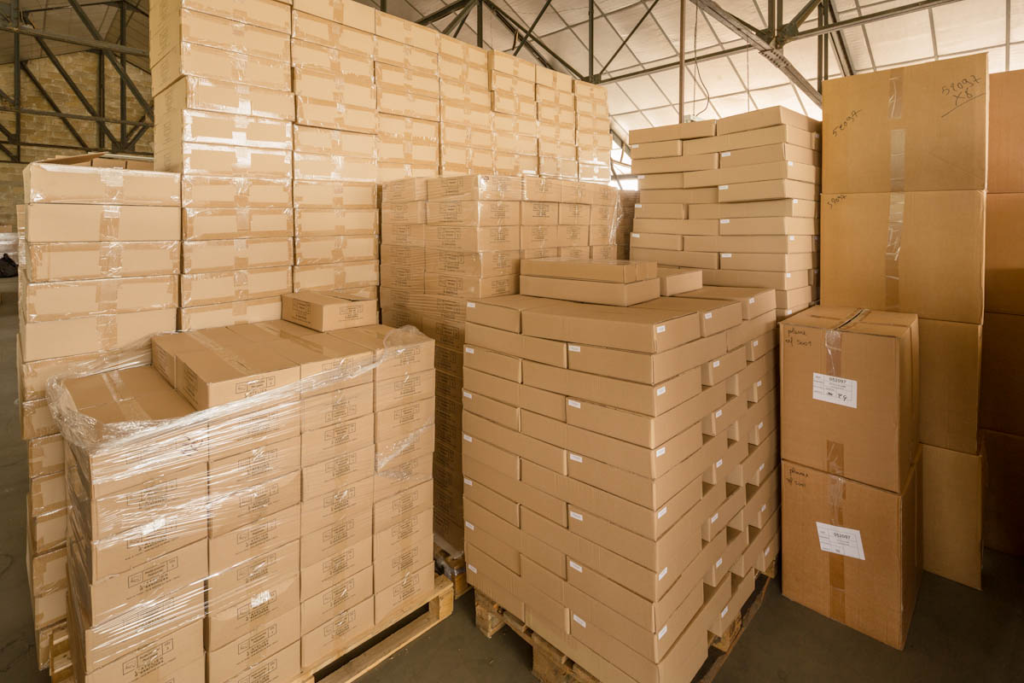
A low unit cost can look attractive in the first quotation stage. But for B2B furniture buyers, the real cost sits across the full order cycle: sample revisions, engineering mistakes, finish inconsistency, hardware shortages, packaging damage, delayed loading, and after-sales claims.
This is especially true in flat pack furniture. Because products are packed down, shipped long distances, and assembled at the destination, every detail matters: structure, drilling accuracy, edge banding quality, panel labeling, instruction clarity, carton strength, and hardware organization. A factory that understands export furniture does not simply manufacture panels. It manufactures a system that must still work after container loading, customs clearance, inland transport, warehousing, and final assembly.
That is also why many professional buyers look for factories with strong OEM and ODM systems, project supply experience, and export-ready packaging rather than choosing only on price. On your site, those strengths are already positioned as core advantages, alongside advanced CNC production, panel material flexibility, and support for brands, importers, and wholesalers.
Check #1: Confirm the Factory’s Real Product Focus
Not every furniture factory is equally suitable for every product category. Some are stronger in upholstered goods. Some specialize in solid wood. Others are more capable in panel furniture, cabinetry, storage systems, and ready-to-assemble bedroom programs.
A reliable flat pack furniture manufacturer in China should have a product focus that matches your purchasing needs. If your business is centered on:
- flat pack bedroom furniture
- wardrobes and storage beds
- home office furniture
- kitchen cabinets
- apartment furniture packages
- hotel room casegoods
- multifunctional furniture for small spaces
then your ideal supplier should already be producing those categories at scale.
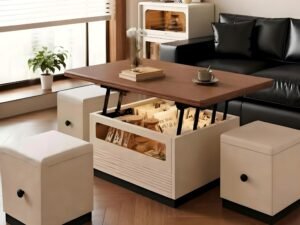
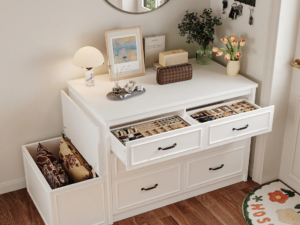
On the Starwood, the visible category structure covers Bedroom, Kitchen, Living Room, Home Office, Kids’ Room, Storage Cabinet, and Space-Saving & Multi-Functional furniture, which makes the positioning much more relevant for project buyers and panel-furniture importers than a general factory with no clear specialization.
Buyer Tip
Ask the supplier for:
- current export categories
- top-selling SKUs
- project-oriented categories
- similar products already shipped to your market
A professional answer is usually specific. A weak answer is often too broad.
Check #2: Review OEM and ODM Capability Carefully
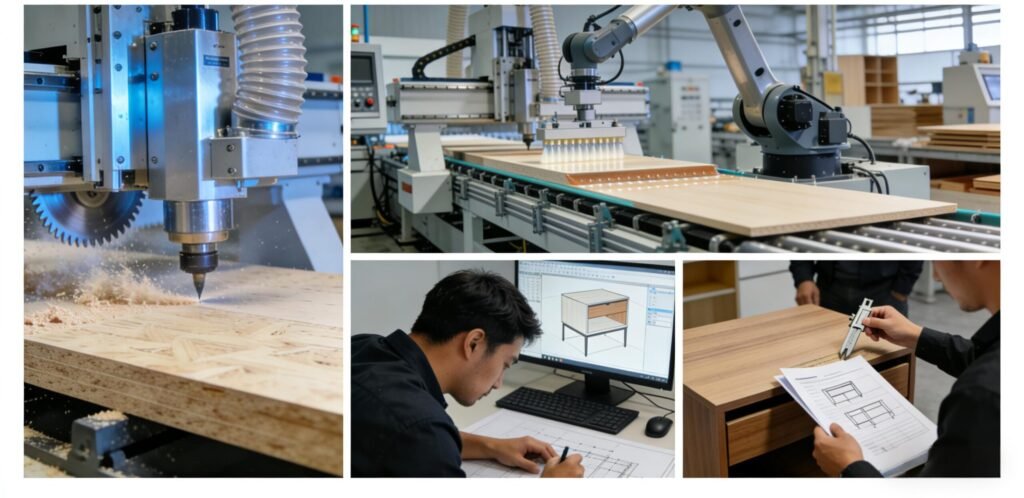
Many suppliers say they offer OEM and ODM, but buyers should confirm what that actually means in practice.
OEM
OEM usually means you provide the design, drawing, dimensions, or reference sample, and the factory manufactures according to your requirements.
ODM
ODM usually means the factory can support design development, structure optimization, dimension adjustment, material matching, and market-oriented customization based on an existing concept or style direction.
Your OEM & ODM service page clearly positions the business around custom furniture for bedrooms, storage solutions, and modern living spaces, with customization in materials, finishes, dimensions, and configurations. It also highlights support for retailers, interior designers, property developers, and growing brands.
For B2B buyers, the important question is not whether a factory uses the words OEM/ODM. It is whether the supplier can handle:
- drawing review
- technical clarification
- structure optimization
- sampling
- material confirmation
- finish matching
- packaging engineering
- scalable mass production
If a supplier cannot clearly explain that workflow, the OEM/ODM claim may be superficial.
Natural External Reference
For buyers new to international sourcing, it also helps to understand broader trade support resources from the International Trade Administration, which explains global trade and sourcing frameworks in an official U.S. government context. You can refer to the International Trade Administration here:
Check #3: Understand Panel Materials and Compliance Expectations
In panel furniture export, material choice directly affects cost, appearance, durability, weight, emissions expectations, and market acceptance.
Your homepage states the factory uses MDF, particle board, plywood, and engineered panels for export furniture production.
That matters because different buyers need different material combinations:
Common Material Options
MDF
Often chosen for smooth painted surfaces, routed details, and cost-effective panel structures.
Particle Board
Common in flat pack furniture due to value, dimensional consistency, and compatibility with melamine finishes.
Plywood
Often preferred when higher screw-holding strength, better structural stability, or premium positioning is needed.
Engineered Panels / Laminated Boards
Useful for scalable production, visual consistency, and easier maintenance in residential and hospitality projects.
Compliance Matters
For many export markets, buyers also ask about composite wood emission compliance and documentation. The U.S. EPA’s official page on TSCA Title VI composite wood products is a useful authority reference for emission standards in composite wood products.
If sustainability sourcing is part of your client requirement, the Forest Stewardship Council (FSC) explains chain-of-custody certification and how forest-based material traceability works across the supply chain.
Buyer Tip
Before sampling, confirm:
- board type
- thickness
- density or quality grade
- surface finish
- edge-banding standard
- emissions/compliance document requirements
- hardware brand or grade if needed
Check #4: Evaluate CNC and Production Capability
A serious flat pack furniture factory must be able to produce with repeatable accuracy.
Why? Because in RTA and flat pack furniture, every hole position, panel size, slot, and hardware alignment affects on-site assembly. Small production errors can create large after-sales problems.
Your homepage highlights advanced CNC manufacturing and automated production lines for precise cutting, consistent processing, and large-scale output.
That is a good sign, but buyers should still verify how that production strength translates into actual order performance.
Ask These Questions
- What types of CNC and panel-processing equipment are used?
- How does the factory control drilling accuracy?
- How are repeat orders standardized?
- How are color and finish variations managed across batches?
- Can they handle both container-based wholesale orders and project-oriented mixed SKU programs?
Why This Matters for Projects
For hotel, apartment, and residential furnishing projects, furniture programs often include multiple categories and repeated dimensions across many rooms. Production precision becomes critical when you need:
- consistent wardrobe modules
- repeat bedroom units
- identical hardware sets
- fast assembly at site
- fewer rework claims
Check #5: Check Customization Depth, Not Just “Custom Available”
Many factories list “customization” as a service, but not all customization is equally useful for buyers.
A real OEM/ODM furniture partner should support multiple layers of customization:
Structural Customization
- dimensions
- storage configuration
- modular combinations
- knock-down structure
- reinforcement adjustments for project use
Visual Customization
- melamine color
- wood grain direction
- veneer look
- handle style
- edge color
- finish matching
Commercial Customization
- logo labels
- packaging artwork
- assembly manual
- barcode / SKU system
- master carton marking
- market-specific packing language
For apartment, hotel, and developer projects, this is especially important because the same furniture concept often needs to be adapted for:
- room size differences
- regional style preferences
- budget levels
- carton size limits
- installation requirements
Application Scenarios
A buyer may need one wardrobe structure for:
- furnished apartments
- student housing
- hotel long-stay rooms
- urban micro-living units
- branded residential projects
The right supplier can adapt the same product family to multiple scenarios without losing manufacturing efficiency.
Check #6: Ask About MOQ, Sample Policy, and Order Structure
MOQ is often the first commercial question buyers ask, but it should be discussed together with product mix and production planning.
Your homepage currently states a minimum order quantity of 1 container, which is a practical benchmark for export-focused furniture supply.
For B2B buyers, however, MOQ should be understood in three levels:
1. Product MOQ
The minimum quantity for a single SKU or finish.
2. Order MOQ
The minimum total order volume the factory accepts.
3. Mixed Container Flexibility
Whether different SKUs can be combined within one container.
Sample Questions Buyers Should Ask
- Is there a sample fee?
- Can the sample fee be refunded against a bulk order?
- How many finish revisions are allowed?
- Can mixed products be loaded in one container?
- Is the MOQ different for OEM items and standard items?
- Can hotel or apartment projects be split by phase?
A reliable supplier will explain MOQ based on material sourcing, finish setup, packaging, and production efficiency rather than giving vague answers.
Check #7: Verify Lead Time Control and Production Planning
Many sourcing problems come not from manufacturing failure, but from poor planning.
Lead time in export furniture depends on:
- product complexity
- drawing approval speed
- sample confirmation
- panel material availability
- hardware sourcing
- order quantity
- finish type
- packaging requirements
- factory loading schedule
Your homepage emphasizes stable lead times, while the OEM/ODM positioning supports product development through mass production.
That is useful, but buyers should confirm how lead time is actually managed.
What Good Lead-Time Control Looks Like
- clear sample schedule
- drawing confirmation stage
- pre-production material approval
- production milestone updates
- pre-shipment QC timing
- loading plan confirmation
- quick notice if changes affect delivery
Professional Buyer Practice
For hotel and apartment projects, avoid asking only, “What is your lead time?”
Instead ask:
- What is the sample lead time after drawing approval?
- What is the bulk lead time after deposit and finish confirmation?
- What risks could extend production?
- How do you manage urgent replenishment orders?
A stronger supplier answers with a process, not just a number.
Check #8: Inspect Export Packaging Details
Flat pack furniture export is won or lost in packaging.
Your homepage explicitly highlights export-standard flat-pack packaging designed for international shipping and damage reduction.
That should immediately matter to overseas buyers because panel furniture faces multiple logistics stages:
- factory handling
- truck loading
- container stuffing
- ocean transport
- destination unloading
- warehousing
- last-mile delivery
- on-site assembly
Packaging Questions Buyers Should Ask
- Are edge protectors used?
- How is glass packed if included?
- Are hardware bags labeled by part number?
- Are assembly instructions inserted per carton?
- Is there carton drop-resistance consideration?
- Are spare parts included?
- Are outer cartons suitable for e-commerce, wholesale, or only container project supply?
If wood packaging is used anywhere in the export system, official phytosanitary guidance around ISPM 15 is worth understanding. The International Plant Protection Convention and APHIS both provide official explanations of ISPM 15-compliant wood packaging material for international trade.
For trade terms and responsibility transfer in international shipments, the ICC’s official Incoterms 2020 reference is also useful when clarifying shipping obligations and risk allocation.
Why Packaging Matters for Different Buyers
Wholesale buyers need strong pallet/carton handling.
E-commerce buyers need higher resistance to parcel damage and returns.
Project buyers need room-by-room identification and easier site allocation.
Check #9: Review Quality Control Process
Buyers should never assume “QC” means the same thing at every factory.
A reliable flat pack furniture manufacturer should be able to explain quality control in stages:
Incoming Material Check
- board quality
- finish consistency
- hardware quantity
- packing material quality
In-Process Check
- panel sizing
- drilling accuracy
- edge-banding quality
- structure stability
- finish defects
Pre-Packing Check
- part completeness
- hardware bag accuracy
- labeling
- instruction inclusion
Pre-Loading Check
- carton condition
- quantity verification
- shipping marks
- container loading arrangement
Your site repeatedly emphasizes strict quality control as part of the factory’s positioning.
Buyer Tip
Ask for:
- QC checkpoints
- sample inspection photos
- carton photos
- loading photos
- defect-handling process
- acceptable quality standard for bulk orders
That is especially important for apartment and hotel projects where missing parts or finish issues can delay site installation across many rooms.
Check #10: Confirm Project Experience for Hotels and Apartments
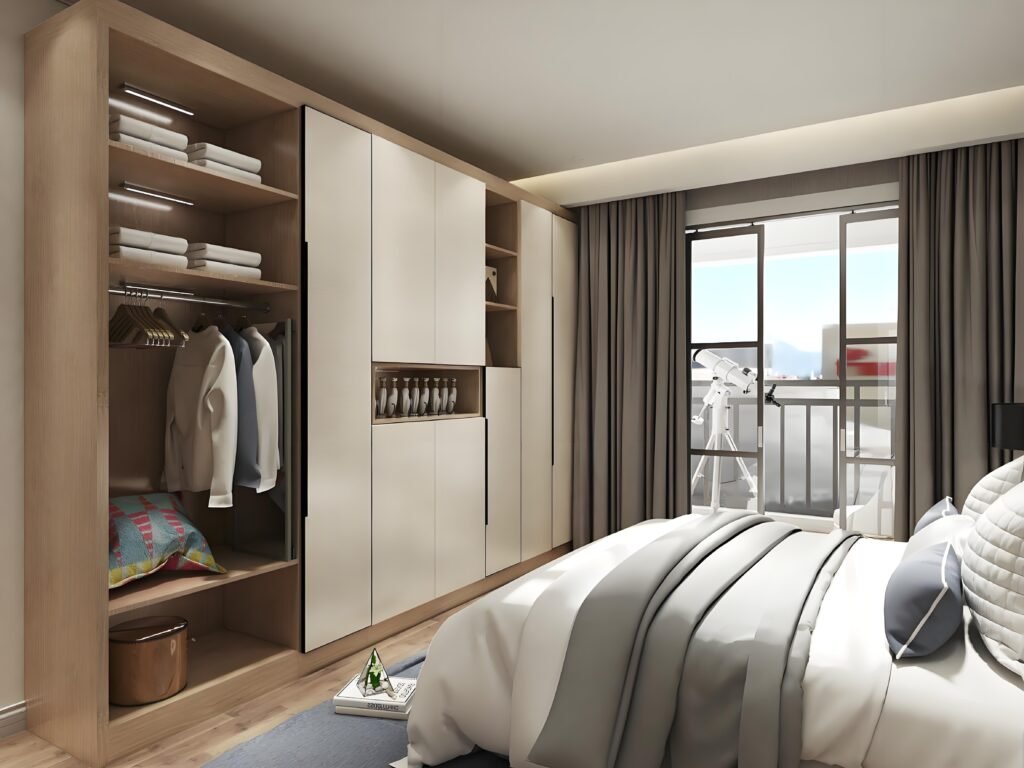
A factory that serves only retail-style wholesale orders is not always the best fit for hospitality or real-estate projects.
Your homepage states the product range supports apartments, hotels, and residential projects, while the OEM & ODM page refers to apartments, homes, commercial properties, and modern living spaces.
That matters because project buyers usually need more than product supply. They may also need:
- room-type planning
- repeated module dimensions
- finish consistency across phases
- phased shipments
- carton coding by room or package list
- coordination across wardrobes, beds, cabinets, and storage units
Typical Application Scenarios
Hotel projects
Need durable, visually consistent casegoods, efficient room installation, and tighter coordination with project schedules.
Apartment projects
Need practical storage, compact layouts, flat-pack delivery efficiency, and cost control across many units.
Student housing / rental units
Need space-saving furniture, hard-wearing materials, and easy replacement planning.
A supplier with genuine project experience will discuss furniture not only as products, but as part of an installation and handover process.
Check #11: Test Communication Speed and Technical Clarity
Even a capable factory can become difficult to work with if communication is slow, vague, or incomplete.
B2B buyers should test communication before ordering.
Look for These Signals
- replies within a reasonable timeframe
- clear answers to technical questions
- willingness to confirm drawings and details in writing
- ability to explain packaging and QC clearly
- structured quotation format
- understanding of export requirements
Your homepage promises a response within 24 hours, which is a helpful commercial benchmark.
A Good Supplier Usually:
- asks intelligent follow-up questions
- clarifies missing dimensions
- confirms materials before pricing
- distinguishes standard models from OEM development
- flags technical risks early
A Weak Supplier Often:
- sends only generic catalogs
- avoids technical detail
- changes answers frequently
- promises unrealistic timelines
- cannot explain packaging or MOQ logic
For overseas sourcing, communication quality is one of the clearest indicators of future order stability.
Check #12: Review Long-Term Partnership Potential
The final check is not about the first order. It is about the second, third, and tenth order.
A reliable flat pack furniture manufacturer in China should be able to support growth over time:
- repeat SKUs
- new collections
- seasonal finish changes
- apartment or hotel expansion phases
- replenishment orders
- private-label development
Your homepage positions the factory as supporting product development, sampling, mass production, export packaging, and long-term cooperation with global brands, importers, wholesalers, and distributors. It also states the company has operated since 2013 and serves multiple export regions.
That long-term orientation matters because strong B2B partnerships are built on:
- consistent engineering
- cost transparency
- repeat quality
- stable delivery
- commercial flexibility
- problem-solving attitude
If you are planning to build a category, not just buy a one-off container, choose a supplier that can grow with your business.
What a Strong B2B Furniture Factory Should Be Able to Offer
Before you finalize a supplier, your shortlist should ideally cover these points:
Manufacturing
- flat pack / panel furniture specialization
- stable CNC production
- category fit for your target products
Materials
- MDF, particle board, plywood, and engineered panel options
- finish and hardware customization
- compliance discussion when needed
Commercial Terms
- MOQ clarity
- sample process
- project order flexibility
- quotation transparency
Export Support
- export-standard packaging
- loading planning
- shipping mark control
- global buyer experience
Project Capability
- apartment / hotel / residential project understanding
- repeated modules and finish consistency
- practical site-oriented packaging and coordination
Collaboration
- OEM support for buyer-provided drawings
- ODM support for design adaptation
- responsive communication and technical follow-up
Why This Matters for Hotel, Apartment, and Developer Buyers
For project procurement teams, a furniture factory is not only a supplier. It becomes part of delivery execution.
A dependable factory partner can help reduce:
- installation delays
- packaging claims
- mismatched finishes
- missing parts
- replenishment confusion
- replacement cost after handover
That is why developers, hotel buyers, and furnishing contractors often value:
- clear technical communication
- stable production capacity
- packaging discipline
- scalable category supply
- room-type coordination
- consistent bulk quality
In project environments, reliability protects schedule as much as product quality.
FAQ
What is the difference between an OEM and ODM flat pack furniture manufacturer?
An OEM manufacturer produces according to the buyer’s design or technical files, while an ODM manufacturer can also support design development, structure optimization, and custom adaptation based on a concept or existing model. Your OEM & ODM page positions the factory around both models.
What materials are commonly used in flat pack panel furniture?
Common materials include MDF, particle board, plywood, and other engineered panels. Your homepage specifically lists these material options for export furniture manufacturing.
What is a reasonable MOQ for export flat pack furniture?
MOQ varies by factory and product category. On your site, the stated minimum order quantity is 1 container, which is common for export-oriented B2B programs.
Why is packaging so important in flat pack furniture export?
Because flat pack furniture passes through multiple logistics steps before assembly. Strong packaging helps reduce damage, missing parts, and customer claims. Your homepage highlights export-standard packaging as a core advantage.
Is flat pack furniture suitable for apartment and hotel projects?
Yes, especially when the products are designed for efficient shipping, repeated room layouts, practical storage, and scalable installation. Your site explicitly positions its range for apartments, hotels, and residential projects.
Final Thoughts
Choosing a reliable flat pack furniture manufacturer in China is not about finding the cheapest catalog. It is about selecting a factory that can support your business model, category strategy, and delivery expectations.
For B2B buyers, the best partner is usually the one that can combine:
- the right product categories
- proven OEM/ODM capability
- suitable panel materials
- stable production quality
- export-safe packaging
- project understanding
- practical communication
- dependable long-term cooperation
If your business serves wholesalers, apartment developers, hotel contractors, distributors, or private-label furniture programs, those 12 checks will help you filter suppliers more accurately and reduce sourcing risk before the first container ships.
CTA
Looking for a reliable flat pack furniture manufacturer in China for wholesale, OEM/ODM, hotel, or apartment projects?
Send us your product list, drawings, BOQ, or reference images. Our team can review your requirements, recommend suitable material and packaging options, and provide a factory quotation for your project.