7 Essential Checks for an OEM Kids Bed Set Manufacturer in China
For importers, distributors, retailers, and private-label furniture brands, choosing an OEM kids bed set manufacturer in China is a strategic sourcing decision rather than a simple price comparison. A kids bed line involves more than appearance. Buyers need to evaluate structure, panel material, edge treatment, finish consistency, safety readiness, export packaging, and whether the supplier can support long-term OEM growth.
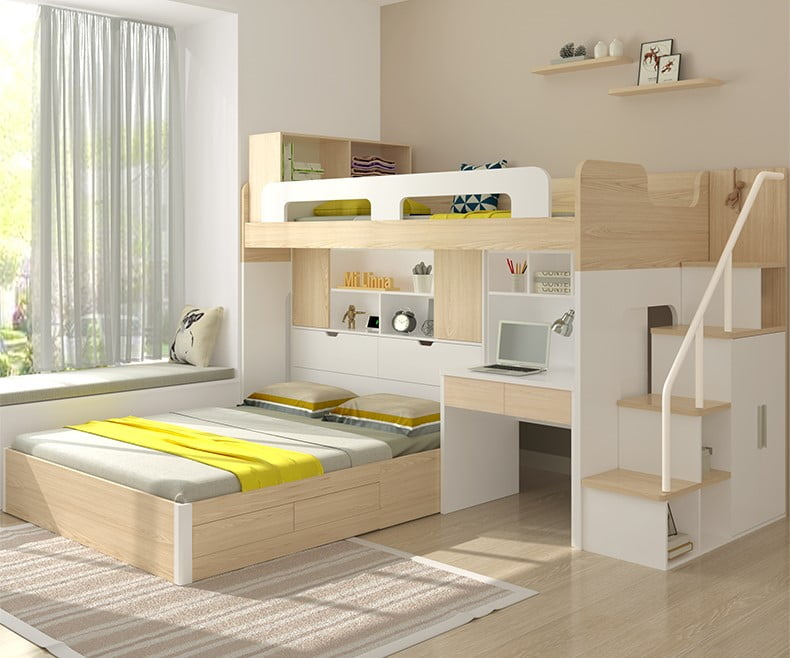
This is especially important when your program includes private label, flat-pack delivery, multi-SKU bedroom collections, or project supply for apartments, family hotels, serviced residences, and large-volume retail channels. A supplier that looks competitive on quotation may still fail on compliance preparation, carton durability, lead time stability, or document accuracy.
In this guide, we will walk through the seven checks professional buyers should use before selecting a custom kid bed supplier for private label. The goal is to help you reduce sourcing risk, protect your brand, and choose a manufacturing partner that can support both market entry and repeat orders.
Table of Contents
- Why choosing the right manufacturer matters
- Check 1: Define the exact product and application scenario
- Check 2: Review materials, structure, and finish options
- Check 3: Verify safety and compliance readiness
- Check 4: Assess OEM/ODM and private-label capability
- Check 5: Confirm MOQ, lead time, and production capacity
- Check 6: Review quality control and documentation systems
- Check 7: Evaluate packaging, logistics, and after-sales support
- What a strong custom development process looks like
- Red flags buyers should not ignore
- FAQ
Why Choosing the Right Manufacturer Matters
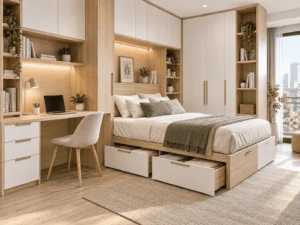
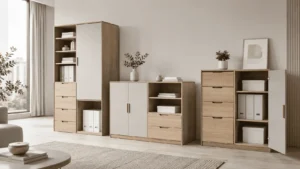
In the kids furniture category, the buyer is not only purchasing a bed. You are purchasing a complete supply capability that affects your brand reputation, return rate, gross margin, and delivery performance. A kids bed set can include the bed frame, guardrail elements, storage components, bedside units, wardrobes, study desks, or matching dressers. Once you move from an off-the-shelf item to an OEM program, every decision becomes connected: dimensions, carton size, material density, hardware specification, labeling, assembly instructions, and finish durability.
For B2B buyers, the risk is even higher. A weak supplier may deliver acceptable samples but unstable mass production. A factory with limited engineering support may struggle when you request a modified ladder angle, safer edge profile, lower carton drop damage, or country-specific warning labels. A factory that cannot manage material traceability may also create downstream compliance problems for your team.
That is why experienced buyers do not ask only, “What is your price?” They ask, “Can this manufacturer support our market, our packaging standard, our safety expectations, and our private-label positioning over multiple seasons?”
Check 1: Define the Exact Product and Application Scenario
Before comparing factories, define exactly what kind of kids bed set you are buying. Many sourcing problems begin because the buyer’s brief is too general.
Retail and Private-Label Programs
If you are building a retail or e-commerce line, your priorities usually include:
- flat-pack efficiency
- carton size optimization
- stable repeatability
- easy assembly
- visually strong finish options
- low complaint rate after delivery
In this case, your OEM partner should understand retail packaging, barcode placement, instruction manuals, spare parts management, and photo-ready sample support.
Distributor and Wholesale Programs
If you sell through dealers or wholesale channels, you may need:
- flexible finish selection
- mixed-container loading
- consistent color matching across multiple SKUs
- lower MOQ per design family
- strong replacement part support
This type of program works best with a factory that can standardize core structures while allowing different finish combinations.
Family Hotel, Apartment, and Project Supply
For project-based buyers, the bed set is often part of a broader furnishing package. In these cases, you should pay more attention to:
- durability for frequent use
- standardized dimensions across rooms
- packing efficiency for site delivery
- clearer installation instructions
- project schedule reliability
- coordinated design language with wardrobes, desks, and storage units
The more clearly you define the application scenario, the easier it becomes to judge whether a factory is truly suitable.
Check 2: Review Materials, Structure, and Finish Options
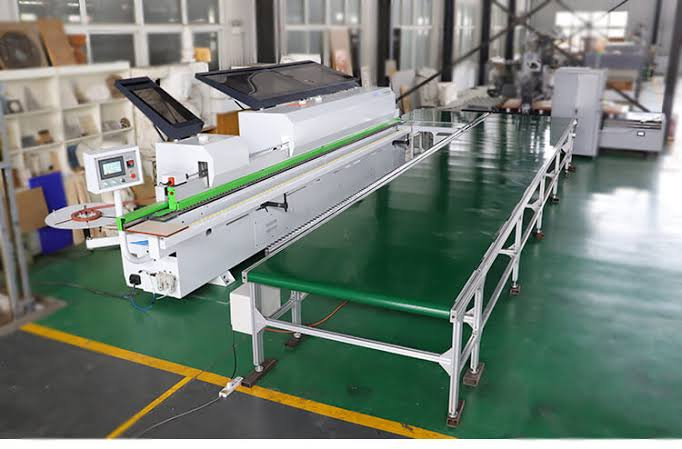
A professional OEM kids bed set manufacturer in China should be able to explain not only what material is used, but why it is used in each part of the structure.
Common Panel Material Options
For panel furniture, typical material choices include:
- MDF
- particleboard
- plywood
- mixed-material construction for strength and cost balance
For example, a supplier may use MDF for painted decorative parts, particleboard for laminated flat panels, and plywood or reinforced structural members for load-bearing components. The best choice depends on your target market, design intent, required finish, and price positioning.
If your market is sensitive to emissions and sustainability claims, the supplier should also understand composite wood regulations. The U.S. EPA states that hardwood plywood, MDF, and particleboard, as well as finished goods containing them, fall under TSCA Title VI formaldehyde emission standards. That makes raw board sourcing and labeling discipline important for importers of panel furniture.
Questions to Ask About Materials
Ask the factory:
- What panel types do you use for side panels, slats, headboards, drawers, and storage units?
- What board thickness is standard for each component?
- What edge band thickness is used?
- How do you manage finish consistency across repeat orders?
- Which hardware suppliers do you use for connectors, slides, and brackets?
- Do you have emission-related documents for the boards used in export orders?
Surface Finish and Edge Banding
In kids furniture, finish quality is not only about appearance. It also affects durability, cleanability, and customer perception. A reliable supplier should be able to discuss:
- melamine or paper-laminated surfaces
- painted or lacquered surfaces
- scratch resistance
- color consistency
- rounded edges where appropriate
- edge sealing quality for humid environments
For project buyers and premium private-label brands, edge details and drilling precision often separate a commodity factory from a dependable OEM partner.
Check 3: Verify Safety and Compliance Readiness
This is one of the most important checkpoints for professional buyers. Safety compliance is not a decorative extra. It is part of market access and brand protection.
For U.S. Buyers: Understand Product Classification First
The U.S. Consumer Product Safety Commission explains that identifying whether an item is a children’s product determines which rules apply. CPSC also states that children’s products generally require third-party testing, a Children’s Product Certificate (CPC), and tracking information.
This means an importer should not wait until shipment booking to discuss compliance. It should be addressed during development, sample confirmation, and labeling review.
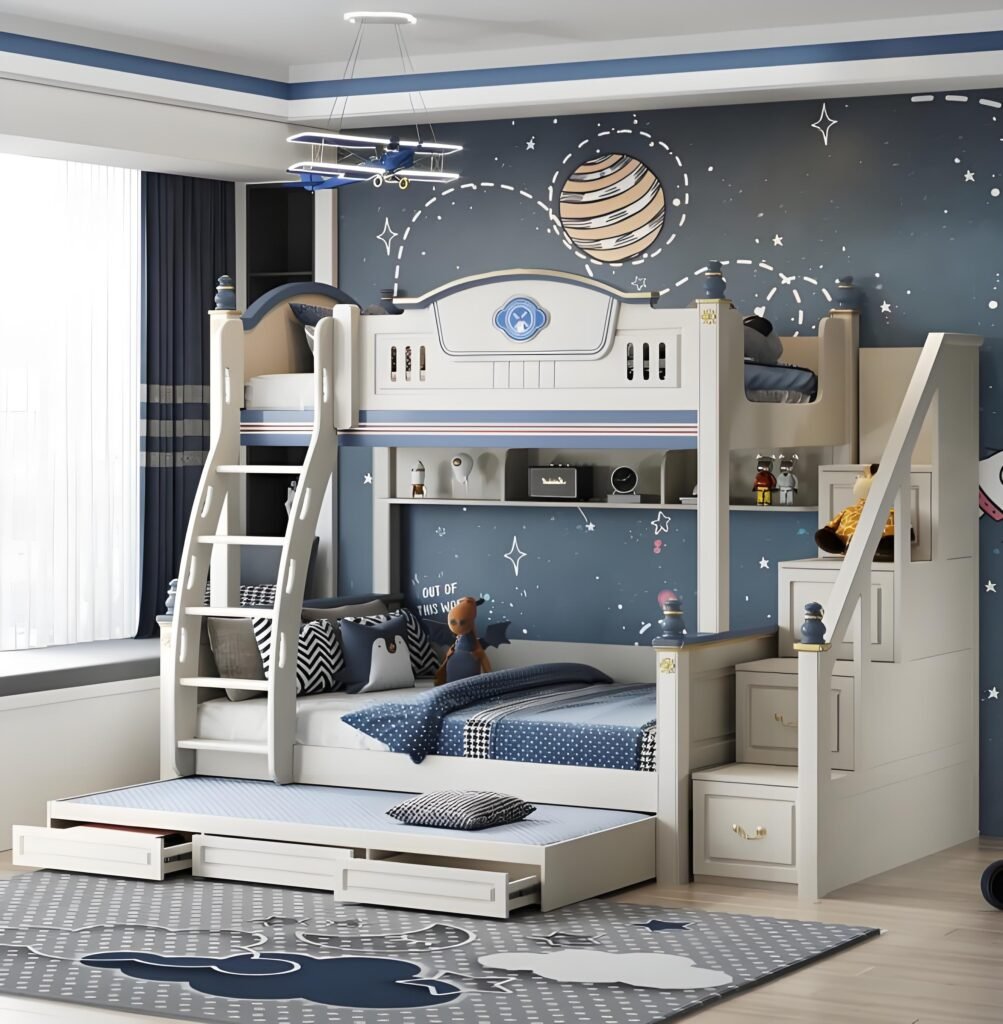
For Bunk Beds and Loft Beds
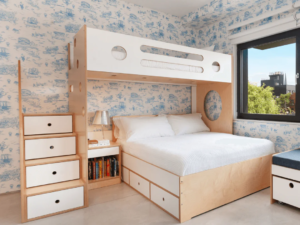
If your kids bed set includes bunk or loft configurations intended for children, you should review the CPSC bunk bed business guidance early in the sourcing process. CPSC states that bunk beds are subject to mandatory safety rules, and bunk beds designed or intended for children 12 years of age or younger are also subject to additional children’s product requirements. The agency also notes that the rules are intended to reduce entrapment risks associated with upper bunks and openings below guardrails.
For this reason, a qualified OEM supplier should be able to discuss:
- guardrail design
- opening dimensions
- structural consistency
- warning labels
- age grading language
- test planning before mass production
For Composite Wood Emissions
If your product uses MDF, particleboard, or hardwood plywood, review the EPA formaldehyde standards for composite wood products. EPA states that these product categories are regulated under TSCA Title VI and that compliant products must be labeled accordingly.
This matters for buyers because emissions compliance starts at the material sourcing level, not only at finished-goods inspection.
For EU Buyers
If you sell into Europe, you should review the EU General Product Safety Regulation. The European Commission states that the GPSR is applicable from 13 December 2024 and replaces the previous General Product Safety Directive.
A practical buyer step is to ask the factory how they support:
- traceability information
- responsible person details where needed
- warning labels
- technical file readiness
- carton and product marking consistency
It is also useful to monitor the EU Safety Gate system, which circulates information on dangerous non-food products and enforcement actions. Reviewing it can help buyers identify recurring risk areas in furniture categories before launching new items.
Check 4: Assess OEM/ODM and Private-Label Capability
A real OEM partner does more than accept your logo. The factory should be able to help convert a concept into a manufacturable product.
What Good OEM Support Looks Like
A strong factory usually supports:
- reference-based design development
- dimension optimization
- structure review for KD packing
- material substitution recommendations
- finish sample approval
- hardware selection
- logo placement
- carton artwork
- instruction manual layout
- barcode and shipping mark integration
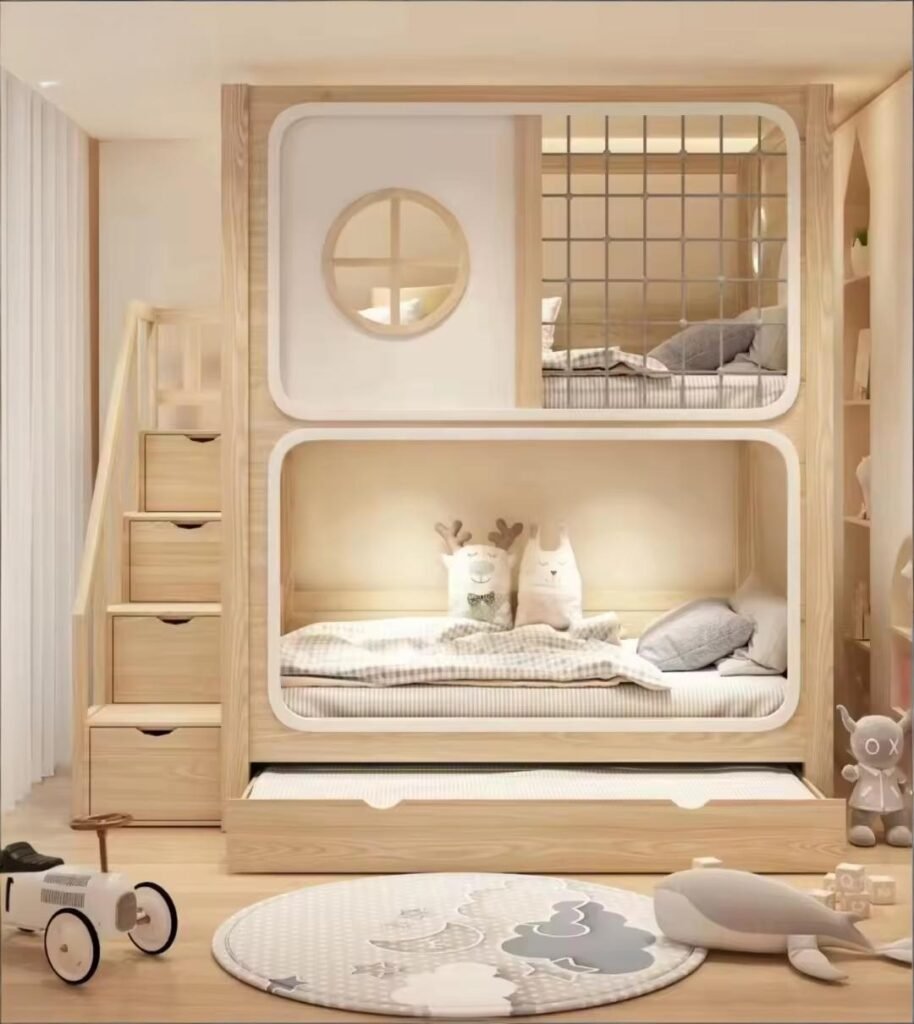
For example, if you are launching a private-label collection, the supplier should be able to keep a unified visual language across the bed, wardrobe, storage cabinet, and study desk.
What Good ODM Support Looks Like
ODM capability becomes important when buyers do not have full drawings. In that case, the supplier should be able to propose:
- design variations for different markets
- safer or stronger structural alternatives
- carton redesign for e-commerce or distributor delivery
- lower-cost versions without losing function
- accessory kits for market differentiation
If a factory only answers “yes” to everything but offers no engineering suggestions, that is usually a warning sign.
For your internal link placement, this is a good section to link to your OEM & ODM Furniture Manufacturing Services page.
Check 5: Confirm MOQ, Lead Time, and Production Capacity
Many sourcing problems happen because MOQ and lead time are discussed too late or too vaguely.
MOQ
For a kids bed set program, MOQ is often affected by:
- number of finish colors
- hardware type
- customized packaging
- private-label printing
- sample-to-mass production differences
- whether the order shares components with other SKUs
A professional buyer should ask:
- What is the MOQ per model?
- What is the MOQ per color?
- Can components be standardized across multiple designs?
- Can different SKUs be combined in one container?
- Is there a higher MOQ for custom cartons or manuals?
Lead Time
Lead time should be broken down into:
- drawing confirmation
- sample production
- sample revision
- material procurement
- mass production
- inspection window
- loading and shipping preparation
For project buyers, ask whether the factory can stage deliveries by installation schedule. For retail buyers, ask how they manage peak-season capacity.
Capacity and Continuity
Do not ask only for monthly production capacity. Ask:
- How many lines handle panel cutting, drilling, edge banding, and packing?
- How do you manage repeat orders during peak season?
- What is your plan if one hardware supplier delays?
- Do you keep standard accessories in stock?
A supplier with realistic answers is better than one that promises everything immediately.
Check 6: Review Quality Control and Documentation Systems
A qualified supplier should have a process, not just a final inspection table.
What Buyers Should Expect
Your quality plan should include:
- sample approval records
- incoming material checks
- in-process inspection
- drilling and hardware fitting checks
- finish and color comparison
- assembly verification
- carton drop-risk review
- pre-shipment inspection
For broader management discipline, many buyers also value suppliers working within a quality management framework such as ISO 9001. ISO describes ISO 9001 as a globally recognized quality management standard used to improve performance and meet customer expectations.
Documents Buyers Should Request
Depending on market and product type, ask for:
- product specification sheet
- bill of materials summary
- packing specification
- assembly instruction draft
- carton mark artwork
- test reports where applicable
- material compliance documents
- inspection checklist
- shipment photo record
For private-label programs, document control is part of quality. A wrong manual or old carton mark can create the same customer complaint as a structural issue.
Check 7: Evaluate Packaging, Logistics, and After-Sales Support
In export furniture, packaging performance directly affects margin.
Why Packaging Matters
A kids bed set usually ships in KD or flat-pack form. That improves container efficiency, but it also increases the importance of:
- corner protection
- internal panel separation
- hardware bag management
- moisture protection
- carton compression strength
- clear labeling for warehouse and installation teams
If you sell through e-commerce or multi-step distribution, carton performance becomes even more important.
Transit Testing and Packaging Discipline
If your customers require stronger packaging validation, it is worth reviewing ISTA testing and certification resources. ISTA explains that it offers transit-testing resources and certification programs, and that the Transit Tested mark indicates a packaged product has passed pre-shipment laboratory testing within specified damage limits.
Not every order requires formal certification, but a supplier familiar with transit-test thinking usually performs better in export packaging design.
After-Sales Support
Ask every supplier:
- How do you handle missing hardware claims?
- Can you provide spare parts with the order?
- What is your photo standard for after-sales verification?
- How fast can you reproduce parts for replacement?
- Do you support revised manuals after launch feedback?
A strong after-sales process is especially important for private-label and online sales channels.
What a Strong Custom Development Process Looks Like
A reliable custom kid bed supplier for private label usually follows a clear development flow:
1. Inquiry and Requirement Review
You provide target market, dimensions, material preference, reference images, estimated volume, and packaging needs.
2. Technical Evaluation
The factory reviews structure, material suitability, finish options, and export feasibility.
3. Quotation and Proposal
You receive pricing, MOQ, lead time, and optional upgrades such as better hardware, stronger slats, or improved carton protection.
4. Sample Development
The supplier makes a pre-production sample, confirms finish, reviews fitting accuracy, and updates drawings if needed.
5. Compliance and Label Review
You confirm warnings, carton marks, manuals, and any required testing route for your market.
6. Mass Production
Production starts only after approved sample, confirmed artwork, and signed packing details.
7. Inspection and Shipment
Pre-shipment inspection, loading photos, and carton verification are completed before dispatch.
This process may sound basic, but it is where experienced manufacturers stand apart from price-only traders.
Red Flags Buyers Should Not Ignore
When evaluating an OEM supplier, watch for these warning signs:
1. Unclear Answers on Compliance
If the factory cannot explain whether your item may fall under children’s product rules, bunk bed rules, or panel emission requirements, slow down the project.
2. No Material Traceability
If they cannot identify board source, thickness, finish system, or hardware supplier, quality consistency will be difficult to control.
3. Overly Low MOQ With No Structure
A very low MOQ may sound attractive, but if it comes with unstable colors, mixed hardware, or long replenishment time, it can become expensive later.
4. Weak Sample Management
If the mass-production version does not match the approved sample in details like edge banding, slat layout, or connector position, that is a serious risk.
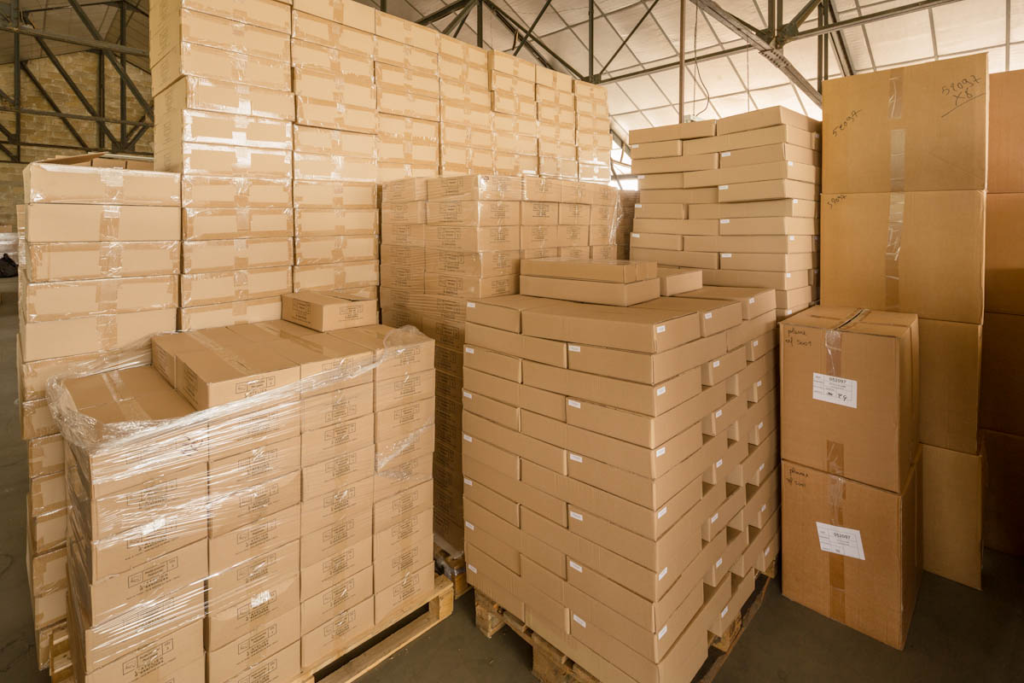
5. Packaging Is Treated as an Afterthought
For export furniture, carton engineering is part of the product, not a last-minute decision.
Final Thoughts
The best OEM kids bed set manufacturer in China is not necessarily the one with the lowest offer. It is the one that can support your market access, private-label positioning, cost target, quality consistency, and long-term growth.
For serious B2B buyers, the right evaluation model includes:
- application scenario
- materials and structure
- compliance readiness
- OEM/ODM capability
- MOQ and lead time
- quality documentation
- packaging and after-sales support
If your company is building a new kids furniture collection, expanding a distributor line, or sourcing for apartment and family-hospitality projects, a structured supplier review will save time and reduce costly mistakes.
Request our OEM catalog, sample policy, and quotation for your kids bed line.
We support custom dimensions, material matching, flat-pack packaging, private-label programs, and export-oriented production for B2B buyers.
FAQ Section
1. What should I check first when choosing an OEM kids bed set manufacturer in China?
Start with product definition. Confirm bed type, target market, material preference, packaging style, and whether the order is for retail, wholesale, or project use. Without a clear brief, supplier comparison is not accurate.
2. Can a panel furniture factory support private-label kids bed programs?
Yes, if the supplier has true OEM capability. That includes custom dimensions, finish selection, logo placement, carton design, manual preparation, and repeat-order consistency.
3. What materials are commonly used in kids bed sets?
Panel furniture programs usually use MDF, particleboard, plywood, or mixed-material construction, depending on finish, budget, and structural needs.
4. Why is compliance readiness important for kids bed sourcing?
Because product classification, market destination, and material type affect the required testing, labeling, and documentation. Buyers should address these issues before mass production.
5. What is a reasonable MOQ for a custom kids bed set?
MOQ depends on structure, finish, hardware, and packaging customization. It is best to ask for MOQ by model, color, and packaging version rather than one single MOQ number.
6. Why does export packaging matter so much for kids furniture?
Because flat-pack or KD products move through multiple handling points. Strong export packaging reduces damage, protects margins, and improves buyer satisfaction after delivery.