In export furniture business, the supplier model you choose can directly affect cost, shipping efficiency, product positioning, and order scalability. For B2B buyers sourcing wardrobes for distribution, project supply, retail chains, or OEM programs, the question is no longer only about design or finish. It is also about how the product is packed, shipped, stored, installed, and sold.
That is why many buyers compare a flat pack wardrobe manufacturer with a traditional furniture supplier before placing an order.
Both models have their place. A traditional supplier may offer assembled furniture, classic structures, or heavier casegoods for selected markets. However, a flat pack wardrobe manufacturer often provides stronger advantages for export business, especially when buyers need better container utilization, lower freight cost, easier handling, and repeatable large-volume supply.
This guide compares both options from a B2B export perspective. It is written for importers, wholesalers, furniture brands, contractors, and project buyers who need a practical sourcing decision rather than a general product overview.
Table of Contents
- What is a flat pack wardrobe manufacturer
- What is a traditional furniture supplier
- Key differences for export business
- When flat pack wardrobes are the better option
- When a traditional supplier may still work
- How B2B buyers should decide
- FAQ
- Conclusion
What Is a Flat Pack Wardrobe Manufacturer?
A flat pack wardrobe manufacturer produces wardrobes in knock-down or ready-to-assemble form. Instead of shipping the full unit already assembled, the supplier packs panels, hardware, fittings, and accessories into compact export cartons.
This model is also often linked to terms such as:
- RTA wardrobe supplier
- ready to assemble wardrobe factory
- KD wardrobe manufacturer
- flat pack furniture exporter
For export buyers, this structure offers clear operational benefits. Because the wardrobe is packed in flat components, more units can fit into one container. This reduces freight cost per unit and improves storage efficiency after arrival.
A professional flat pack factory should also support:
- OEM and ODM development
- carton optimization for export loading
- hardware kit control
- barcode or SKU labeling
- project packing by room or item code
- installation instructions if required
In most international markets, flat pack wardrobes are now widely used for retail, e-commerce, wholesale distribution, residential projects, and selected hospitality applications.
What Is a Traditional Furniture Supplier?
A traditional furniture supplier usually offers wardrobes in more assembled or semi-assembled form. In some cases, these suppliers specialize in classic furniture structures, decorative craftsmanship, or finished casegoods intended for showroom sale or direct placement.
This model may be suitable when:
- the buyer prefers pre-assembled furniture
- the market accepts higher freight cost
- the product is aimed at premium display sales
- installation labor at destination must be minimized
- the product design is not suitable for knock-down structure
However, from an export business perspective, traditional supply often creates challenges in loading efficiency, freight cost, packaging size, warehousing, and delivery flexibility.
That is why B2B buyers often compare both models carefully before choosing a long-term supplier.
Why This Comparison Matters in Export Business
For domestic sales, the difference between flat pack and traditional structure may not always be decisive. For international trade, it matters much more.
When wardrobes are exported across regions, buyers must think about:
- container loading efficiency
- ocean freight cost per unit
- inland delivery cost
- warehouse storage space
- handling and unloading efficiency
- damage risk during transit
- installation workflow at destination
- resale format for distributors or retailers
A flat pack wardrobe manufacturer is often better aligned with these requirements. That is why flat pack supply continues to grow in export-focused furniture categories.
1. Shipping Efficiency: Flat Pack Usually Wins
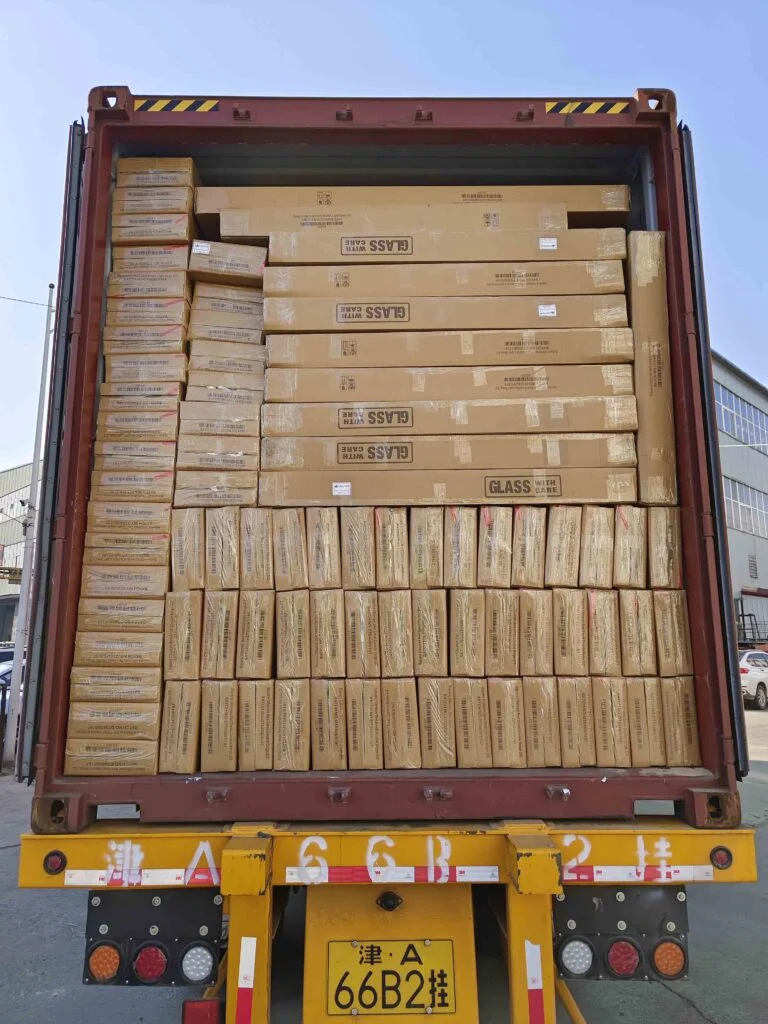
The biggest advantage of a flat pack wardrobe manufacturer is shipping efficiency.
Because wardrobes are packed in separated panels and compact cartons, the supplier can usually load far more units into one container than a traditional assembled supplier. This improves:
- freight cost per unit
- loading utilization
- destination warehouse storage
- distribution flexibility
For importers and wholesalers, this is a major commercial benefit. Lower logistics cost can improve pricing competitiveness and margin control.
By contrast, wardrobes shipped in assembled or bulky semi-assembled form take up much more space. Even if the factory price looks acceptable, the freight cost per unit may become too high for an export-focused business model.
2. Cost Control: Flat Pack Supports Better Total Landed Cost
Many buyers compare only factory price. That is not enough.
For export business, the real question is total landed cost, including:
- unit production cost
- export packaging cost
- container utilization
- freight cost
- unloading labor
- warehousing cost
- local delivery efficiency
A flat pack wardrobe manufacturer often delivers better total cost performance even if the ex-factory unit cost is not always the very lowest.
This is because flat pack supply reduces cost in multiple downstream steps. In many B2B models, this matters more than a small difference in initial production price.
Traditional furniture supply can create hidden costs through bulky shipments, higher storage requirements, and lower delivery flexibility.
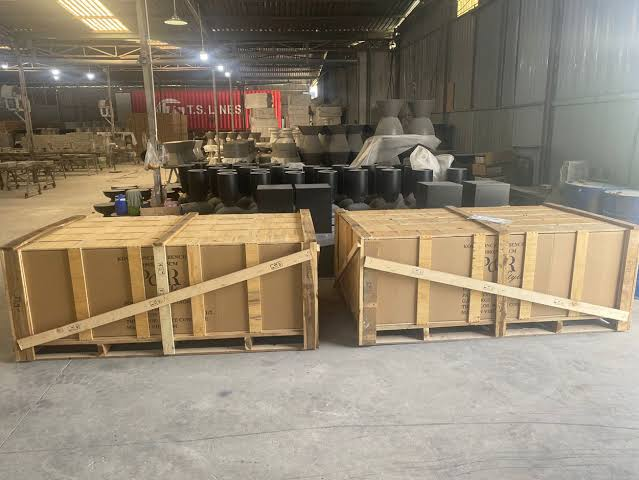
3. Packaging Advantage: Flat Pack Is Better for International Distribution
Packaging is one of the strongest arguments in favor of a flat pack wardrobe manufacturer.
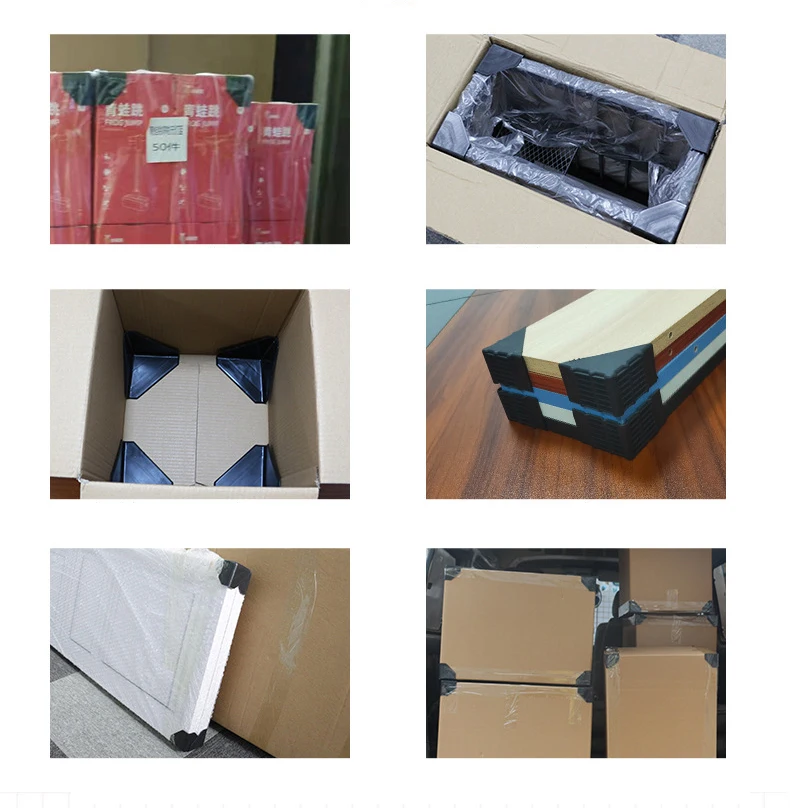
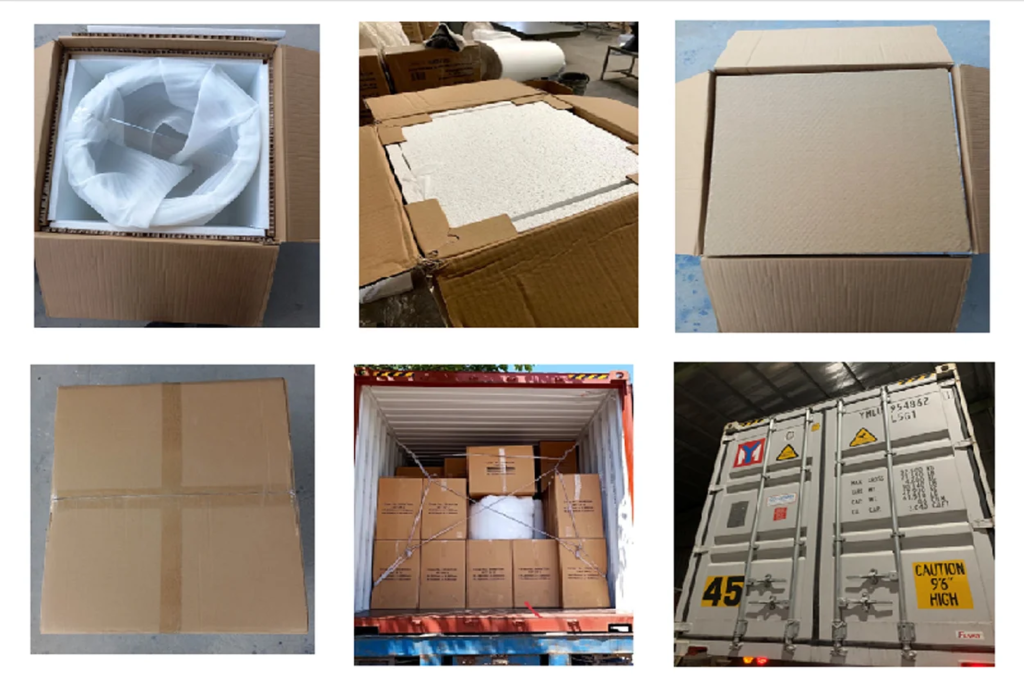
A good flat pack supplier designs packaging not only for protection, but also for export handling. This includes:
- carton sizing for optimal loading
- edge and corner protection
- anti-scratch materials
- clear hardware bag control
- SKU labeling
- barcode or project code labeling
- easy identification for receiving teams
For distributors and retailers, flat pack cartons are easier to store, count, transport, and dispatch. For project buyers, they are easier to move floor by floor or room by room.
Traditional assembled wardrobes often need larger protective packaging. This increases volume and handling complexity during export and distribution.
4. Warehouse Handling: Flat Pack Is More Practical
A ready to assemble wardrobe factory supports better warehouse efficiency because flat pack products take less volume and stack more neatly.
This matters for:
- import warehouses
- distributor stock rooms
- retail back-end storage
- project staging areas
- regional delivery centers
Flat pack wardrobes allow buyers to keep more sellable units in the same warehouse footprint. This helps control storage cost and supports more flexible inventory planning.
Traditional wardrobes may reduce assembly time at destination, but they consume more storage space and are harder to move in large quantities.
5. Damage Risk: It Depends on the Supplier’s Packing Quality
Some buyers assume flat pack always means more damage risk. In reality, damage risk depends more on packaging design and export control than on structure alone.
A professional flat pack wardrobe manufacturer can reduce damage risk through:
- reinforced carton construction
- foam and corner protection
- panel separation
- hardware bag control
- moisture barrier materials
- drop-resistant export packaging logic
Poorly packed assembled furniture can also arrive damaged, especially when large surfaces or extended structures are exposed to impact during loading and unloading.
The correct comparison is not “flat pack versus assembled.” The correct comparison is “professionally engineered export packaging versus weak export packaging.”
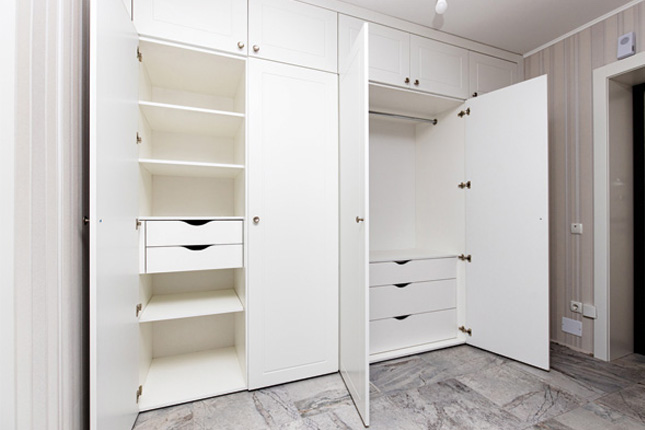

6. Installation: Traditional Supply May Save Time, but Flat Pack Offers More Flexibility
Traditional assembled wardrobes may reduce installation work at the destination. This can be useful in some premium markets or when buyers want products that are ready for immediate placement.
However, flat pack wardrobes offer other operational advantages:
- easier transport into buildings with limited access
- simpler room-by-room movement on project sites
- lower risk during final-mile delivery
- easier replacement of damaged panels
- better compatibility with phased installations
For apartments, student housing, rental projects, and distribution programs, these benefits are often more valuable than the extra assembly effort.
For B2B export buyers, the right question is not “Which model installs faster?” but “Which model supports the full supply chain better?”
7. Project Orders: Flat Pack Is Usually Better for Apartments and Volume Supply
A flat pack wardrobe manufacturer is often the better choice for apartment projects, developer programs, student housing, and large-volume residential supply.
Why? Because these projects need:
- efficient container loading
- room-based packing
- easier site movement
- repeatable specifications
- more practical storage before installation
- cost control across many units
Flat pack structures are especially useful when products must move through elevators, corridors, or staged delivery zones.
A traditional supplier may still suit certain bespoke hospitality environments, but for most volume-driven export projects, flat pack is the more scalable model.
8. Retail and Distribution: Flat Pack Is Better for Scalable Business
For importers, wholesalers, furniture chains, and e-commerce sellers, a flat pack wardrobe manufacturer is usually the stronger long-term supply choice.
It supports:
- easier SKU management
- lower freight cost per unit
- better warehouse turnover
- easier regional delivery
- improved resale packaging
- broader market reach through lower logistics barriers
This is one reason why so many global furniture distribution models rely on ready-to-assemble products.
Traditional supply may still work for selected local showroom or premium retail formats, but it is less efficient for scalable international distribution.
9. Customization and OEM/ODM: Both Can Work, but Flat Pack Often Gives More Export Flexibility
Both a flat pack wardrobe manufacturer and a traditional supplier may offer OEM or ODM service. However, flat pack manufacturers often have stronger experience in export-oriented engineering because they must consider structure, hardware logic, carton layout, and installation sequence from the start.
For OEM/ODM buyers, this is valuable because the supplier can often optimize:
- panel breakdown
- export carton sizes
- accessory packing
- knock-down structure stability
- material usage
- international logistics efficiency
This makes flat pack supply especially attractive for brand owners and importers that want to balance custom design with export practicality.
10. Product Positioning: Traditional Suppliers Still Have a Place
To be fair, a traditional supplier is not automatically the wrong choice.
Traditional wardrobes may still fit certain business models, especially when:
- the market expects fully assembled furniture
- the buyer focuses on premium decorative products
- the order volume is smaller and freight efficiency is less critical
- installation capability at destination is limited
- the sales model depends on showroom-ready presentation
In these cases, a traditional supplier may still be appropriate. But for mainstream export distribution, large project supply, and cost-sensitive container business, the advantage usually shifts to the flat pack wardrobe manufacturer.
Flat Pack Wardrobe Manufacturer vs Traditional Supplier: Side-by-Side Comparison
Shipping Efficiency
Flat pack is usually better because more units fit into one container.
Freight Cost Control
Flat pack is usually better because the cost per shipped unit is lower.
Warehouse Efficiency
Flat pack is usually better because cartons stack efficiently and use less space.
Final-Mile Handling
Flat pack is usually better because cartons are easier to move and deliver.
Installation Speed
Traditional supply may be better when immediate placement is more important than transport efficiency.
Export Scalability
Flat pack is usually better for wholesalers, e-commerce, chain retail, and project business.
Premium Decorative Positioning
Traditional supply may be better for selected high-end formats where assembled presentation is part of the value.
How B2B Buyers Should Decide
If you are choosing between a flat pack wardrobe manufacturer and a traditional supplier, start with your business model.
Choose a flat pack wardrobe manufacturer if you need:
- lower freight cost
- higher container loading efficiency
- easier warehousing
- easier regional distribution
- export-friendly packaging
- scalable project supply
- OEM/ODM support with export logic
Choose a traditional supplier if you need:
- assembled furniture presentation
- reduced on-site assembly
- premium market positioning with bulky finished structures
- a product model where freight efficiency is less important
For most export-oriented B2B buyers, flat pack is the stronger option.
Common Mistakes Buyers Make in This Decision
Comparing Only Product Price
The lowest ex-factory price does not always create the best export margin.
Ignoring Container Loading Efficiency
Freight cost can quickly erase the price advantage of bulky furniture.
Overlooking Warehouse and Delivery Cost
Storage and handling costs matter in long-term distribution business.
Choosing a Supplier Without Export Experience
A factory may build wardrobes well but still fail in labeling, carton planning, loading, or project support.
Treating All Flat Pack Factories as the Same
Not all flat pack suppliers have strong OEM/ODM capability or professional export packaging systems.
Conclusion
So, which is better for export business: a flat pack wardrobe manufacturer or a traditional supplier?
For most B2B export models, the answer is clear. A flat pack wardrobe manufacturer usually offers better container efficiency, lower logistics cost, easier warehousing, stronger distribution practicality, and better suitability for apartment projects, wholesale supply, and international furniture programs.
A traditional supplier may still work for selected premium, assembled, or showroom-based markets. But for scalable export business, flat pack wardrobes are often the smarter commercial choice.
If your goal is to improve shipping efficiency, cost control, and order flexibility, working with an experienced RTA wardrobe supplier is usually the more competitive long-term strategy.
Looking for a flat pack wardrobe manufacturer with export experience? Send us your project specs to compare packaging, loading, and pricing solutions.
FAQ
Frequently Asked Questions
What is a flat pack wardrobe manufacturer?
A flat pack wardrobe manufacturer produces wardrobes in ready-to-assemble or knock-down form, allowing more efficient export packing, loading, storage, and distribution.
Is a flat pack wardrobe better for export business?
In most cases, yes. Flat pack wardrobes usually provide better container loading efficiency, lower freight cost, easier warehousing, and stronger flexibility for B2B distribution and project supply.
When should I choose a traditional furniture supplier instead?
A traditional supplier may be more suitable when your market prefers assembled furniture, your product is highly decorative, or installation time must be reduced at destination.
Are flat pack wardrobes suitable for apartment and project orders?
Yes. Flat pack wardrobes are often ideal for apartment, student housing, and large-volume residential projects because they are easier to transport, store, and install in phases.
Can a flat pack wardrobe manufacturer support OEM and ODM orders?
Yes. A qualified flat pack factory can often support OEM and ODM requirements, including custom dimensions, finishes, packaging, and export labeling.
What should I check before choosing a flat pack wardrobe supplier?
You should review factory capability, export experience, carton engineering, hardware control, QC process, OEM/ODM support, loading efficiency, and after-sales handling.
Useful References for International Buyers
For buyers who want to understand international container planning and freight efficiency in more detail, the International Chamber of Shipping offers useful shipping industry information:
International Chamber of Shipping
https://www.ics-shipping.org/
For broader guidance on international trade and logistics frameworks, the International Trade Administration provides export resources here:
International Trade Administration
https://www.trade.gov/
For packaging and transport standard awareness, the International Organization for Standardization provides access to logistics and packaging-related standards information here:
ISO
https://www.iso.org/
For sustainable sourcing expectations in wood-based products, the Forest Stewardship Council explains its certification framework here:
FSC
https://fsc.org/
For furniture standards awareness in commercial applications, BIFMA provides a useful overview here:
BIFMA Standards Overview
https://www.bifma.org/page/standardsoverview
Q1: What is a flat pack wardrobe manufacturer?
A1: A flat pack wardrobe manufacturer produces wardrobes in ready-to-assemble or knock-down form, allowing more efficient packaging, export shipping, storage, and distribution.
Q2: Is a flat pack wardrobe better for export business?
A2: In most cases, yes. Flat pack wardrobes usually offer better container loading efficiency, lower freight cost, easier warehouse handling, and stronger suitability for distribution and project orders.
Q3: When should I choose a traditional furniture supplier?
A3: A traditional supplier may be more suitable when your market prefers assembled furniture, when installation time must be minimized, or when the product is positioned as a premium showroom item.
Q4: Are flat pack wardrobes suitable for apartment or project supply?
A4: Yes. Flat pack wardrobes are often well suited to apartment, residential, and high-volume project orders because they are easier to transport, store, and install in phases.
Q5: Can a flat pack wardrobe manufacturer support OEM and ODM orders?
A5: Yes. A qualified flat pack supplier can often support custom dimensions, finishes, hardware options, packaging systems, and export labeling requirements.