Custom Wardrobe Manufacturer in China: 12 Checks B2B Buyers Must Make Before Ordering
For importers, project contractors, hotel purchasing teams, apartment developers, and furniture distributors, choosing the right custom wardrobe manufacturer in China is about much more than price. It is about whether the supplier can support your specifications, manage your timelines, control product quality, and deliver wardrobes that are suitable for real commercial use.
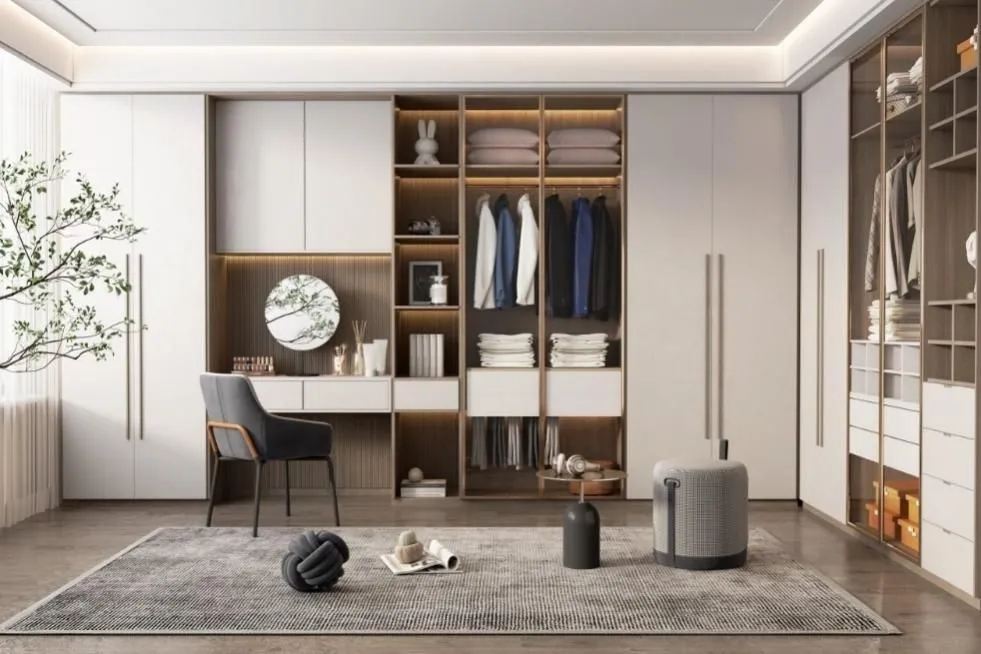
China remains one of the strongest sourcing bases for panel furniture and custom storage products. Buyers can often benefit from wide material choices, flexible finishes, OEM/ODM support, and scalable production. However, not every supplier is equally prepared for B2B work. Some companies can produce attractive samples but struggle with mass production consistency, export packing, or project coordination.
That is why professional buyers need a more structured evaluation process.
This guide explains what B2B buyers should check before placing an order with a custom closet manufacturer in China, especially for OEM/ODM furniture programs, hotel casegoods, apartment furniture packages, and recurring bulk orders.
Table of Contents
- Why B2B buyers source custom wardrobes from China
- Who should work with a custom wardrobe manufacturer in China
- 12 checks buyers must make before ordering
- Common sourcing mistakes in wardrobe projects
- Why OEM/ODM support matters in hotel and apartment projects
- FAQ
- Conclusion
Why B2B Buyers Source Custom Wardrobes from China
Many B2B buyers choose China because the supply chain is complete and efficient. A qualified custom wardrobe manufacturer in China can often provide panel processing, surface finishing, hardware matching, custom dimensions, flat-pack engineering, and export packing from one coordinated system.
This matters in commercial procurement because buyers often need more than a standard catalog product. They may require specific dimensions, defined finishes, packaging standards, room-based labels, or mixed product loading for project delivery.
For furniture brands, distributors, and project buyers, China can offer advantages in these areas:
- OEM production based on the buyer’s drawings and requirements
- ODM development based on local market demand
- flexible material and finish options
- scalable output for volume orders
- export-ready packing and container loading
- support for hotel, apartment, and developer projects
The real advantage is not only cost. The real advantage is manufacturing flexibility supported by an experienced export system.
Who Should Work with a Custom Wardrobe Manufacturer in China
A custom wardrobe manufacturer in China is usually a good fit for buyers who need repeatable production and specification control.
Hotel and Hospitality Buyers
Hotel projects need wardrobes that match room concepts, finish schedules, and surrounding furniture such as bedside tables, vanities, and TV units. The supplier must understand commercial consistency, not just retail appearance.
Apartment and Residential Project Buyers
Apartment developers and furnished housing operators often need large quantities with stable dimensions, practical internal layouts, cost efficiency, and installation-friendly structures.
Furniture Importers and Wholesalers
Importers and wholesalers need a supplier that can support repeat orders, standardize packaging, manage quality risk, and communicate clearly during production.
OEM and ODM Brand Buyers
Brand owners need a partner that can translate design intent into mass production while maintaining finish quality, brand consistency, and cost control.
12 Checks B2B Buyers Must Make Before Ordering
1. Confirm That the Supplier Is a Real Manufacturer
Many suppliers present themselves as factories, but some are actually trading companies or mixed sourcing offices. This does not always mean they are unsuitable, but it does affect lead time control, transparency, engineering depth, and problem-solving ability.
A real factory should be able to explain:
- what production processes are done in-house
- what processes are outsourced
- what panel machinery is used
- how edgebanding and drilling are managed
- how assembly and packing are organized
- what the monthly output capacity is for wardrobes or panel furniture
For B2B buyers, this is one of the first and most important checks.
Questions to ask
- Are you a manufacturer or a trading company?
- Which production processes are completed in your own factory?
- Can you share workshop photos or production videos?
- Can third-party inspectors visit before shipment?
2. Check Real OEM and ODM Capability
A supplier may offer “customization,” but B2B buyers should verify whether the factory can truly handle OEM/ODM wardrobe manufacturing.
A qualified supplier should be able to work from:
- technical drawings
- finish schedules
- room lists or BOQ files
- sample boards
- concept sketches
- target market requirements
- packaging instructions
A strong OEM wardrobe manufacturer will not only copy a design. The factory should also understand structure optimization, cost-efficient material selection, hardware compatibility, and export packing logic.
Good sign
If the factory discusses production feasibility, panel yield, installation efficiency, and packaging structure, it usually indicates deeper experience with real B2B projects.
3. Review Board Materials and Compliance Options
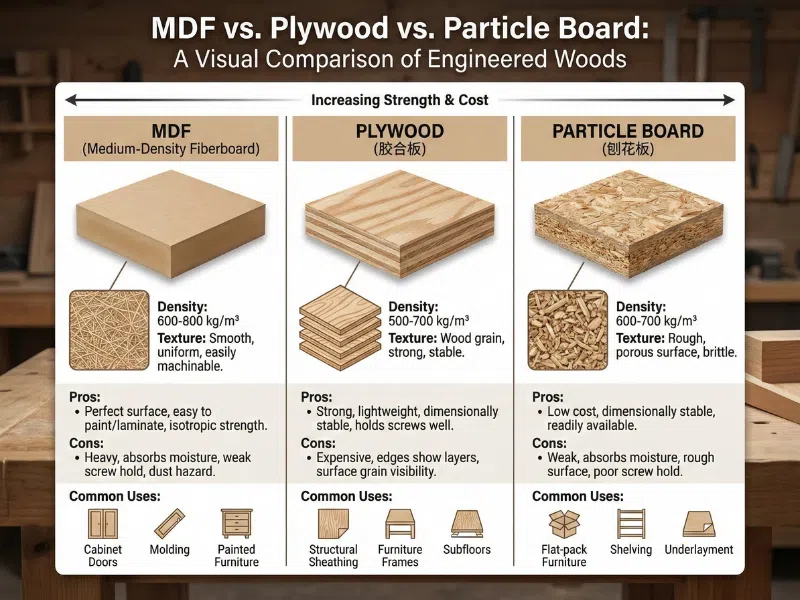
Material selection is critical in wardrobe projects. Common materials include plywood, MDF, particleboard, melamine-faced boards, veneer-faced boards, and laminate panels. Buyers should confirm not only the visual result, but also the compliance suitability for the destination market.
If the products are intended for the U.S. market, buyers should check whether the supplier understands EPA TSCA Title VI requirements for composite wood products and finished goods containing those materials. The U.S. Environmental Protection Agency provides the official overview here: Formaldehyde Emission Standards for Composite Wood Products.
If the goods will enter California, buyers should also review the California Air Resources Board composite wood program: CARB Composite Wood Products Program.
For buyers with sustainability requirements, it is also helpful to understand chain-of-custody rules for certified forest-based materials. The Forest Stewardship Council explains this here: FSC Chain of Custody.
Questions to ask
- What board materials do you recommend for this project?
- Can you support TSCA Title VI compliant panels?
- Can you provide FSC-certified material on request?
- Which finish systems are available: melamine, veneer, laminate, lacquer, PET, or UV coating?
- Which material option is most stable for repeat production?
4. Evaluate Finish Consistency Across Bulk Production
For wardrobes, finish problems are one of the most common causes of complaints in export orders. A sample may look good, but bulk production can still create issues such as color variation, edge mismatch, glue marks, scratches, poor sheen control, or inconsistent grain direction.
This becomes more important in hotels and furnished apartments, where many units are installed side by side.
Buyers should check whether the supplier has a clear method for controlling:
- board color matching
- edge banding quality
- lacquer smoothness
- veneer continuity
- interior and exterior finish consistency
- finish approval against signed samples
Ask whether the factory uses sealed approval samples before mass production begins.
5. Confirm Hardware Standards and Budget Flexibility
Wardrobe performance depends heavily on hardware. Hinges, drawer slides, hanging rails, track systems, and soft-close mechanisms all affect long-term user satisfaction.
B2B buyers should not only ask which hardware brands are used. They should also ask whether the supplier can offer different hardware solutions for different budget levels and market expectations.
A capable bulk order wardrobe supplier should be able to offer:
- an economical option for cost-sensitive projects
- a mid-range commercial option for regular use
- a premium option for higher-end residential or hospitality use
This flexibility helps project buyers balance cost and performance more effectively.
6. Review the Quality Control System
A serious manufacturer should have a clear QC process, not just a general promise of “good quality.”
A strong quality control system normally includes:
- incoming material inspection
- in-process checks during panel cutting and drilling
- trial assembly checks
- surface finish inspection
- hardware testing
- final inspection before packing
- packing verification before loading
Buyers can also ask whether the factory operates under a recognized quality management framework. ISO explains the principles behind ISO 9001 here: ISO 9001 Overview.
Ask for practical proof
- QC checklist examples
- inspection photos
- dimension records
- hardware testing records
- final packing approval process
7. Ask About Engineering and Drawing Support
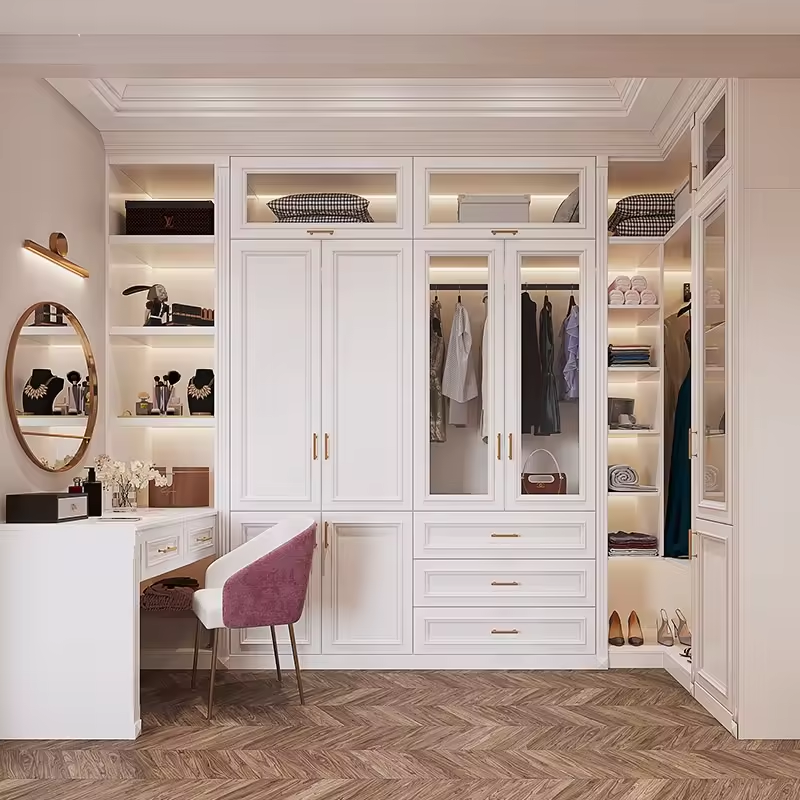
In project furniture procurement, engineering support is often as important as manufacturing itself. A supplier may produce wardrobes, but can they support your project workflow?
A suitable wardrobe factory should be able to help with:
- shop drawing confirmation
- room-type dimension planning
- knock-down structure optimization
- hardware placement details
- installation sequence logic
- item coding and room-based labels
This is especially important for hotel and apartment projects where installation speed affects site schedules and labor costs.
Warning sign
If a supplier cannot explain how drawings are reviewed, approved, revised, and released to production, the risk of order errors is much higher.
8. Verify Lead Time Discipline and Production Capacity
One of the most common sourcing mistakes is choosing a supplier based only on quoted lead time without verifying real capacity.
Lead time for wardrobes can be affected by:
- number of SKUs
- material availability
- finish complexity
- hardware sourcing
- sample approval timing
- packing format
- seasonal shipping congestion
A reliable supplier should clearly separate:
- sample lead time
- mass production lead time
- reorder lead time
This helps buyers plan purchasing schedules more accurately and reduces the risk of project delays.
9. Check Export Packing and Loading Experience
Export packing is a major part of wardrobe sourcing. Even good products can arrive damaged if packing is poorly designed.
For B2B orders, buyers should ask whether the supplier supports:
- flat-pack export cartons
- reinforced corners
- foam and anti-scratch protection
- hardware bag control
- carton marking by item code or room code
- palletized packing if required
- mixed container loading for project delivery
Packing should be part of quotation and engineering discussion from the beginning, not something left until the end.
10. Review Compliance Awareness for Target Markets
A qualified custom wardrobe manufacturer in China should understand which compliance expectations apply to your destination market.
For example:
For U.S. projects involving composite wood products, buyers often need to review EPA TSCA Title VI requirements: EPA Formaldehyde Standards.
For California, buyers should also understand CARB requirements: CARB Composite Wood Program.
For certified forest-based sourcing, the FSC chain-of-custody framework is relevant: FSC Chain of Custody.
For commercial furniture quality and performance discussions, BIFMA offers a useful standards overview: BIFMA Standards Overview.
A good supplier does not need to claim every certification for every product. But they should know which standards are relevant and how to discuss them professionally.
11. Assess Communication and Problem-Solving Speed
Bulk furniture sourcing is also a communication test. The best supplier is often the one that prevents problems early, not the one that only responds after issues appear.
Buyers should evaluate whether the factory can:
- answer technical questions clearly
- confirm drawing changes quickly
- identify risks before production
- provide regular production updates
- suggest solutions when adjustments are needed
For overseas B2B buyers, this often matters more than small price differences.
12. Review After-Sales Service and Claim Handling
Even good factories may face occasional shortages, damage claims, or hardware issues. What matters is whether they have a professional way to manage them.
Buyers should ask:
- what evidence is required for claims
- how missing parts are verified
- how replacement hardware is supplied
- whether remake policy exists for manufacturing defects
- how future orders are protected from repeat issues
For hotel and apartment projects, after-sales response is part of supplier qualification.
[Insert Image 4 here]
Image ALT: Flat-pack export packaging for custom wardrobe manufacturer in China
Image Title: Export Packing for Bulk Wardrobe Orders
Caption: Strong export packing helps reduce transit damage and keeps bulk project deliveries organized.
Common Mistakes B2B Buyers Make When Sourcing Wardrobes from China
Choosing Only by Price
A low quotation can become a high total cost if it creates delays, defects, or site rework.
Approving a Sample Without Locking Production Details
A good prototype does not guarantee stable bulk production. Structure, materials, finish, hardware, and packing all need written confirmation.
Ignoring Packing Details
Poor export packing can cause scratches, damaged panels, missing hardware, and installation delays.
Using Incomplete Specifications
If board thickness, finish code, hardware grade, or packing requirements are vague, disputes become more likely later.
Selecting a Supplier Without Project Experience
A supplier that is suitable for small retail orders may not be prepared for hotel or apartment volume programs.
Why OEM and ODM Support Matter in Hotel and Apartment Projects
For hospitality and residential project buyers, wardrobes are part of a coordinated furniture package. They must work visually and functionally with the rest of the room.
That is why a strong OEM wardrobe manufacturer adds value in several ways:
- improving value engineering
- adapting designs for manufacturing efficiency
- balancing budget and finish level
- supporting room-based labeling and installation
- reducing project risk through technical coordination
This is also why experienced buyers prefer a manufacturing partner, not just a catalog supplier.
What a Good Custom Wardrobe Manufacturer in China Should Deliver
Before you place an order, the supplier should be able to provide:
- a clear quotation with material details
- technical confirmation of dimensions and structure
- a sample or prototype plan
- realistic production lead times
- a defined QC process
- compliance awareness for the destination market
- export packing proposals
- a communication workflow for project execution
- a practical after-sales policy
If these points remain unclear, the sourcing risk remains high.
Conclusion
Working with a custom wardrobe manufacturer in China can create major advantages for B2B buyers, especially in hotel, apartment, OEM, ODM, and distribution programs. However, successful sourcing depends on choosing a supplier with real manufacturing capability, stable quality systems, professional engineering support, and export experience.
The best supplier is not simply the one with the lowest price. It is the one that can repeat approved quality across the full order, manage technical details correctly, and support your commercial goals with reliable service.
If you evaluate suppliers using the 12 checks in this guide, you will reduce sourcing risk and improve the quality of your purchasing decision.
Need a custom wardrobe manufacturer in China for your next project? Contact us for OEM/ODM options, material recommendations, shop-drawing support, and a bulk quotation tailored to your hotel, apartment, or distribution business.
FAQ
How do I choose a custom wardrobe manufacturer in China?
You should check whether the supplier is a real manufacturer, then review OEM/ODM capability, materials, compliance awareness, QC systems, engineering support, export packing, and after-sales response.
What materials are commonly used in custom wardrobe production?
Common materials include plywood, MDF, particleboard, melamine-faced boards, laminate panels, and veneer-faced panels. The right option depends on budget, finish requirements, and target market compliance.
Do I need to check formaldehyde compliance when importing wardrobes?
Yes. If your wardrobes use composite wood products, you should confirm whether the materials meet applicable market rules such as EPA TSCA Title VI in the U.S. and CARB requirements for California.
Can a Chinese wardrobe factory handle hotel and apartment projects?
Yes, but you should confirm that the factory has experience with project drawings, finish consistency, bulk production, room-based labeling, and installation-friendly export packing.
What is the difference between OEM and ODM wardrobes?
OEM means the factory produces according to the buyer’s design, brand, or specification. ODM means the factory starts from an existing design platform and adapts it to the buyer’s needs.
Why is export packing so important for bulk wardrobe orders?
Wardrobes often ship in flat-pack form with many panels and hardware sets. Weak packing can cause damage, shortages, and costly installation delays.
Useful References for International Buyers
For buyers who want to better understand certified sourcing, the Forest Stewardship Council provides a clear explanation of chain-of-custody requirements:
FSC Chain of Custody
https://fsc.org/en/chain-of-custody
For U.S. import projects involving composite wood products, the U.S. Environmental Protection Agency explains formaldehyde emission standards here:
EPA Formaldehyde Emission Standards for Composite Wood Products
https://www.epa.gov/formaldehyde/formaldehyde-emission-standards-composite-wood-products
For California-focused compliance checks, the California Air Resources Board provides an official overview here:
CARB Composite Wood Products Program
https://ww2.arb.ca.gov/our-work/programs/composite-wood-products-program
For buyers who want to review quality management principles, ISO provides an overview of ISO 9001 here:
ISO 9001
https://www.iso.org/standard/62085.html
For commercial furniture standards awareness, BIFMA provides a useful standards overview here:
BIFMA Standards Overview
https://www.bifma.org/page/standardsoverview
For buyers who want a broader reference on furniture safety standard development, ASTM provides information here:
ASTM Furniture Safety Standards
https://www.astm.org/membership-participation/technical-committees/committee-f15/subcommittee-f15/jurisdiction-f1542