TV Stand Size Guide for Buyers: How to Choose the Right Width, Clearance & Stability (43–85″ TVs)
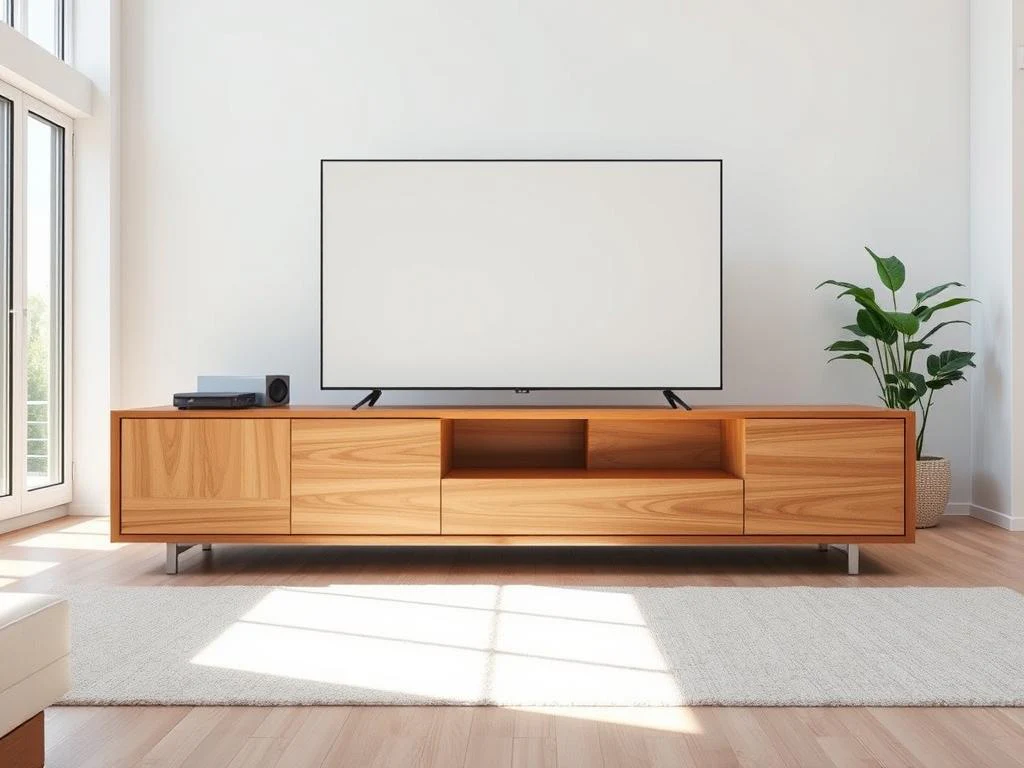
If you’re sourcing TV stand SKUs for retail, e-commerce, or multi-unit projects (apartments, BTR, hotels), “size” is rarely just aesthetics. A mismatched stand triggers returns. It causes bad reviews and project rework. This is particularly true when the TV is between 65 and 85 inches. The issue is exacerbated if the packaging is flat-pack and the corridor is tight.
At Starwood, our TV stand collection is built around space-saving designs, bulk/wholesale readiness, and customizable size/finish/shelf configuration for project rollouts. Flat-Pack Furniture Manufacturer This guide turns those capabilities into a practical sizing system. Your team can use this for RFQs. It is also useful in pre-production checks.
Table of Contents
- The 7 sizing rules buyers can standardize
- Rule #1: TV size → minimum stand width (43/55/65/70/75/85)
- Rule #2: Depth & height—what changes by channel (e-com vs project vs hotel)
- Rule #3: Walkway clearance for apartments, BTR, and hotel rooms
- Rule #4: Load capacity is not stability—how to avoid tip/tilt risk
- Rule #5: Storage layout affects dimensions (drawers, doors, open bays)
- Rule #6: Cable management & ventilation—size requirements buyers forget
- Rule #7: Packaging & installation tolerances (RTA/KD)
- Spec-ready RFQ “Size Confirmation Checklist” (copy/paste)
- FAQ
1) The 7 sizing rules buyers can standardize
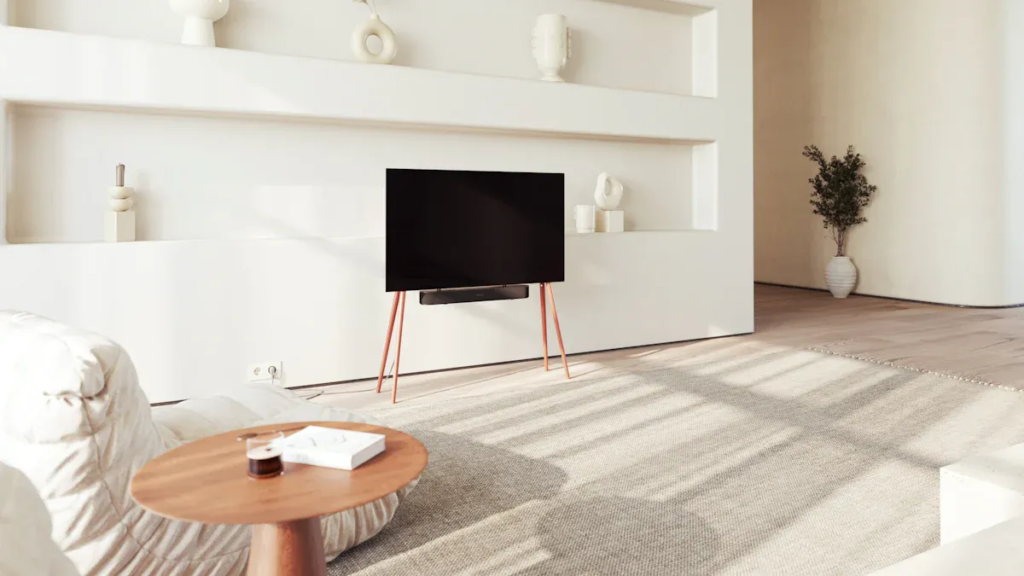
Rule 1 — Match stand width to TV diagonal with side margins.
Rule 2 — Confirm depth against TV base + cable radius + wall outlet clearance.
Rule 3 — Set a walkway line (especially for apartments/hotels) and protect it.
Rule 4 — Separate “load rating” from “stability / anti-tip.”
Rule 5 — Storage decisions (drawers/doors/open bays) change the real footprint.
Rule 6 — Cable management & ventilation need physical space, not just holes.
Rule 7 — Flat-pack packaging + assembly tolerance must be designed into size.
If you only implement two rules, you’ll see the fastest drop in returns. (1) Width rule and (3) walkway line will also reduce site issues.
2) Rule #1: TV size → minimum stand width (with buyer-safe margins)
The simple buyer rule (works across most markets)
For a stable, visually balanced setup:
- Minimum stand width = TV screen width + 100–200 mm total margin
- That’s typically 50–100 mm clearance on each side (more for premium displays or when customers place décor/speakers).
Why it matters: TVs are wider than most people think, and bases vary. The stand must accommodate the panel. It also needs to fit the center/dual feet base. Additionally, it must consider user behavior. A “55 tv on stand” is often pushed back near the wall with cables bent.
Quick sizing table (buyer-friendly defaults)
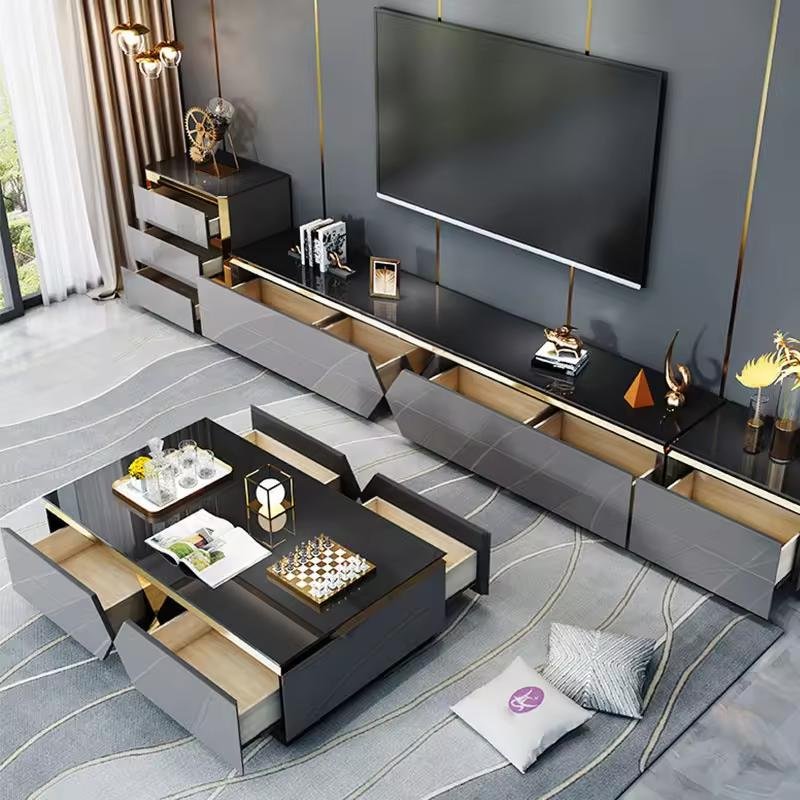
Use this table as a starting point; confirm the actual TV base and VESA/stand footprint in your RFQ.
| TV Size Search Intent | Typical “Safe” Stand Width Range | Common Buyer Search Example |
|---|---|---|
| 43 inch tv stand | 1000–1200 mm | “43 inch tv stand” |
| 55 in tv stand / 55 tv on stand | 1400–1600 mm | “55 inch tv stand width” |
| 60 tv stand / 60 inch tv and stand | 1500–1700 mm | “media console dimensions” |
| 65 in tv stand | 1600–1800 mm | “best tv stands for 65 inch tv” |
| 70 in tv stand | 1800–2000 mm | “cool tv stands” |
| 75in tv stand | 1800–2200 mm | “best tv stand for 75 inch tv” |
| 85″ (large-format projects) | 2000–2400 mm | “best standing tv” |
Buyer note: For 75–85″, customers often want longer “bench” looks—low-profile, minimal legs—so width grows faster than the TV size.
Special cases that change width decisions
- Corner SKUs: “corner tv stand 55 inch” must respect diagonal wall placement; usable width is different from front width.
- Barn door tv stand: sliding doors need track clearance; front width often increases.
- Floating tv stands: wall-mounted cabinets need a wider “visual base” to look balanced and allow internal cable routing.
- Fireplace SKUs: “fireplace tv stand 75 inch”. “Fireplace tv stand for 65 inch tv”. “Fireplace heater tv stand”. “Corner electric fireplace tv stand”. The insert module dictates the central width. This pushes the overall width up.
3) Rule #2: Depth & height—what changes by channel (e-com vs project vs hotel)
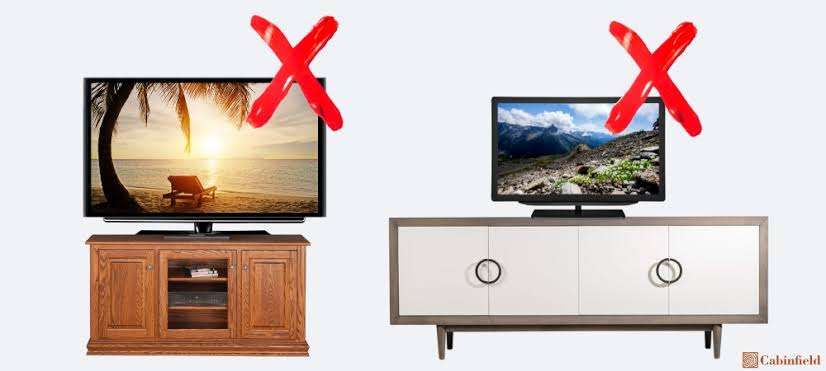
Depth: don’t forget the TV base and cable bend
Many returns happen when:
- The TV base is deeper than expected
- The back panel blocks cable plugs
- The stand is pushed to the wall and cables kink
B2B recommendation: build the depth spec around three components:
- TV base depth
- Cable radius (especially HDMI + power)
- Wall outlet / skirting clearance
For project TV stands (apartments/hotels), depth is also about circulation. Buyers like a slimmer profile to protect walkways.
Height: viewing comfort vs perceived “luxury”
Height is less standardized than width, but buyers usually pick by:
- Sofa seat height and viewing angle
- Soundbar placement
- Cleaning access (especially rentals)
If you offer customization (as we do for size/finish/shelf configuration Flat-Pack Furniture Manufacturer), propose two height tiers:
- Low bench (modern, minimal, “besta tv stand” style benchmarking)
- Standard console (more storage, better for large remotes/devices)
4) Rule #3: Walkway clearance for apartments, BTR, and hotel rooms
Why walkway lines decide whether a SKU works in projects
In multi-unit rollouts, the TV stand isn’t isolated—it’s part of an interior circulation plan. If the cabinet pushes people into a tight corridor, you’ll get:
- site complaints
- furniture relocation requests
- damage from suitcases/cleaning carts
Use an “accessible-route” reference as a conservative baseline
For hospitality and managed rentals, many teams use 36 inches (915 mm) as a conservative minimum clear width reference. This measurement is for continuous routes. access-board.gov+1
How to apply it (practical):
- Draw the room plan with the TV wall and sofa line
- Lock a minimum clear route from entry → bed/sofa → bathroom
- Size the TV stand depth so it never breaks the route in typical layouts
This is especially important for small apartments, BTR units, dorms, and hotel guest rooms. These are exactly the bulk-order use cases many buyers source TV stands for. Flat-Pack Furniture Manufacturer
5) Rule #4: Load capacity is not stability—avoid tip/tilt risks
What buyers should request (and factories should document)
A 75″ TV can be “within load rating” but still be unstable if:
- The base sits near the front edge
- The stand is narrow relative to height
- The floor is uneven
- Users open drawers while kids pull/climb
For child safety and brand risk, anchoring guidance is widely promoted by CPSC’s “Anchor It!” campaign. Anchor It+1
Stability checklist (spec language buyers can use)
Ask the supplier to clarify:
- Anti-tip provision (brackets/straps, or at least anchor-ready structure)
- Center-of-gravity design (wider base, stronger back panel, reinforcement)
- Drawer/door behavior (soft-close reduces slam; full-extension drawers increase tip risk if multiple are open)
If you sell “tv on portable stand” or “adjustable tv stand” (mobility products), you need to consider stability. It requires a separate spec track. Focus on casters, brakes, and tilt.
6) Rule #5: Storage layout changes the real footprint
Storage is why customers buy a TV stand—so layout drives size
Common buyer searches include:
- “bookshelf and tv stand” (vertical storage integration)
- “cool tv stands” (open display + décor)
- “affordable tv stands” (usually fewer parts, simpler doors)
Design choices that affect dimensions:
- Drawers need internal depth + slide clearance
- Doors need swing clearance (or choose sliding/barn doors)
- Open bays must fit devices + airflow; otherwise returns
In our product positioning, “hidden storage, soft-close doors and integrated cable management” are highlighted. They reduce clutter and improve daily use. Flat-Pack Furniture Manufacturer
7) Rule #6: Cable management & ventilation must be sized, not “mentioned”
Cable holes are not enough
Buyers frequently ask for:
- clean back look
- “wall mount for tv stand” compatibility
- device ventilation
Tie your size spec to functionality:
- Back panel cutouts must align with power outlets
- Cable channels need internal space (especially for power bricks)
- Ventilation requires real open area, not micro-perforations
Also watch for wall-mount installs: VESA mount patterns are standardized; buyers often confirm compatibility using the VESA FDMI standard. VESA显示标准+1
- “65 inch tv stand with mount” (buyers want mount-ready routing)
- “floating tv stands” (need hidden cable space inside the cabinet)
8) Rule #7: RTA/KD packaging & assembly tolerance must be designed into size
Why “perfect CAD size” fails in real shipments
Flat-pack TV stand SKUs fail mainly due to:
- edge impacts in transit (long panels)
- missing/incorrect hardware
- assembly confusion → crooked doors → perceived size/quality issues
If your factory offering is RTA/flat-pack export (as ours is positioned), build size decisions with:
- packaging thickness (corner protectors, foam)
- hardware allocation (one-bag-per-step)
- pre-drilled accuracy so door gaps remain consistent
This is how “affordable tv stand” lines stay low-return without downgrading the look.
9) RFQ Size Confirmation Checklist (copy/paste, buyer-ready)
Use this in every inquiry (OEM/ODM, wholesale, or project):
A) TV & installation
- TV diagonal size(s): 43 / 55 / 60 / 65 / 70 / 75 / 85
- TV base type: center pedestal / dual feet / custom stand
- Base footprint (W×D) and TV weight
- Install type: tabletop / wall mount (VESA pattern, cable route needs) VESA显示标准
B) Stand sizing targets
- Target overall width range (mm)
- Target depth limit (mm) based on room route
- Target height (mm) based on sofa/bed viewing
C) Space & walkway line (projects)
- Room type: apartment / BTR / hotel guest room / dorm
- Minimum clear route requirement (e.g., 915 mm / 36″) access-board.gov
- Outlet location & skirting/baseboard details
D) Stability & safety
- Required load rating (top panel + shelf)
- Anti-tip readiness (anchor kit included? anchor points?) Anchor It+1
- Drawer configuration (count + extension type)
E) Function & layout
- Device list: soundbar, console, set-top box, router (with dimensions)
- Cable management needs (holes, channels, back panel design)
- Ventilation / heat sources (fireplace heater module if applicable)
F) Packaging & assembly

- Channel: e-commerce / retail / project
- Package size limits (carton max length/weight)
- Instruction language requirements
- Spare parts ratio for projects
10) Popular search intents buyers use
You’ll see these in RFQs and Google searches—here’s how they map to sizing:
- Fireplace category: There are many types in this category. They include fireplace and TV stand, fireplace heater TV stand, and Wayfair fireplace TV stand. Other types are Home Depot fireplace TV stand, Lowes fireplace TV stand, and Costco TV stand with fireplace. Additional options are fireplace TV stand Walmart and chimney TV stand.
The insert module dictates width and depth. It also specifies ventilation clearance. - Style & material searches: cherry wood tv stand, dark wood tv stand. Generic tv stand, cool tv stands. Barn door tv stand
→ Style impacts door clearance. Style affects door clearance. It also affects the front structure. - Special placement: corner tv stand 55 inch, floating tv stands
→ needs different width logic and wall constraints. - Mobility/adjustability: tv on portable stand, adjustable tv stand
→ stability and base size become primary. - Brand benchmark: besta tv stand
→ buyers use it as a mental size reference; offer comparable widths with OEM finishes.
FAQ
Q1: What width TV stand do I need for a 55″ TV?
A: For most buyers, start with 1400–1600 mm width. This helps keep side margins and handle different base types (“55 in tv stand”, “55 tv on stand”).
Q2: What is the best TV stand width for a 75″ TV?
A: Most 75″ setups land in 1800–2200 mm. The size varies. It depends on whether it’s a low bench, a storage-heavy console, or a fireplace tv stand 75 inch style. An insert module can be included.
Q3: How much walkway clearance should projects protect in front of a TV stand?
A: Many teams use 36″ (915 mm) as a conservative reference for a continuous clear route. This is especially important in hotels and accessible layouts. access-board.gov
Q4: Is “weight capacity” enough to ensure a TV stand is safe?
A: No—stability depends on center-of-gravity, drawer behavior, floor conditions, and anti-tip readiness. CPSC’s Anchor It guidance highlights anchoring TVs/furniture to reduce tip-over risk. Anchor It+1
Q5: Do wall-mounted TVs change TV stand sizing?
A: Yes—wall-mount installs increase the importance of cable routing space and outlet alignment. VESA FDMI patterns help standardize mount interfaces. VESA显示标准+1
Q6: Why do buyers return TV stands even when the TV “fits”?
A: The most common reasons are depth/cable clearance issues. There is also instability perception. Another issue is device bays that don’t fit consoles/soundbars. Additionally, there is assembly/packaging damage in flat-pack channels.
If you’re planning a new TV stand program, decide on the type. It could be an affordable tv stand line for e-commerce. Another option is a 65 in tv stand best-seller for retail. You might also consider project-ready consoles for hotels/BTR. Send us your target TV sizes, room depth limits, and packaging constraints. We’ll propose 2–3 size platforms (e.g., 1400/1600/1800/2000 mm), matching finishes and storage layouts, with OEM/ODM options and bulk-order lead-time planning—so your rollout stays consistent across SKUs and batches.
ABOUT US
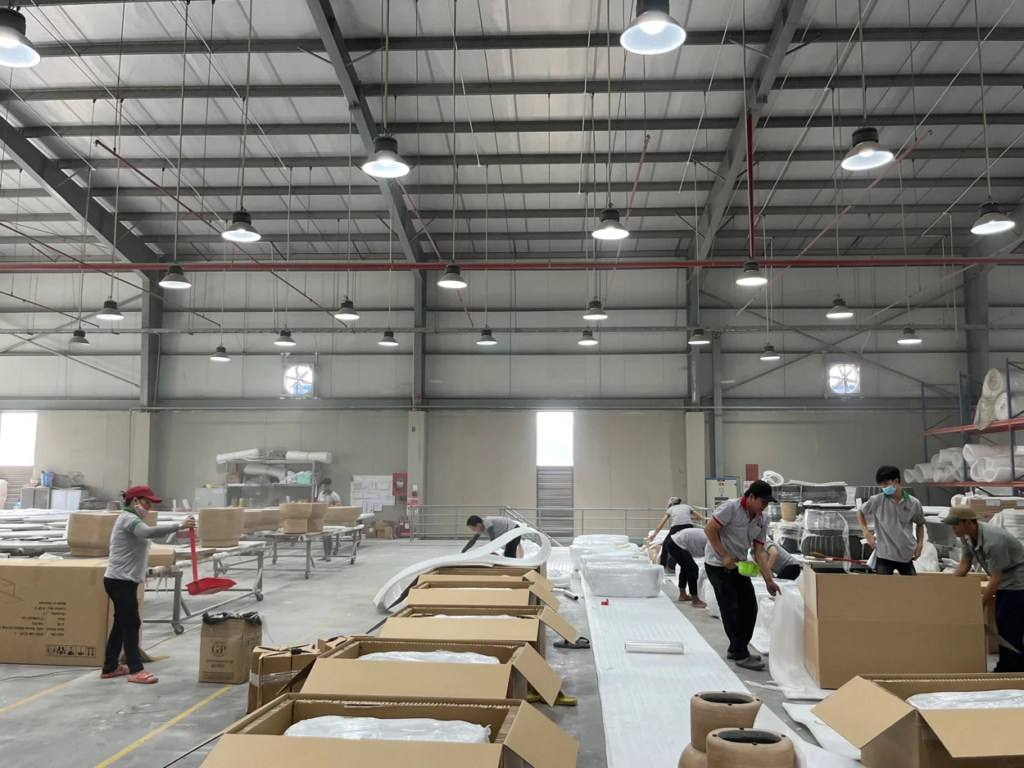
About Us — Starwood TV Stand OEM/ODM Manufacturer
Starwood is a panel-furniture manufacturer and export supplier focused on TV stand and living-room storage programs for professional buyers. We support OEM/ODM development for wholesalers, retailers, e-commerce brands, and FF&E/project procurement (hotels, apartments, BTR and multi-unit rollouts). Our TV stand range is engineered for space-efficient layouts and a stable structure. It includes practical cable management and buyer-friendly RTA/KD packaging. This helps reduce damage, returns, and installation issues at scale. We offer size platforms that cover 43–85″ TVs. Customization includes finishes, storage configurations, and hardware grades. We collaborate with you to align cost targets, lead time, and quality consistency. This ensures your best-selling SKUs remain repeatable and your projects deliver smoothly.
Learn more about our TV stand solutions here: https://plywoodmfr.com/living-room-furniture/tv-stand/