Kids Storage Furniture: 8 Profit-Ready Picks Wholesalers Reorder
Table of Contents
- Why “Storage” Drives Repeat Orders (Toys, Books, Seasonal Clothing)
- 8 Best-Selling Structures Buyers Actually Reorder
- Engineering Details That Decide Return Rates (Stops, Pinch Points, Cable Holes, Anti-Tip)
- Market Preferences: Retail Bundles vs. Single-SKU Expansion
- SKU Bundling Playbook: Entry / Core / Margin Builders
- Specs & Export Notes (KD/RTA, Materials, Hardware)
- FAQ
- CTA: Get the Catalog + Color Board + OEM Sampling Flow
1) Why “Storage” Is a High-Repeat Category
Kids storage furniture is crucial for wholesalers, distributors, and project furnishers. It is one of the few kids categories with predictable replacement cycles. It also has repeat purchasing triggers. Unlike “theme” products that peak once and fade, storage grows with the child. Additionally, it grows with the household. Therefore, the repurchase logic is built in.
The 3 demand engines that keep storage selling
(1) Toy rotation & daily tidying
Parents constantly need storage that makes cleanup fast. Toy volume increases faster than room size, so demand shifts from “one basket” to “structured storage systems” (cubbies, bins, drawers).
(2) Books & school supplies = stable year-round demand
Bookshelves and study storage don’t depend on holiday seasons. This is why kids furniture buyers often use storage SKUs to stabilize sales in slow months.
(3) Seasonal clothing & bedding changes
Seasonal rotation creates demand for wardrobes, drawer chests, under-bed storage, and multi-use cabinets. That’s also why “storage + bed” combinations often outperform plain beds in kids bedroom furniture sets planning.
B2B takeaway
If you are building a profitable catalog, start with kids storage furniture because it supports:
- Cross-selling with beds, desks, and wardrobes
- Project compatibility (apartment, hotel family suites, serviced apartments, dorm-style rentals)
- Lower trend risk compared to character-themed items
- Repeat orders driven by life stage (preschool → primary → teen)
2) 8 Best-Selling Structures (What Moves in Bulk)
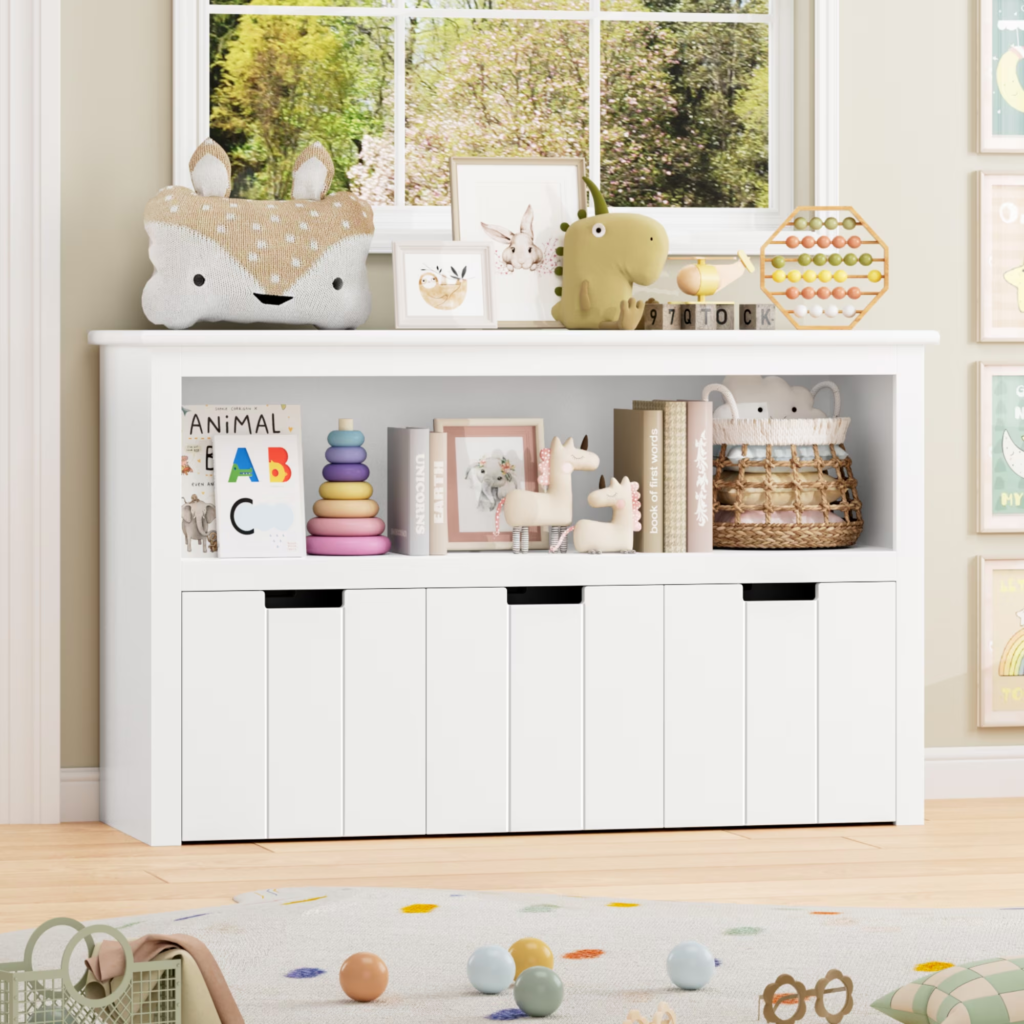
Below are the 8 structures that consistently perform for wholesalers and OEM/ODM programs. Your catalog can be 80% profitable if you plan these well, because they cover most room layouts and price tiers.
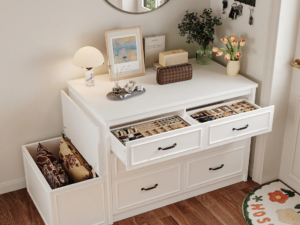
Structure #1: Drawer Chest / Dresser (3–6 drawers)
Best for: mass retail, apartment projects, mid-tier e-commerce bundles
Why it sells: universal use (clothes + toys + bedding), easy to photograph, easy to price tier
Margin lever: soft-close upgrade, thicker back panel, anti-tip kit, premium runners
Return-risk areas: drawer alignment, thin bottoms, no stops, unstable tall ratio
Authority note (anti-tip matters): U.S. clothing storage units are under a federal safety rule. They reference ASTM stability requirements. Buyers care because compliance reduces liability and returns. U.S. Consumer Product Safety Commission+1
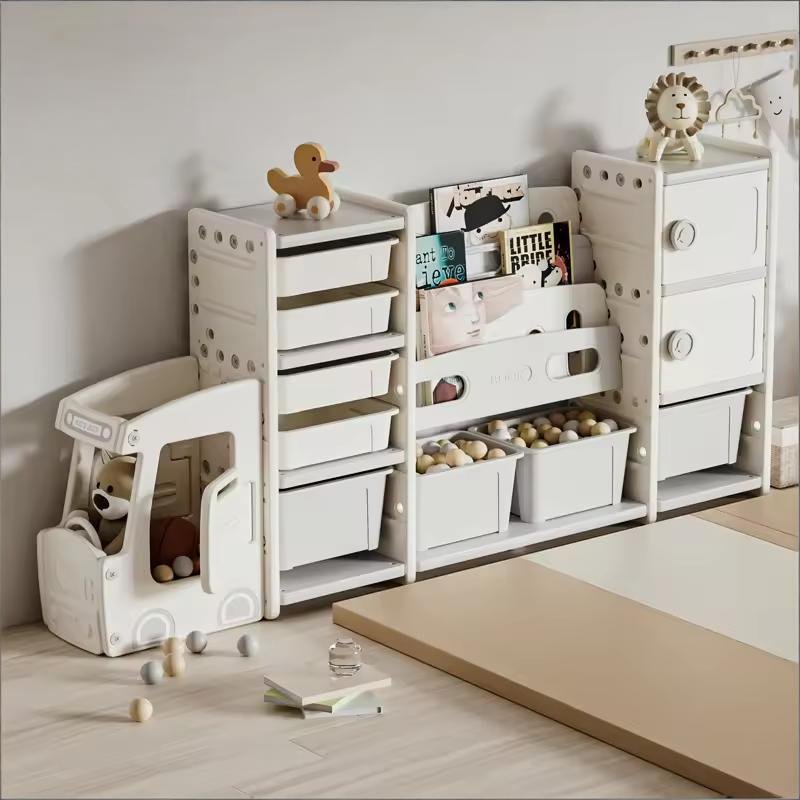
Structure #2: Toy Organizer (bins + open shelves)
Best for: preschool market, daycare/education channels, value bundles
Why it sells: fast “before/after tidy” story, great for small rooms
Margin lever: thicker side panels, rounded edges, reinforced base, improved bin quality
Return-risk areas: tipping from climbing, sharp corners, weak bin rails
Safety education references: CPSC’s Anchor It campaign and guidance focus on tip-over prevention and anchoring furniture. U.S. Consumer Product Safety Commission+1
Structure #3: Bookcase / Reading Shelf (front-facing or standard)
Best for: EU/UK, education projects, minimalist interiors
Why it sells: stable demand, easy room styling, upsell to “reading corner set”
Margin lever: adjustable shelves, anti-tip, premium edge banding
Return-risk areas: wobble on uneven floors, shelf sagging, missing wall-fix instructions
Structure #4: Cube Organizer / Modular Cubbies (2×2, 3×3, 4×2)
Best for: e-commerce, container-friendly shipments, mix-and-match catalog strategy
Why it sells: modular = easy SKU expansion; buyers can add bins later
Margin lever: add matching doors, bins, labels, child-safe handles
Return-risk areas: poor squareness, weak back, unstable stacking
International test methods: ISO storage-unit test methods address strength/durability/stability—useful language for professional buyers and spec sheets. 国际标准化组织
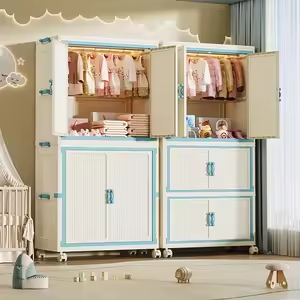
Structure #5: Wardrobe Combo (wardrobe + drawers + open shelves)
Best for: Middle East & EU projects, apartment furnishing packages
Why it sells: “complete storage wall” solution, reduces need for extra furniture
Margin lever: interior accessories (hanging rail, divider, soft-close hinges), thicker doors
Return-risk areas: door sag, hinge failure, poor ventilation, weak back board
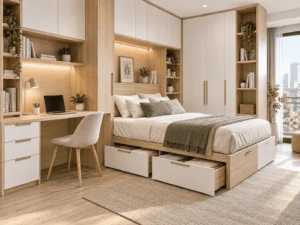
Structure #6: Under-Bed Storage (drawers / trundle drawers / lift-up base)
Best for: small rooms, project furnishing, bundles with bed frames
Why it sells: turns unused space into storage; strong “space-saving” message
Margin lever: soft-close drawer runners, upgraded wheels, dust-proof design
Return-risk areas: drawer friction on carpet, wheel quality, low clearance
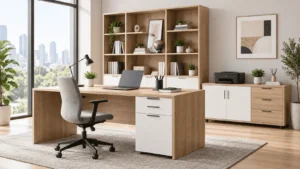
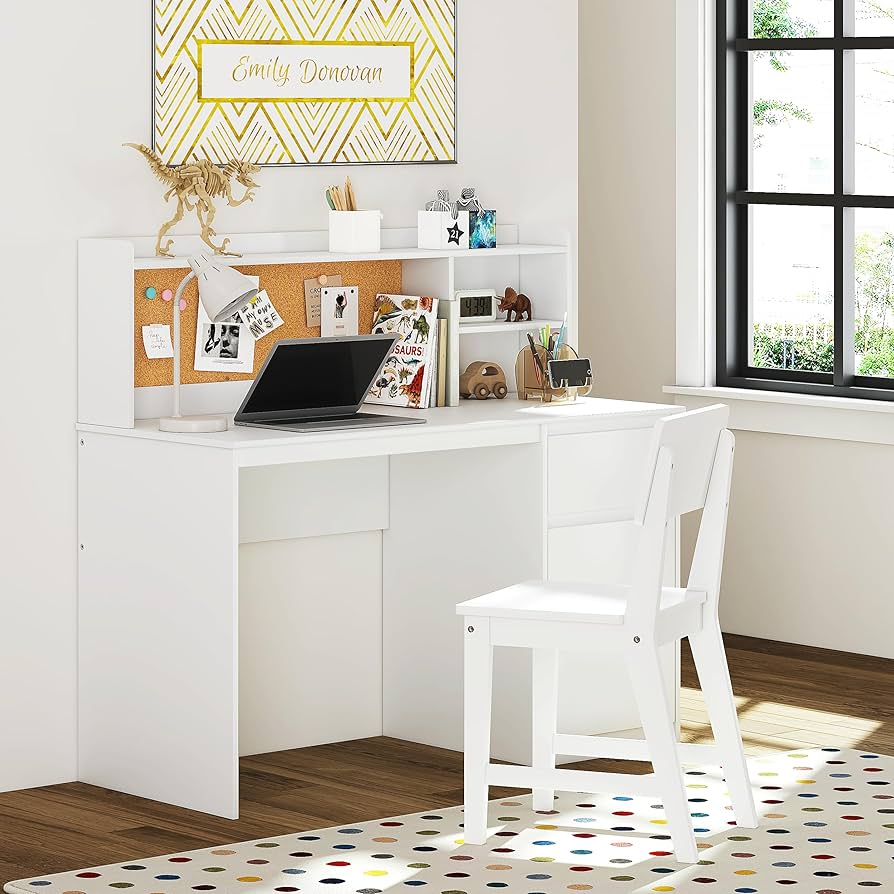
Structure #7: Desk + Hutch / Study Storage
Best for: UK/EU/AU, teen rooms, mid-to-high e-commerce
Why it sells: home learning trend; easy to create a “study corner” set
Margin lever: cable grommets, lighting channel, hidden storage
Return-risk areas: wobbly desk, sharp edges, insufficient leg clearance
Structure #8: Storage Stairs / Loft Combo Storage
Best for: premium kids programs, space-saving “hero” SKU, apartment projects
Why it sells: combines bed + storage + sometimes desk = high AOV
Margin lever: modular add-ons, better hardware, premium finishes
Return-risk areas: safety rails, stair stability, installation complexity
3) Engineering Details That Decide Return Rates
For B2B buyers, “nice design” is not enough. Return rates and claim costs are decided by details hidden in the structure. If you want long-term reorder programs, build your selection checklist around these points.
3.1 Drawer stops & anti-pull-out behavior
Drawers are often used as “steps” by children. Without proper stops and stability, the risk increases. Many safety standards focus on stability under drawer-opening scenarios—this is why professional buyers ask about test logic and anti-tip provisions. ASTM International | ASTM+1
What to specify in OEM/ODM:
- Drawer stop design (mechanical limit, anti-pull-out)
- Runner grade (standard vs. upgraded)
- Drawer bottom thickness and groove structure
- Squareness tolerance and alignment method
3.2 Pinch-point control (hands & hinges)
If your program targets the “best kids furniture” tier, pinch-point protection is a brand requirement—especially for toy cabinets and wardrobes.
What to specify:
- Soft-close hinges / slides as an option line (good margin lever)
- Safe edge radius for doors and lids
- Avoid exposed sharp hardware corners
3.3 Cable management & modern-use cutouts
Parents now place lamps, tablets, night lights, and air purifiers in kids rooms. Cable grommets reduce clutter and damage claims.
What to specify:
- Pre-cut grommet location + reinforcement ring
- Routing channel behind back panel
- Vent holes for electronics zones
3.4 Stability & anti-tip: non-negotiable for tall storage
Tip-over incidents are a widely recognized child safety issue, and multiple regulators publish guidance and requirements.
- U.S. CPSC provides business guidance for clothing storage units and references mandatory rules. U.S. Consumer Product Safety Commission
- Australia has introduced a mandatory information standard to reduce toppling furniture incidents. 澳大利亚竞争与消费者委员会
- Health Canada also publishes safety guidance on furniture tip-overs. 加拿大政府
What to specify for export programs:
- Anti-tip kit included (bracket + strap) for tall SKUs
- Wall-fix instructions in the manual
- Stability testing references in your spec sheet
3.5 Materials & emissions: compliance language helps win projects
For panel furniture export, buyers care about formaldehyde emissions compliance and documentation, especially for hotels, apartments, and public projects.
Authority reference (U.S. EPA TSCA Title VI): EPA’s composite wood formaldehyde emission standards are a common compliance language for international buyers. US EPA+1
What to specify:
- Panel type: plywood / MDF / OSB (and grade)
- Edge sealing method
- Supplier documentation for emission requirements (per target market)
3.6 EU/UK spec language: storage safety test methods
For EU/UK-oriented buyers, referencing recognized storage furniture safety requirements improves procurement acceptance. EN 14749 is commonly used language for domestic storage safety requirements and test methods. E-Standard+1
4) Market Preferences: Retail Bundles vs Single SKU Expansion
A practical catalog strategy is not “one global product.” It’s one platform + multiple market-facing configurations.
4.1 USA / Canada: bundle convenience + compliance confidence
- Buyers like “complete-room stories” similar to kids bedroom furniture sets bundles (bed + dresser + storage).
- Compliance language matters for tall storage (anti-tip). U.S. Consumer Product Safety Commission+1
- E-commerce wants KD/RTA packaging to reduce damages and shipping cost.
4.2 UK / EU: minimalist styling + modular expansion
- Neutral colors, simple lines, modular cube organizers, bookcases
- Spec language around safety test methods helps tender approvals. E-Standard+1
- Project buyers value long-term spare parts availability (hinges, runners)
4.3 Middle East: storage capacity + wardrobe combos
- Wardrobe combos and larger capacity storage perform well
- Premium finishing and hardware upgrades often have higher acceptance
- Projects demand consistent batch color control and packaging strength
4.4 Australia: tip-over warnings & buyer education are visible
Australia’s product safety guidance and mandatory information standard put toppling risk into buyer awareness. 澳大利亚竞争与消费者委员会+1
Your manuals, labels, and anti-tip kit become not just “nice to have,” but procurement differentiators.
5) SKU Bundling Playbook (Entry / Core / Margin Builders)
This is where wholesalers win. Don’t sell single pieces—sell a system. Below is a proven way to design a catalog that supports repeat orders, store resets, and project packages.
5.1 Entry Set (Price-Lead / Fast Volume)
Goal: win listings, promotions, and tenders
Typical mix:
- 1× cube organizer (2×2)
- 1× toy organizer (bins)
- 1× small bookcase
Why it works: low carton volume, easy KD/RTA, high sell-through
Positioning keywords: cheap kids furniture, furniture kids, kids storage furniture
5.2 Core Set (Best Seller / Year-Round Reorder)
Goal: become your customer’s stable reorder program
Typical mix:
- 1× 4-drawer dresser
- 1× cube organizer (3×3)
- 1× desk + hutch OR bookcase
Why it works: covers daily needs (clothes + books + study), good margin options
Positioning keywords: best kids furniture, kid bedroom furniture, kids furniture set
5.3 Margin Builder (Premium Add-Ons / Project Upgrades)
Goal: lift profit without changing the main structure
Add-on strategy:
- Soft-close hardware upgrade package
- Anti-tip kit + upgraded manual/label pack
- Premium edge banding and thicker back panel
- Matching doors/bins for cubbies
- Wardrobe interior accessories
Why it works: Procurement can justify upgrades as “safety + durability + user experience,” not just “higher price.”
Authority references for transition text you can copy into your blog:
- “Tip-over prevention is a recognized child safety issue; procurement teams often request anchoring guidance and stability compliance language.” U.S. Consumer Product Safety Commission+1
- “Formaldehyde emissions requirements for composite wood are referenced by EPA TSCA Title VI. Many buyers use this as a compliance benchmark.” US EPA+1
6) Specs & Export Notes (KD/RTA, Materials, Hardware)
As a panel furniture export supplier, your blog should include concrete B2B terms buyers look for.
Materials (by price tier)
- Plywood: better screw holding and durability for frequent use
- MDF: smooth finishing for paint/film, strong value tier choice
- OSB: cost-efficient in specific structures and markets (confirm finish expectations)
KD/RTA (flat-pack) advantages
- Better container utilization and lower freight risk
- Easier warehousing for wholesalers
- More scalable for e-commerce fulfillment
Hardware & upgrade logic
- Standard runners/hinges for entry and core SKUs
- Soft-close package for premium tiers and projects
- Anti-tip kit and wall-fix instructions for tall storage categories U.S. Consumer Product Safety Commission+1
7) FAQ
Q1: What kids storage furniture structures are safest for large-scale projects?
A: Prioritize stable bases, anti-tip kits, clear wall-fix instructions, and drawer-stop designs. For tall storage categories, buyers often reference stability guidance and tip-over prevention resources. U.S. Consumer Product Safety Commission+1
Q2: Which SKUs deliver the fastest reorder cycle for wholesalers?
A: Cube organizers, toy organizers, and 3–6 drawer chests typically reorder fastest. They solve daily organization needs, and they fit multiple room layouts.
Q3: How do we reduce returns in KD/RTA flat-pack kids furniture?
A: Focus on squareness tolerance, pre-drilled accuracy, stronger back panels, robust edge banding, and clear manuals. Add optional soft-close and anti-tip kits to reduce complaints.
Q4: How should we plan price tiers using plywood/MDF/OSB?
A: Build entry SKUs with cost-optimized panels, core SKUs with balanced durability, and premium SKUs with upgraded hardware/finishing. Always match material choice to market expectations and compliance language.
Q5: What compliance topics should be mentioned in a B2B catalog?
A: Stability/anti-tip for tall storage, and emissions documentation for composite wood. EPA TSCA Title VI is frequently cited as a benchmark for formaldehyde emissions compliance language. US EPA+1
Q6: Retail bundles or single SKUs—what’s better for buyers?
A: Retailers often prefer bundles for storytelling. This is similar to kids’ bedroom furniture sets. Importers and projects may start with core SKUs. They expand with modular add-ons.