Kids Bedroom Furniture Sets Sourcing Checklist for Importers (North America)
If you source kids bedroom furniture sets for the U.S. or Canada, you already know the category is high-opportunity—and high-risk. Buyers want the “complete room” look (bed + storage + study). However, one weak point in structure, finish consistency, packaging, or compliance can create expensive returns. It also causes reputational damage.

As a panel furniture export manufacturer (OEM/ODM), we wrote this guide specifically for industry buyers. This includes importers, wholesalers, multi-channel retailers, and project procurement teams. You’ll get:
- The 6 most common sourcing pitfalls we see in North America
- A practical 20-point factory + sample checklist
- A set-planning framework that improves sell-through and reduces SKU chaos
- A “series” approach that increases reorders
- A quote template that prevents misunderstandings before you place a PO
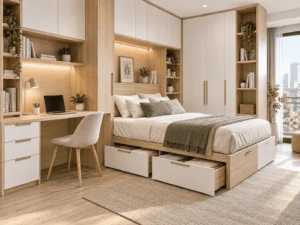
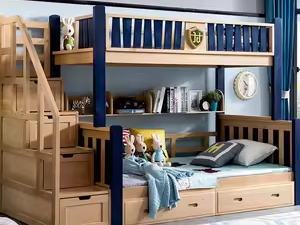
You can also browse our kids room product direction. We offer space-saving loft beds, storage beds, and study units. These can help align your line plan. Flat-Pack Furniture Manufacturer+2Flat-Pack Furniture Manufacturer+2
Table of Contents
- Why kids bedroom furniture sets sell in North America
- The 6 most common pitfalls buyers face
- The 20-point factory and sample checklist
- How to bundle sets that sell (and don’t inflate returns)
- How to build a “series” that drives reorders
- Quote fields you must confirm (no exceptions)
- Request templates: sample request + RFQ
- FAQ for importers (RankMath FAQ-ready)
1) Why Kids Bedroom Furniture Sets Sell in North America
North America’s market logic is simple. Parents want a coordinated room that looks finished. It should fit standard mattress sizes and survive daily use. Sets make purchase decisions easier for retail customers. The idea is “buy one set, done.” This is why kids bedroom furniture sets and kids storage furniture remain consistent search demand.
For B2B buyers, sets improve:
- AOV (average order value) in retail and online channels
- Basket size (bed + dresser + nightstand + desk)
- Brand continuity across a collection (same color and hardware)
But sets only scale when your sourcing controls the real failure points. These include structural stability, finish match, anti-tip requirements for storage pieces, and packaging.
2) The 6 Most Common Pitfalls (and How to Avoid Them)
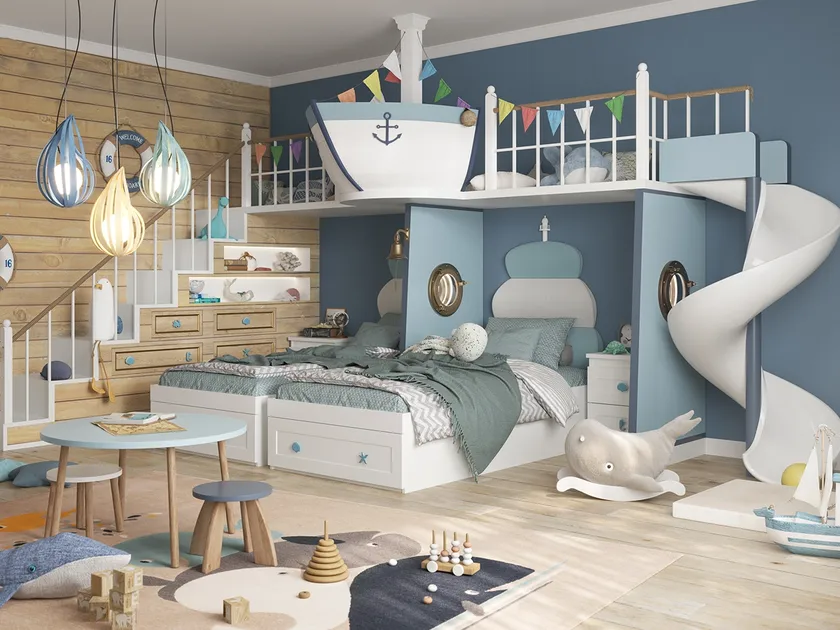
Pitfall 1: Size mismatch (mattress + room fit + shipping reality)
The biggest avoidable issue is dimension confusion. This includes bed inner size versus mattress nominal size. It also includes guardrail height and ladder footprint. Another factor is whether the set fits typical smaller bedrooms and apartments. If you sell space-saving designs like loft beds with desks or wardrobes, confirm the overall size. Also, ensure usable desk depth and the wardrobe’s interior layout are checked. Flat-Pack Furniture Manufacturer+1
Fix: Require a dimension drawing package (overall, internal, and packing dimensions).
Pitfall 2: Loose structure after 3–6 months (complaints + returns)
Panel furniture must handle repeated loads and movement. Weak cam fittings cause wobble and squeaks. Poor pre-drilling leads to a “cheap” feel, especially in beds and tall storage pieces. Thin connection points also contribute to these issues.
Fix: Ask for load/strength evidence, upgraded connector options, and in-house assembly testing photos/videos.
Pitfall 3: Packaging damage (your #1 hidden profit killer)
Long panels, drawer fronts, and glossy surfaces are high-risk in transit. One weak carton edge can destroy your landed margin.
Fix: Confirm carton grade, edge/corner protection, internal partitioning, and drop-test experience for e-commerce SKUs.
Pitfall 4: Color variance between items in the set
Buyers hate when the bed is “warm white,” the dresser is “cold white,” and the nightstand is somewhere in between. This happens when finishes come from different batches or different press/lamination lines.
Fix: Lock a color standard (sample board + production standard), and require batch control for set components.
Pitfall 5: Unreliable hardware (especially drawer slides)
“Feels cheap” often means “slides and hinges failed.” Drawers are a daily-use component—buyers notice immediately.
Fix: Specify slide type, cycle expectations, and whether soft-close is required for your channel positioning.
Pitfall 6: Compliance gaps (tip-over + composite wood emissions + children’s product limits)
North America compliance is not just a checkbox—it’s a buying requirement.
Key areas you should understand:
- Clothing storage units tip-over: CPSC adopted ASTM F2057 as a mandatory standard, with requirements codified for CSUs. If your kids set includes a dresser/wardrobe/chest, this matters. U.S. Consumer Product Safety Commission+2U.S. Consumer Product Safety Commission+2
- Composite wood formaldehyde: U.S. TSCA Title VI (and California’s CARB ATCM) regulate formaldehyde emissions for composite wood products and finished goods containing them. US EPA+2电子联邦法规+2
- Lead limits for children’s products / coatings: CPSIA lead limits are a common procurement concern for youth categories, especially for paints/surface coatings and accessible parts. AHFA+2电子联邦法规+2
Fix: Ask what standards your supplier routinely supports for the U.S./Canada market and what documentation is available (test reports, labels, material declarations).
3) The 20-Point Factory and Sample Checklist (North America Importers)
Use this checklist during supplier evaluation, sampling, and pre-production approval. It’s written for kids furniture, kids bedroom furniture sets, and kids storage furniture sourcing.
A) Materials and Construction (1–7)
- Confirm board type: MDF / particleboard / plywood + thickness by component
- Confirm edge banding type, thickness, and adhesion quality
- Check pre-drilling accuracy (alignment, depth, chip-out)
- Verify fastener and connector spec (cams, dowels, screws)
- Bed frame structural reinforcement points (center support, slats, rail joints)
- Drawer box construction (panel thickness, bottom groove, squareness)
- Back panel thickness and how it’s fixed (staple only vs slot + screws)
B) Finish Consistency (8–11)
- Color match across bed, storage, and desk components (same batch control)
- Surface scratch resistance appropriate for kids use
- Gloss/matte uniformity (especially UV high gloss)
- Odor/off-gassing check after unpacking (record and compare)
C) Safety and Stability (12–15)
- Sharp edge and corner radius (kids contact points)
- Anti-tip readiness for tall storage units (anchoring points + kit inclusion where needed) U.S. Consumer Product Safety Commission+1
- Load-bearing confirmation for bed and desk surfaces
- Drawer stop/anti-pull-out design (reduce accidents)
D) Hardware and Functional Use (16–18)
- Drawer slides: brand/type, smoothness, and racking resistance
- Hinges: alignment, cycle expectation, door gap consistency
- Handles: finish durability and safe shape (no sharp protrusions)
E) Packaging and Assembly (19–20)
- Packaging design: corner guards, foam density, inner partitions, spare parts bag
- Instructions: step clarity, part labeling, language needs, and QR/video support
If you supply loft beds, integrated desks, or wardrobes, keep your product direction consistent with your buyers’ space-saving demand. Flat-Pack Furniture Manufacturer+2Flat-Pack Furniture Manufacturer+2
4) How to Bundle Sets That Sell (Bed + Storage + Study)
A “set that sells” is not the biggest set. It is the set that fits how North American families shop. It also fits how your channels operate.
Bundle Strategy 1: Core Set (fastest turnover)
- Kids bed (or loft bed)
- Nightstand
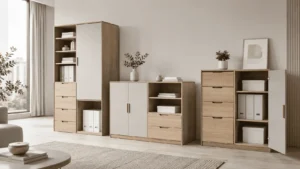
- 3-drawer chest or dresser (careful on tip-over requirements) U.S. Consumer Product Safety Commission+1
Why it works: Balanced price point, easy to stock, good for both retail floor and online.
Bundle Strategy 2: Storage-First Set (best for small rooms)
- Storage bed or loft bed with drawers
- Wardrobe or tall cabinet
- Bookcase or cube storage unit
Why it works: “Kids storage furniture” is a strong search and a strong purchase driver because parents want organization.
Bundle Strategy 3: Study Set (ideal for back-to-school campaigns)
- Loft bed with integrated desk
- Upper storage or wardrobe module
- Matching bookcase
Space-saving integrated designs (sleep + study + storage) are a proven concept for compact bedrooms. Flat-Pack Furniture Manufacturer+2Flat-Pack Furniture Manufacturer+2
5) Build a “Series” to Increase Reorders (and reduce line complexity)
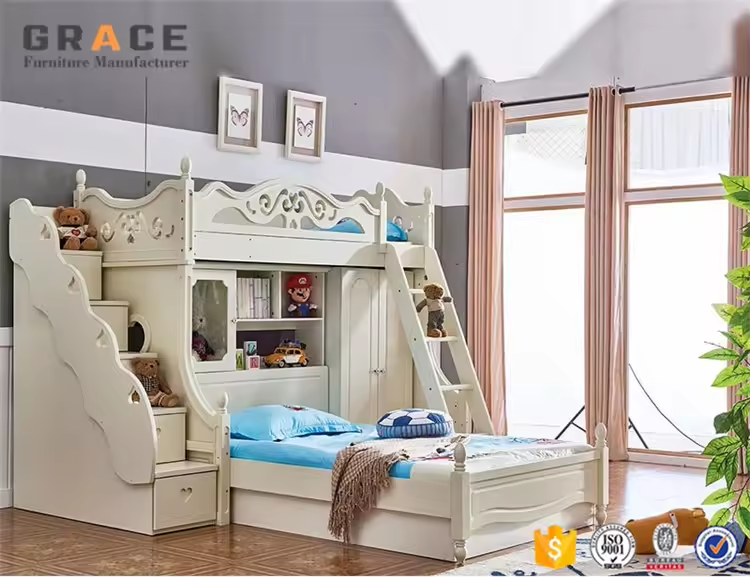
Importers often lose reorder velocity because every container is “random SKUs.” A series strategy solves that.
The Series Framework (simple but powerful)
Pick:
- 1–2 core finishes (e.g., white + natural oak)
- 1 hardware family (handle shape and color consistent)
- 1 edge banding standard
- 1 packaging standard across the line
Then define levels:
- Good: melamine finish, standard slides
- Better: upgraded texture/print, better slides
- Best: UV high gloss or premium texture, soft-close options
This allows you to sell “best kids furniture” positioning at a higher margin. At the same time, you can keep a “cheap kids furniture” entry option in the same visual language.
Benchmarking big brands (how to use the keyword safely)
Buyers may search for “ashley furniture kids bedroom sets” as a reference point. In your content and product planning, treat it as a benchmark: build comparable set completeness and visual consistency, but differentiate with:
- Better space-saving integration
- Better packaging for e-commerce
- Faster OEM response time and modular customization
6) Quote Fields You Must Confirm (Before You Place a PO)
Most disputes come from “missing fields.” For kids bedroom furniture sets, these are non-negotiable:
- Exact item list and SKU structure (what is included in the set)
- Full dimensions (overall + internal) in inches/mm
- Board type and thickness per component
- Finish type (melamine/UV/lacquer/veneer) and color code standard
- Hardware specification (slides, hinges, handle model)
- Safety requirements and what’s included (anti-tip kit, warnings) U.S. Consumer Product Safety Commission+1
- Composite wood emission compliance statement (TSCA Title VI / CARB where applicable) US EPA+2加州空气资源委员会+2
- Packaging spec (carton, foam, corner protection, spare parts, drop-test)
- Assembly instruction language + labeling requirements
- Packing dimensions, CBM, GW/NW, cartons per set
- Container loading estimate (20GP/40HQ)
- Sample policy, lead time, and production timeline
- QC steps (in-line, final inspection) and defect AQL agreement
- Spare parts ratio policy (especially for e-commerce channels)
For buyers using supplier directories and sourcing platforms, it is important to align your documentation format. This should match what procurement teams expect on major B2B platforms. Alibaba+4Thomasnet+4全球资源+4
7) Request Templates
A) Sample Request Template
Hello, we are sourcing kids bedroom furniture sets for North America.
Please confirm if you can provide:
- Item list (bed + storage + desk modules)
- Material options and board thickness by component
- Finish options (melamine / UV) and color samples
- Packaging photos and carton specification
- Assembly manual example
- Any compliance documentation available for U.S./Canada market
Please quote sample cost and sample lead time.
B) RFQ Template (For Best Quotation)
Please quote based on:
- Set configuration: ____
- Target finish/color: ____
- Material: ____ (MDF/plywood/particle board)
- Hardware: ____ (standard/soft-close)
- Order quantity: ____ sets
- Packaging: ____ (standard / e-commerce reinforced)
- Destination: ____ (country/port)
Please include MOQ, lead time, CBM, and loading estimate.
Authority References (for buyers who require documentation)
When your procurement team builds vendor requirements, these references are commonly used for North America sourcing discussions:
- CPSC guidance and rules related to clothing storage unit stability (tip-over). U.S. Consumer Product Safety Commission+1
- EPA TSCA Title VI formaldehyde standards for composite wood products. US EPA+1
- CARB composite wood program for formaldehyde emissions (relevant for California). 加州空气资源委员会
- UL GREENGUARD certification program (indoor air quality / low emissions). UL Solutions
- FSC certification (responsible forestry sourcing). 森林管理委员会
- ISO 9001 quality management standard reference (process consistency). 国际标准化组织
- AHFA regulatory resources (industry compliance guidance context). AHFA+1
- IWPA (wood products trade and responsible sourcing resources). IWPawood+1
- Thomasnet (North America supplier discovery expectations). Thomasnet+1
FAQ
Q1: What is the biggest risk when importing kids bedroom furniture sets into North America?
A: Packaging damage and stability-related complaints are the biggest cost drivers. Lock packaging specs early and verify structural stability during sample assembly.
Q2: Do dressers and wardrobes in kids sets require tip-over compliance?
A: Clothing storage units sold in the U.S. must meet mandatory CPSC requirements tied to the ASTM F2057 standard, so storage pieces should be evaluated carefully. U.S. Consumer Product Safety Commission+1
Q3: Which formaldehyde rules should we consider for panel kids furniture in the U.S.?
A: TSCA Title VI regulates formaldehyde emissions for composite wood products and finished goods containing them; California also has CARB requirements. US EPA+2加州空气资源委员会+2
Q4: How can we reduce returns for flat-pack kids furniture?
A: Reinforce corners, separate glossy parts, improve internal protection, provide spare hardware, and ensure clear step-by-step manuals with labeled parts.
Q5: What set configuration sells best for online channels?
A: A “core set” (bed + nightstand + dresser/chest) tends to convert well. Space-saving loft bed + desk sets perform strongly in small-room markets. Flat-Pack Furniture Manufacturer+1
Q6: Should we offer one finish or multiple finishes?
A: Start with 1–2 best-selling finishes to simplify inventory, then expand once reorder velocity is stable.
Q7: What information must a supplier include in a professional quote?
A: Item list, dimensions, board spec, finish spec, hardware, packaging details, CBM, carton count, lead time, and compliance statement expectations.
Q8: Can OEM/ODM support be done without increasing lead time too much?
A: Yes—if the supplier has a structured process for drawings, sample approval, standardized materials, and repeatable packaging.