Kids Bedroom Furniture Sets Sourcing Checklist for Importers
Importing kids furniture is profitable in the Middle East. However, it can also be one of the easiest categories to get wrong. A kids bedroom furniture set looks great in photos. Yet, it fails in real life due to a weak structure. Confusing instructions can also cause issues. Additionally, packaging that cannot survive long-distance shipping and multiple handling points leads to problems.
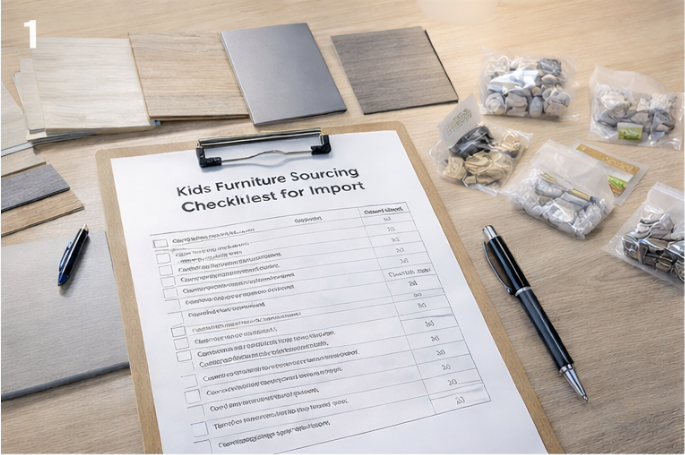
This guide is for you if you are a distributor, wholesaler, retailer, or project buyer in UAE. It is also for those in Saudi Arabia, Qatar, Kuwait, Oman, or Bahrain. It assists you with your needs. It reduces risk. This guide is for professionals in these regions. It is designed to assist you in speeding up decisions.
- The 6 most common sourcing pitfalls buyers face
- A practical 20-point factory and sample checklist for kids bedroom furniture sets
- A proven bundle strategy to increase sell-through (and reduce SKU chaos)
- A “series” approach to drive repeat orders
- A quotation field list to avoid hidden costs and misunderstandings
- A B2B-ready CTA to request a quote pack and container loading plan
This is written from the perspective of a panel furniture export manufacturer serving B2B buyers. (Internal reference examples are from https://plywoodmfr.com/ and the kids room category pages.)
Table of Contents
- Why Kids Furniture Sourcing Is Different in the Middle East
- The 6 Most Common Pitfalls Importers Face
- The 20-Point Factory and Sample Checklist
- How to Build Kids Bedroom Furniture Sets That Sell Faster
- How to Build a “Series” to Increase Repeat Orders
- Quote Checklist The Fields You Must Confirm
- Recommended Standards and Trade Resources
- FAQ
- CTA Request the Quote Pack
1) Why Kids Furniture Sourcing Is Different in the Middle East
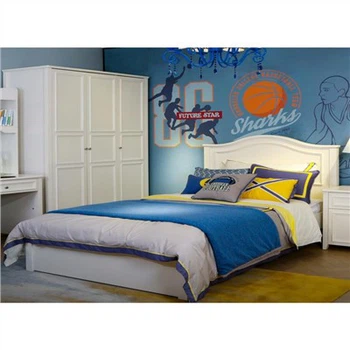
Middle East buyers typically face three market realities:
1) Higher expectations for appearance and finish
Many retailers prefer clean, modern looks (white/grey/wood tone), premium textures, and durable surfaces that remain stable under frequent cleaning.
2) Longer and tougher logistics
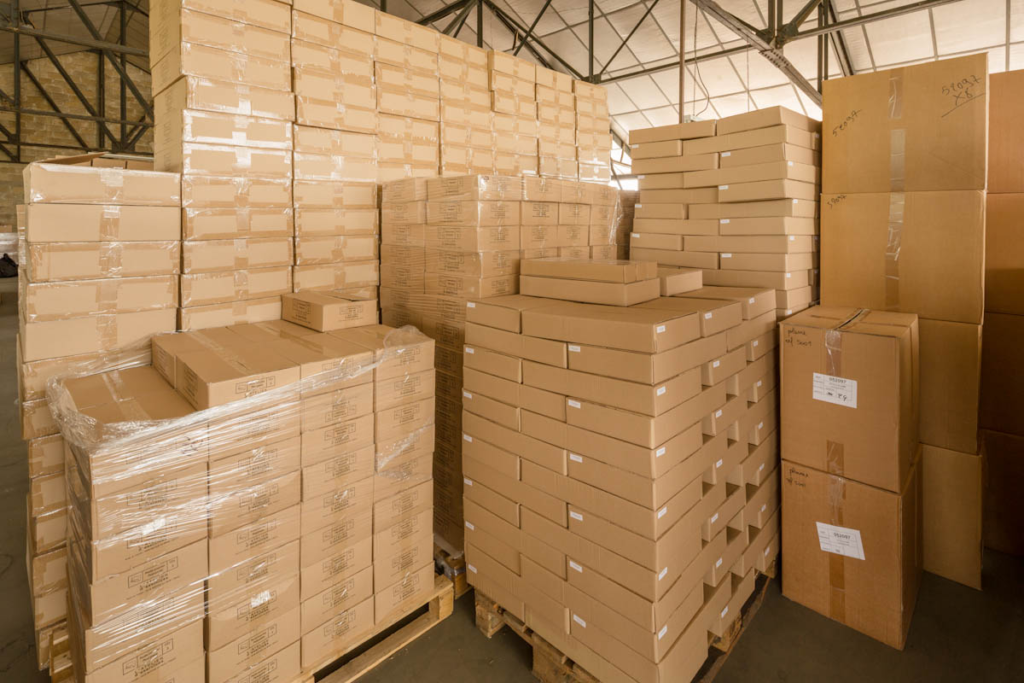
Even with strong ports and infrastructure, kids furniture often travels through multiple handling steps: factory loading, export customs, sea freight, inland trucking, warehouse storage, then last-mile distribution. Weak packaging becomes expensive quickly.
3) Mixed channel demands (retail + e-commerce + projects)
Importers increasingly serve hybrid channels: showroom + dealer networks + online listings. That means your kids bedroom furniture sets must be photo-friendly, easy to assemble, and consistent across batches.
If your product strategy is “cheap kids furniture only,” you may win orders once. However, you might lose future business due to returns, missing hardware, or customer complaints. The goal is to source cost-effective, stable, repeatable kids furniture that maintains margin and reduces after-sales workload.
2) The 6 Most Common Pitfalls Importers Face
Below are the sourcing problems that most often damage profit in kid bedroom furniture imports.
Pitfall 1: Size mismatch with local room planning
A bed that is “standard” in one region may not match typical room sizes in Gulf markets. It may not match mattress sizes either. It can also not meet retail display expectations. Importers frequently receive sets that look correct on paper but create layout problems in real rooms.
Fix: Confirm exact dimensions for every module and define the target mattress compatibility (and tolerance).
Pitfall 2: Structure becomes loose after repeated use
Kids furniture is used aggressively: climbing, leaning, pulling drawers, opening cabinets repeatedly. Weak joint design, low-grade connectors, and thin panels lead to wobble and early failure.
Fix: Require joint structure details and load-related checks (more in the checklist).
Pitfall 3: Packaging damage that creates hidden costs
Carton corner crush, panel edge chips, and scratches are the silent killers of profit. A “good-looking set” can become unsellable after damage—especially for high gloss or light colors.
Fix: Demand packaging spec confirmation (foam, corner protection, internal support, carton strength).
Pitfall 4: Color variation across batches or across items in the same set
Kids bedroom furniture sets must match—bed, wardrobe, desk, and storage units should look consistent. If the wood grain, white tone, or gloss level varies, you get complaints and slow sell-through.
Fix: Confirm a master sample and production color control process.
Pitfall 5: Unstable hardware quality
Cheap slides, weak hinges, and inconsistent screws lead to noisy drawers, stuck doors, or early breakage—often blamed on the importer.
Fix: Specify hardware grade and test standard. Keep a backup hardware kit plan.
Pitfall 6: Poor assembly instructions increase returns
Many end-users struggle when the manual is unclear. Even installers have difficulties in these cases. Board labeling is inconsistent. Hardware bags are not separated, which adds to the complexity.
Fix: Require clear part codes, step-by-step drawings, and bilingual labeling if needed (English/Arabic options are common in the Middle East).
3) The 20-Point Factory and Sample Checklist (Material, Edge Banding, Hardware, Slides, Load, Finish)
Use this checklist during supplier selection, sampling, and pre-production confirmation. For best results, treat it as a “must-pass” list for every kids furniture set.
A. Factory Capability and Process Control (1–5)
1. Product scope match
Does the factory regularly make kids storage furniture? Does it produce kids furniture beds, wardrobes, desks, and complete sets? It should make not just one item type.
2. OEM/ODM readiness
Ask for examples of customization: size changes, layout changes, color changes, packaging branding, and instruction manual improvements.
3. Production capacity and lead time stability
Confirm monthly capacity for your target SKUs and how they handle peak seasons.
4. Quality checkpoints
Confirm incoming material check, in-process check, and packing check. A factory that can show a standard QC flow is usually more stable.
5. Traceability
Batch coding for cartons, hardware bags, and internal production helps solve claims quickly.
B. Materials and Panel Engineering (6–10)
6. Core board selection
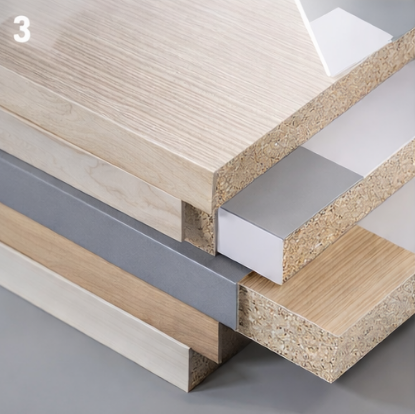
Confirm whether the set uses MDF, plywood, particle board, or mixed structures. Ask why each board is chosen for each module (bed frame vs cabinet body vs drawer).
7. Panel thickness standard
Define thickness for key structural parts. A “nice look” is not enough—thickness affects stability and screw holding.
8. Edge banding quality
Edge banding should be consistent and well-sealed to reduce moisture sensitivity and prevent peeling. This matters for long shipping and long service life.
9. Verify the connector design and screw holding
Determine which connectors are used. These include cam locks, dowels, and screws. Assess their performance after multiple assembly and disassembly cycles.
10. Safety-related shaping
Ask for rounded edges on child contact areas and stable corners on high-traffic modules.
C. Hardware and Drawer Systems (11–14)
11. Drawer slide grade
Confirm slide type (standard vs soft-close) and expected cycle performance. In Middle East retail, soft-close can be positioned as a value upgrade for “best kids furniture.”
12. Hinges and door alignment
Confirm hinge type and adjustability. A wardrobe door that doesn’t align ruins the premium feel.
13. Handles and knobs
Confirm the material and finish durability. Determine if you can offer multiple handle options for different collections. These collections may be modern or classic.
14. Spare hardware policy
Ask if spare screws/connectors are included per carton, and how replacement parts are supported for after-sales.
D. Load, Stability, and Real-Use Testing (15–17)
15. Bed load and stability expectation
For kids furniture beds, clarify the expected load. Explain how stability is ensured by using side rails, center support, and joint reinforcement.
16. Anti-tip / cabinet stability
For tall storage and wardrobes, confirm the stability approach. Check whether wall-fixing kits are included where required by your market or channel.
17. Real-use simulation
Ask if the factory runs internal tests. These include repeated drawer open/close and door swing tests. Check if assembly verification is done for every batch.
E. Finish Consistency and Packaging (18–20)
18. Finish and surface performance
Define surface type (melamine, UV high gloss, matte, veneer, lacquer) and confirm scratch resistance expectations. High gloss is popular, but packaging must match the finish risk.
19. Color control and batch consistency
Confirm a master sample policy and acceptable tolerance across the full set. This is critical for kids bedroom furniture sets.
20. Export packaging specification
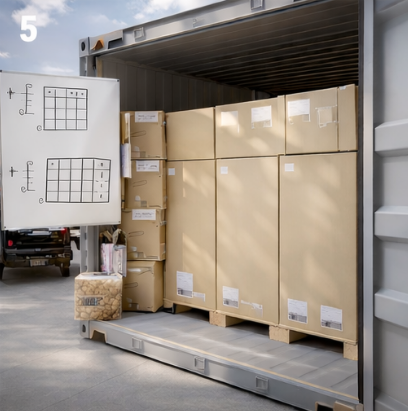
Confirm carton strength, inner protection, corner guards, foam layout, and how many cartons per set. If you supply e-commerce channels, request reinforced packaging options.
Buyer tip: If a supplier cannot answer these questions clearly during sampling, problems will multiply during mass production.
4) How to Build Kids Bedroom Furniture Sets That Sell Faster (Bundle Logic)
The fastest-moving kids bedroom furniture sets are not the ones with the most pieces. They are the ones that fit the buyer’s real room needs and the retailer’s merchandising strategy.
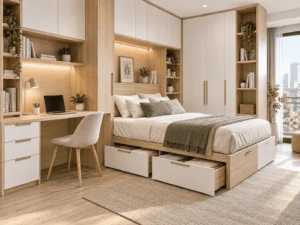
The “Core + Upgrade” set strategy
Instead of forcing one big set, build two bundles:
Bundle A (Core Set):
- Bed (single or storage bed)
- Nightstand OR small storage unit
Bundle B (Upgrade Set):
- Bed
- Wardrobe
- Study desk + hutch or bookshelf
- Optional storage tower / toy storage module
This structure keeps your entry price attractive. It appeals to buyers searching “cheap kids furniture.” It also offers a clear upgrade path for higher margin.
What sells well in Middle East channels
For many buyers, the winning proposition is space + storage + clean look:
- Storage bed or loft bed concepts (sleep + storage + study)
- Practical wardrobes with flexible internal layout
- Desks that look modern and are easy to assemble
- Matching finishes across modules
If you want a benchmark language for style positioning, some buyers compare collections to “ashley furniture kids bedroom sets.” They do so in terms of coordinated design and consistent finishes. They then source an OEM/ODM alternative with better margin and flexible customization.
Reduce SKU confusion with “modular compatibility”
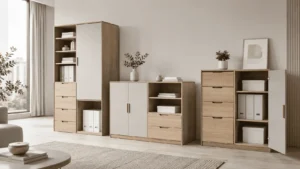
A powerful importer strategy is to standardize:
- One or two core colors
- One handle family
- One panel thickness standard
- Consistent toe-kick/leg design
This makes the set look like a “collection,” not random products.
5) How to Build a “Series” to Increase Repeat Orders (Same Look, Different SKUs)
A “series” is how you move from one-off orders to stable repeat business.
Step 1: Choose a design language
Examples:
- Modern minimal (flat panels, hidden handles, matte finish)
- Modern premium (marble-effect details, UV high gloss, accent panels)
- Space-saving functional (loft bed with desk + wardrobe modules)
Step 2: Define the series rules
- Same color codes
- Same edge banding style
- Same hardware color family
- Same packaging design and labeling standard
Step 3: Release SKUs in waves
Wave 1: Bed + wardrobe + desk
Wave 2: Additional storage modules (kids storage furniture)
Wave 3: Optional accessories (bookcase, toy cabinet, wall shelf modules)
This approach is especially strong for distributors who stock containers and need product continuity.
6) Quote Checklist The Fields You Must Confirm (Avoid Hidden Costs)
Below is a quotation field list you can copy into your RFQ. The goal is to prevent “missing assumptions.”
Required Product Fields
- Product name and item code for each module
- Full set list (what is included)
- Dimensions for each module (L W H)
- Mattress size compatibility and tolerance
- Panel core type (MDF plywood particle board) for each module
- Panel thickness for key load parts
- Surface finish type and color code
- Edge banding specification
- Hardware brand or grade standard
- Drawer slide type (standard or soft close)
- Packaging type (standard export or reinforced e-commerce)
Required Commercial Fields
- MOQ per item and per set
- Price terms (FOB / CIF)
- Sample cost and sample lead time
- Mass production lead time
- Payment terms
- Warranty policy (what is covered, how claims are handled)
Required Logistics Fields
- Carton quantity per set
- Carton dimensions and gross weight
- Container loading estimate (20GP 40GP 40HQ)
- Pallet option (if used)
- Spare parts and replacement policy
- Assembly manual language options (English Arabic)
7) Recommended Standards and Trade Resources
For credibility and sourcing efficiency, importers often reference recognized standards, certifications, and trade directories. Here are reputable resources you can bookmark:
Associations / Industry Bodies
- American Home Furnishings Alliance AHFA: https://www.ahfa.us/
- European Furniture Industries Confederation EFIC: https://www.efic.eu/
- UEA Furniture in Europe: https://www.ueanet.com/
- China National Furniture Association CNFA: https://www.cnfa.com.cn/ens.html
Sustainability and Indoor Air Quality
- FSC Forest Stewardship Council: https://fsc.org/
- GREENGUARD Certification: https://greenguard.org/
- ISO International Organization for Standardization: https://www.iso.org/
- International Wood Products Association IWPA: https://www.iwpawood.org/
Relevant Industry Reference
- NKBA National Kitchen and Bath Association (useful for panel-furniture specification habits): https://www.nkba.org/
- BIFMA (standards culture reference, especially for performance thinking): https://www.bifma.org/
B2B Platforms and Supplier Discovery
- Alibaba: https://www.alibaba.com/
- Made in China: https://www.made-in-china.com/
- Global Sources: https://www.globalsources.com/
- Thomasnet: https://www.thomasnet.com/
- Europages: https://www.europages.co.uk/
FAQ
1) What should I check first when importing kids furniture for the Middle East?
Start with set dimensions, structure stability, finish consistency, and export packaging. These factors impact sell-through and after-sales more than minor visual differences.
2) What is the best bundle structure for kids bedroom furniture sets?
A “Core + Upgrade” strategy works well. There is a small starter set for price-sensitive buyers. Additionally, there is an upgrade set with a wardrobe and study desk for higher margin.
3) How do I reduce returns for RTA kids furniture beds?
Focus on clear assembly manuals, consistent board labeling, spare hardware inclusion, stronger packaging, and stable joint design.
4) Can I customize kids furniture set designs as an importer?
Yes. Many export manufacturers support OEM/ODM customization such as size, color, hardware, packaging branding, and modular layouts.
5) How can I keep color consistency across a full kids bedroom furniture set?
Request a master sample approval. Define color code and finish specs clearly. Confirm the factory’s batch control and QC checkpoints.
CTA Request the Quote Pack and Container Loading Plan
If you are sourcing kids furniture for Middle East markets and want a safer, faster buying process, request our B2B pack:
- Kids bedroom furniture sets quotation template
- Hot-selling size suggestions (bed wardrobe desk storage)
- RTA packaging options (standard vs reinforced)
- Container loading plan suggestion (20GP 40HQ)
- OEM/ODM customization list for your brand
Start here:
https://plywoodmfr.com/
Browse kids room collections:
https://plywoodmfr.com/kids-room-furniture/