
Bookcase vs Bookshelf vs Book Shelving: The Complete UK Buyer’s Guide (Materials, Safety, RTA Packaging & OEM/ODM)
Table of Contents
- Why one “bookcase” keyword attracts very different UK buyers
- Bookcase / Bookshelf / Book Shelving: what each term really means
- Sizing first: dimensions, capacity and what UK shoppers complain about
- Materials compared: Plywood vs MDF vs Particle Board (and surface finishes)
- Load & structure: how to make shelves hold more and stay straight
- Safety & compliance: anti-tip, rounded edges, labels and what buyers request
- RTA / Flat Pack: packaging engineering to reduce damage and claims
- Assembly experience: the fastest way to lower returns and 1-star reviews
- Styles & best-selling trends in the UK: SKU strategy for B2B channels
- OEM/ODM cooperation: from brief → sample → mass production → QC → shipping
- FAQ(with FAQ Schema)
- CTA: Send size/style/market/volume for quote + packaging proposal
1) Why one “bookcase” keyword attracts very different UK buyers
In the UK market, “bookcase” is a single search term—but it hides four buyer personas with totally different risk profiles:
- E-commerce sellers (Amazon / Wayfair-style traffic) care about: parcel damage, assembly time, review risk, and whether returns wipe out margin. They also watch popular searches. Examples include amazon bookcases, wayfair bookcases, and walmart bookcases. These are often searched by UK users comparing styles and prices internationally. They also look at colour-driven terms like black bookcases and white wood bookcase.
- Retail procurement cares about: in-store presentation, consistent batch colour, packaging cube efficiency, and low warranty rate across many stores.
- Contract / project buyers (build-to-rent, student accommodation, aparthotels) care about: stability, durability, and replaceable parts. They also value predictable lead times because site delays cost far more than unit price.
- Brand developers / private label care about: design differentiation, IP-safe details, and repeatable manufacturing.
When the type is wrong (bookcase vs bookshelf vs book shelving), the impact is immediate. Costs escalate due to breakage claims, higher return rates, and 1-star “wobbly” reviews. This also leads to missing-hardware complaints and installation disputes. In Great Britain, consumer goods placed on the market must be safe under the General Product Safety Regulations 2005. UK product safety is overseen through bodies like OPSS. B2B buyers increasingly want a clear safety story and traceable documentation. They do not want just a pretty render. GOV.UK+1
2) Bookcase / Bookshelf / Book Shelving: the differences and where each wins
2.1 Bookcase (freestanding floor unit)
A bookcase is typically a freestanding storage unit with multiple shelves, sometimes with doors, drawers, or a backing panel. It’s the default for living rooms, studies, and multi-room programmes.
Best for
- Living room display + storage (open bookcase / glass-door variants)
- Home office storage (binders + books)
- Contract programmes needing easy replacement (modular sizes)
Watch-outs
- Tall/narrow designs need anti-tip and stronger back structure
- Long shelves require load engineering (see Section 5)
2.2 Bookshelf / Book shelf (single shelving unit or small shelf)
In UK listings, “bookshelf” can mean:
- a smaller freestanding unit (e.g., 5 tier bookcase / 6 shelf bookcase), or
- a single shelf mounted to the wall.
This is why buyers get mismatched expectations: the term is used for both units and individual shelves.
Best for
- Entry-level price points
- Small spaces (narrow/wide variants)
- “Room essentials 5 shelf bookcase” type demand—simple, fast-selling, easy to photograph
2.3 Book Shelving (system shelving / wall-to-wall / built-in feel)
“Book shelving” usually signals a system: wall-mounted rails, modular bays, floating shelf bookcase compositions, or full-room shelving.
Best for
- Premium retail presentation
- Project fit-outs needing consistent wall layouts
- “Book shelving” searches that come from designers & installers
Watch-outs
- Wall condition varies; you must provide clear fixings guidance and disclaimers
- Packaging needs better edge protection (rails + long panels)
1) UK General Product Safety Regulations 2005 (GB guidance, GOV.UK)
https://www.gov.uk/government/publications/general-product-safety-regulations-2005/general-product-safety-regulations-2005-great-britain
2) Office for Product Safety and Standards (OPSS, GOV.UK)
https://www.gov.uk/government/organisations/office-for-product-safety-and-standards
3) BS EN 14749 standard page (BSI)
https://landingpage.bsigroup.com/LandingPage/Standard?UPI=000000000030407319
4) EN 717-1 (Formaldehyde emission chamber method) listing
https://ndls.org.cn/standard/detail/2822fc469dcbdd18a36064e577252d9b
5) ISTA Test Procedures (ISTA official)
https://ista.org/test_procedures.php
6) ISO 2248 Drop test (ISO official)
https://www.iso.org/standard/7062.html
7) ISO 2234 Stacking test (ISO official)
https://www.iso.org/standard/32410.html
8) Royal Mail packaging guidelines
https://help.royalmail.com/personal/s/article/Labels-and-packaging-guidelines-tips
9) FSC Chain of Custody certification (FSC official)
https://fsc.org/en/chain-of-custody
3) Sizing first: how to set dimensions and capacity (books, A4 binders, décor)
UK buyers win or lose on sizing. This is because shoppers judge storage furniture by one thing: “Does it fit what I actually own?”
3.1 Practical dimension ranges (B2B-friendly defaults)
Depth (front to back)
- 18–22 cm: paperbacks, décor, “bookcase decor” styling shots
- 24–30 cm: most hardbacks + some storage boxes
- 30–35 cm: A4 ring binders and office files (home office, student housing)
Shelf clear height (per compartment)
- 23–26 cm: paperbacks, standard hardbacks
- 28–32 cm: tall hardbacks, magazine files
- 32–35+ cm: A4 binders, archive boxes (project programmes)
Width
- Narrow: 30–45 cm (ideal for corners, rentals)
- Standard: 60–80 cm
- Wide bookcase: 90–120 cm (needs load design)
Height
- 5 tier bookcase: typically 150–170 cm
- 6 shelf bookcase: typically 180–200 cm
- Over 200 cm: treat as a stability-first design (anti-tip + stronger back)
3.2 Back panel vs no back panel (why this changes claims rate)
A backing panel isn’t just cosmetic—it provides shear strength that reduces racking (side-to-side wobble). If you go “no back” for an airy look, you usually need cross-bracing or thicker side panels.
3.3 Small-space UK SKUs that sell
- Narrow and tall (but must be anti-tip ready)
- Corner units (UK buyers often search “billy corner bookcase” as a familiar reference; you can design an IP-safe alternative)
- Modular cubes / stackable bays
- Wall-mounted options for tiny flats
4) Materials compared: Plywood vs MDF vs Particle Board (what UK buyers truly care about)
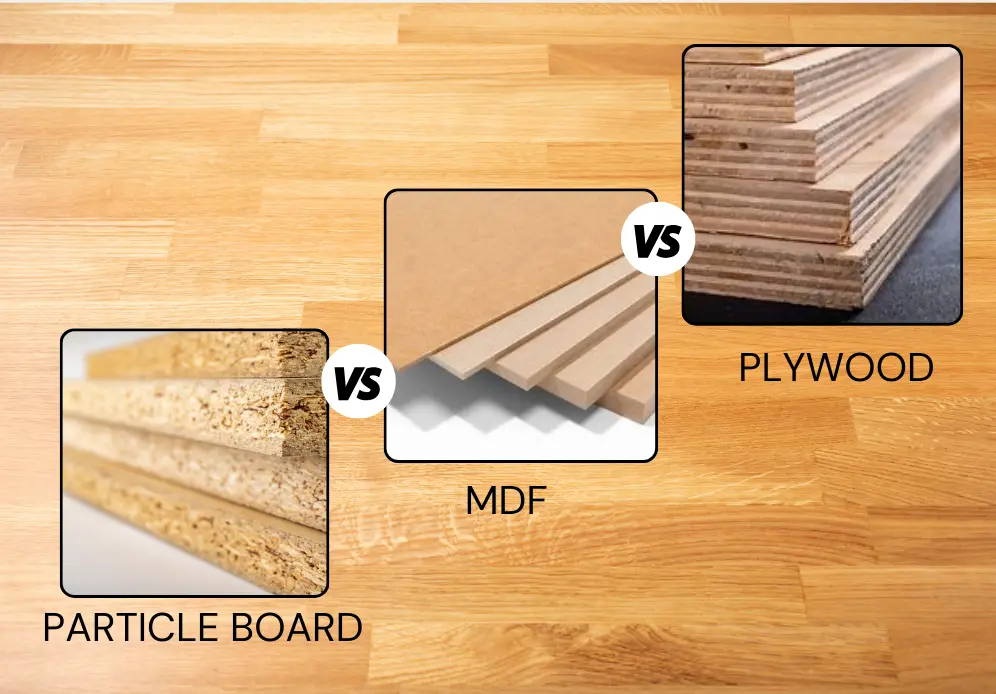
B2B buyers don’t just ask “which is better?” They ask: “Which reduces claims, keeps price competitive, and passes compliance expectations?”
4.1 Plywood
Pros
- Stronger in screw holding and edge durability
- Better stability across humidity swings than many low-grade boards
- A good choice for project programmes where repairs/relocations happen
Cons
- Cost can be higher
- Surface must be finished well to feel “retail grade” (veneer, laminate, paint)
4.2 MDF
Pros
- Very smooth surface—great for paint and premium finishes
- Stable, consistent thickness
- Excellent for modern minimal styles
Cons
- Edge impact can chip if packaging is weak
- Screw holding depends on density and fastener design
4.3 Particle board (PB)
Pros
- Strong value for entry-level and volume retail
- Works well with melamine surfaces
Cons
- Edge durability and screw holding vary by grade
- Needs careful hardware selection and pre-drilling strategy
4.4 Surface finishes UK buyers compare
- Melamine: cost-effective, easy-clean, good for volume
- Veneer: warmer premium look, needs QC on colour and grain match
- Paint: premium but sensitive to packing rub and edge impact
- Laminate (HPL/CPL): higher scratch/water resistance for contract use
4.5 Edge banding & “smell” control
Returns in the UK often come from two silent killers: edge chipping and odour complaints.
- EVA vs PUR edge banding: PUR typically offers stronger bonding and better heat/moisture resistance for demanding logistics.
- For emissions, many UK buyers request formaldehyde control aligned with recognised test methods. EN 717-1 is a widely referenced European chamber method for formaldehyde emission from wood-based panels. 国家数字标准馆
5) Load & structure: how to make bookcases “stand firm and hold more”
5.1 What determines shelf load capacity?
Four variables drive shelf performance:
- Span (distance between supports)
- Thickness (and whether the panel is reinforced)
- Material + density
- Connection method (dowels, cam locks, confirmat screws, brackets)
A “wide bookcase” looks great online. However, if each shelf spans too far without reinforcement, you’ll get sagging. This becomes a review problem within weeks.
5.2 Anti-sag strategies that don’t ruin aesthetics
- Add a front edge lipping or hidden reinforcement strip
- Use a center divider for wide bays
- Increase shelf thickness only where needed (optimise cost)
- Design adjustable shelves with metal pins rated for load
5.3 Stability engineering (especially for tall units)
- Back panel shear strength (or metal bracing)
- L-shaped corner brackets for high-stress points
- Wider plinth/base, or anti-tip kit as standard (Section 6)
5.4 Buyer-ready “spec sheet” checklist (copy into your RFQ)
- Target static shelf load (kg) and acceptable deflection limit
- Max unsupported span (mm) per shelf
- Shelf thickness and reinforcement method
- Back panel type (full / partial / braced)
- Required anti-tip kit + fixings guidance
- Hardware grade (hinges/locks if any)
6) Safety & compliance: anti-tip, rounded edges and what UK buyers request
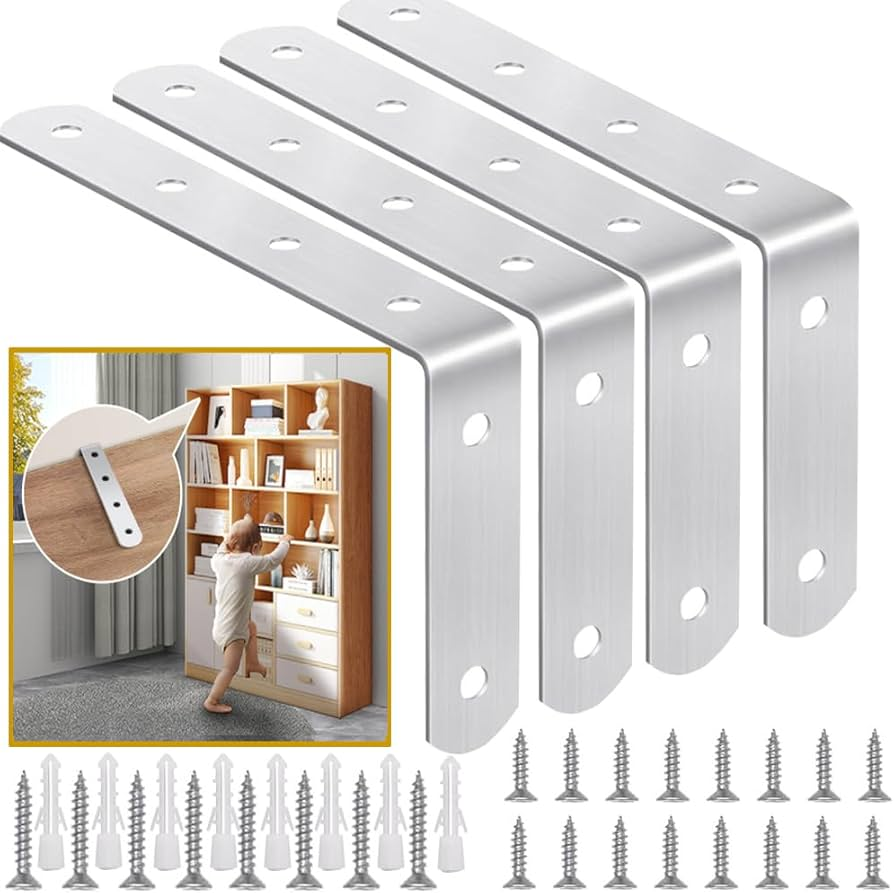
Even when a standard is paywalled, UK buyers commonly reference BS EN standards for storage furniture safety. They use these standards for testing when building their compliance file. For example, BS EN 14749 covers safety requirements and test methods for domestic and kitchen storage units. BSI Group
6.1 Anti-tip: make it standard, not optional
In real homes, tip-over risk increases when:
- Drawers are pulled out (centre of gravity shifts forward)
- The floor is uneven or carpeted
- Children climb or hang on shelves
- The unit is tall/narrow and lightly loaded at the bottom
B2B best practice for the UK
- Include an anti-tip kit in every carton
- Put a clear warning on the outer box and the manual
- Provide installation guidance for common wall types (masonry, stud, dot-and-dab)
6.2 Rounded edges and “impact points”
If you’re selling into family and rental channels, consider:
- Rounded or softened front edges
- Protected corners (packaging + design)
- No sharp exposed hardware
6.3 The UK compliance baseline you should reference
For Great Britain, buyers often build their product safety file around the General Product Safety Regulations 2005 guidance. They also consider related responsibilities for placing consumer products on the GB market. GOV.UK+1
(Practical takeaway: buyers may request a risk assessment, test reports, warnings/labels, and traceability.)
7) RTA / Flat Pack: packaging engineering that reduces damage claims
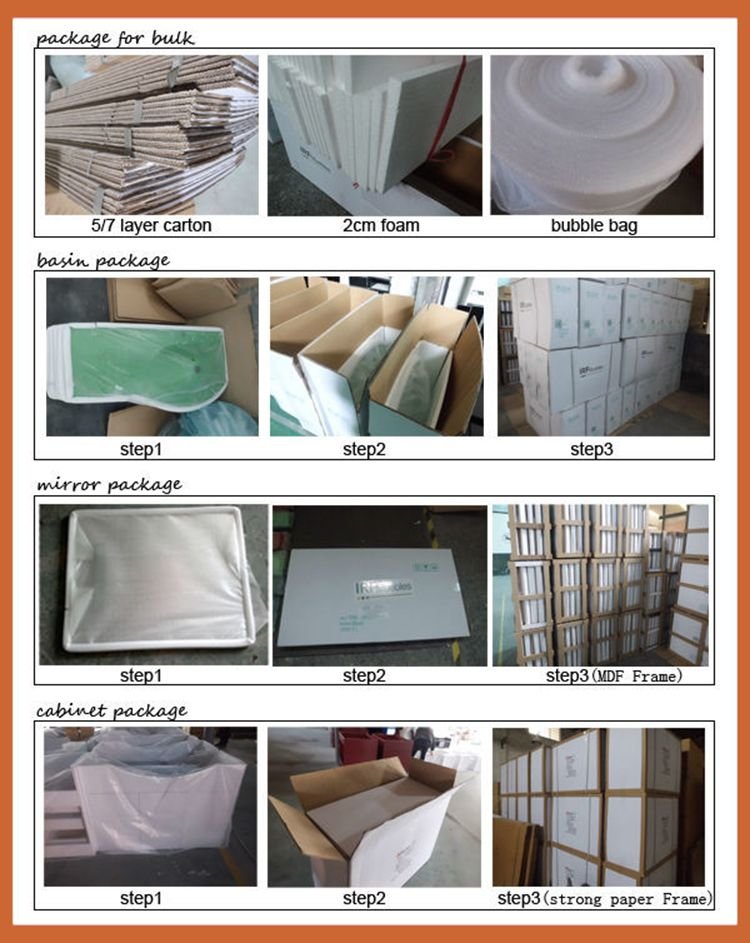
If your UK channel is e-commerce, packaging is your profit. One cracked corner can turn into:
- full refund + collection cost
- negative review photos
- account health issues for sellers
7.1 Packaging structure that works for UK parcel networks
- Corner protectors (paper/honeycomb or molded)
- Foam or paper cushioning at impact points
- Separate compartments for hardware
- Scratch film or interleaf paper for glossy surfaces
- Edge guards for long panels (shelves, side panels)
Royal Mail’s packaging guidance emphasises proper protection and secure wrapping—if a carrier flags poor packaging, it can affect compensation outcomes. 皇家邮政帮助
7.2 Testing language UK buyers understand (and can put into contracts)
- ISTA procedures are widely used to evaluate packaged-product performance against vibration, drops, and handling hazards. ISTA publishes its test procedures and scope. 国际安全运输协会
- ISO standards exist for drop and stacking tests—e.g., ISO 2248 (drop test) and ISO 2234 (stacking test) describe standardised methods to assess package protection. 国际标准化组织+1
7.3 A practical “damage-rate reduction” playbook
- Set a target: damage rate and missing parts rate
- Require outer carton compression and corner impact protections
- Add spare hardware ratio and a clear parts-claim process
- Share carton dims early to model cost (volume weight drives margin)
8) Assembly experience: the fastest way to lower returns and 1-star reviews

UK reviews punish two things:
- “Took forever to build”
- “Holes didn’t line up / wobbly”
8.1 Manual that prevents support tickets
- Step-by-step diagrams
- Part numbers printed on bags
- QR code to assembly video
- Clear anti-tip steps and wall-fixing warnings
8.2 Tolerance control (what OEM/ODM factories must lock)
- CNC drilling accuracy
- Pre-installed inserts where needed
- Fast assembly hardware options (but balance cost and durability)
8.3 Set measurable assembly goals
- Target average build time (e.g., 25–45 minutes)
- Single-person vs two-person feasibility
- “No special tools beyond screwdriver” requirement (for e-commerce)
9) UK style & trend strategy: how buyers choose winning SKUs
9.1 Styles that consistently sell
- Modern minimal (white/black, clean lines)
- Geometric and S-shaped (search-driven interest like S shape bookcase)
- Corner solutions (black corner bookcase / corner bookcase)
- Open bookcase vs door units (dust protection vs styling)
9.2 Channel-based SKU planning (B2B reality)
E-commerce SKU
- Lightweight packaging, easy assembly, fewer parts
- More neutral colours: black bookcases, white wood bookcase
- High photo friendliness (bookcase background, bookcase decor)
Retail SKU
- Higher perceived quality: thicker visuals, better surface feel
- Fewer defects: consistent colour between batches
Project / contract SKU
- Stronger load/stability
- Replaceable parts and consistent lead time
- Optional locks, anti-scratch surfaces
10) OEM/ODM cooperation guide (what UK procurement teams want)
10.1 From brief to mass production
- Requirements: size, load, finish, target price, channel
- Drawing + engineering review (stability, packaging, assembly)
- Sampling (pre-production unit)
- Confirmation (spec + packaging + manual)
- Mass production
- QC checkpoints
- Shipping & after-sales parts plan
10.2 MOQ, lead time, customisation scope
UK B2B buyers typically want clarity on:
- MOQ by finish/colour
- Lead time by season
- Custom options: colour, hardware, carton print, labels, manuals
- Compliance documents and testing plan
10.3 QC checkpoints buyers expect
- Incoming material inspection
- First article inspection
- In-line inspection
- Pre-shipment random inspection (AQL or agreed sampling plan)
11) FAQ
What is the difference between a bookcase and a bookshelf?
A bookcase is usually a freestanding multi-shelf unit (often taller, sometimes with doors/drawers). “Bookshelf” can mean a smaller unit. It can also refer to a single shelf. Define it by dimensions and mounting method in your RFQ.
What depth is best for books and binders?
Books: 24–30 cm works for most. A4 binders: 30–35 cm is safer for office and student housing programmes.
How much weight can each shelf hold?
It depends on span, thickness, material, and reinforcement. Specify a target load and deflection limit, then engineer the shelf system accordingly.
Do I need anti-tip hardware?
For tall or narrow storage, yes. UK buyers increasingly expect it to be included with clear instructions and warnings. These are part of the safety file. GOV.UK
Plywood vs MDF: which is better for a bookcase?
Plywood often wins on edge durability and screw holding; MDF wins on paint-ready smoothness. Choose based on channel: e-commerce needs stronger edges + packaging, premium retail may prefer MDF paint finishes.
How to reduce shipping damage for flat-pack bookcases?
Use corner/edge protection, segregated hardware packs, surface protection film, and validate packaging with recognised testing approaches (ISTA/ISO). 国际安全运输协会+1
What’s a typical MOQ and lead time for OEM/ODM?
It varies by finish and hardware. Buyers should request MOQ per colour/finish. They should also request a production calendar with sampling and QC milestones.
12) CTA (UK B2B enquiry-ready)
Send us your target size/style + market (UK) + estimated order volume to get:
- A quote (material options + finish options)
- A packaging proposal (carton structure + test suggestion)
- A sample timeline (engineering → sample → approval → mass production)
- A QC plan aligned to your channel (e-commerce / retail / project)