Table of Contents
- US Buyers Search Map: Sideboard vs Buffet Cabinet
- Top Searched Configurations Buyers Actually Specify
- Compliance & Risk: TSCA Title VI and Tip-Over Safety
- Project-Grade Construction: Materials, Tops, Details that Survive Turnover
- Packaging & Install: Where Total Cost Is Won or Lost
- Paste RFQ Template for Hospitality Sideboards
- FAQ
Sideboard vs Buffet Cabinet: Project-Grade Dining Storage Specs for US Multi-Unit Hospitality (2025)
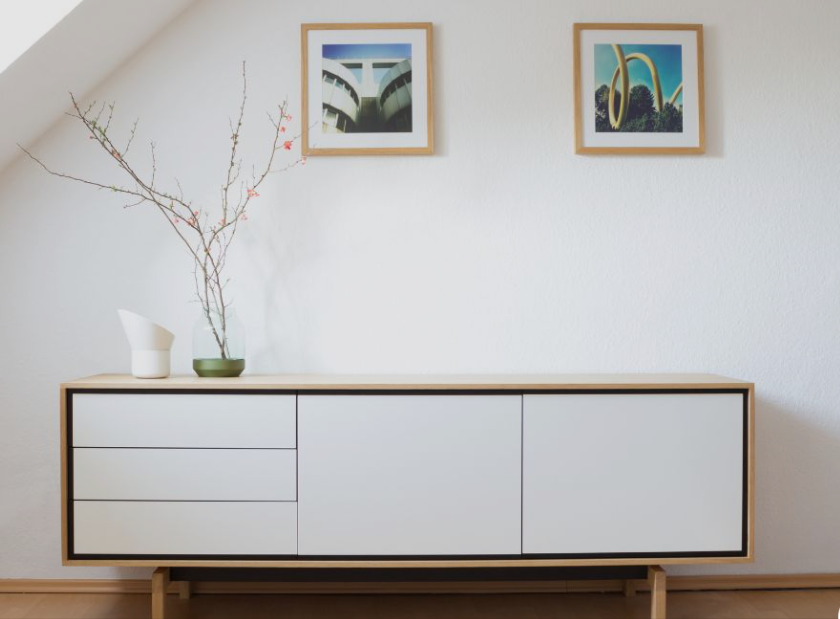
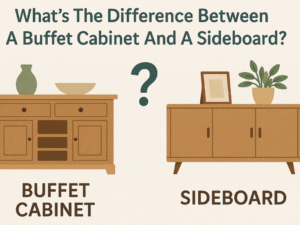
If you source hospitality furniture for hotels, extended-stay brands, and serviced apartments, you’ve likely seen the same confusion in RFQs. Buyers ask for a “buffet cabinet.” Designers draw a “sideboard.” Installers receive a “cabinet buffet” note that means… nothing. The good news: in the US market, sideboard and buffet cabinets are functionally the same category most of the time. The difference is usually context of use and how people search. House Digest
This article is written in a B2B factory / OEM / ODM / project voice for procurement teams. It highlights several factors that reduce risk in multi-unit hospitality. These include TSCA Title VI paperwork and stability best practices (anti-tip). Drawer and hinge longevity, as well as glass-door damage rates, are important. Consider KD vs assembled logistics. You can use a copy/paste RFQ template immediately.
US Buyers Search Map: Sideboard vs Buffet Cabinet
Sideboard vs buffet cabinet: how to write it clearly in a spec (and avoid “cabinet buffet”)
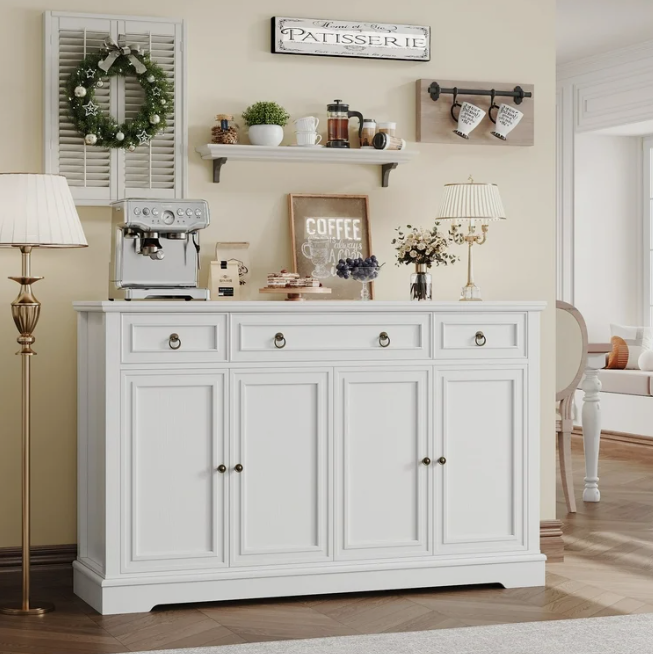
In US procurement language:
- “Sideboard” tends to be the broader category label (works for dining, living, corridor staging, amenity spaces).
- “Buffet cabinet” is heavily used when the product is tied to food service. It is also linked to serving surfaces, dining rooms, and restaurants. This connection is why hospitality buyers search it so often. House Digest
- “Cabinet buffet” shows up as a reversed phrase or non-native wording. Use it as a synonym for buffet cabinet in your SEO and internal search. Do not use it as the primary naming in contracts.
Best practice for B2B clarity (what we recommend as an OEM/ODM supplier):
In schedules and BOQs, write:
Sideboard (Buffet Cabinet), contract-grade
Include dimensions, configuration, finish, and compliance requirements.
That single line prevents “wrong-category” substitutions during value engineering.
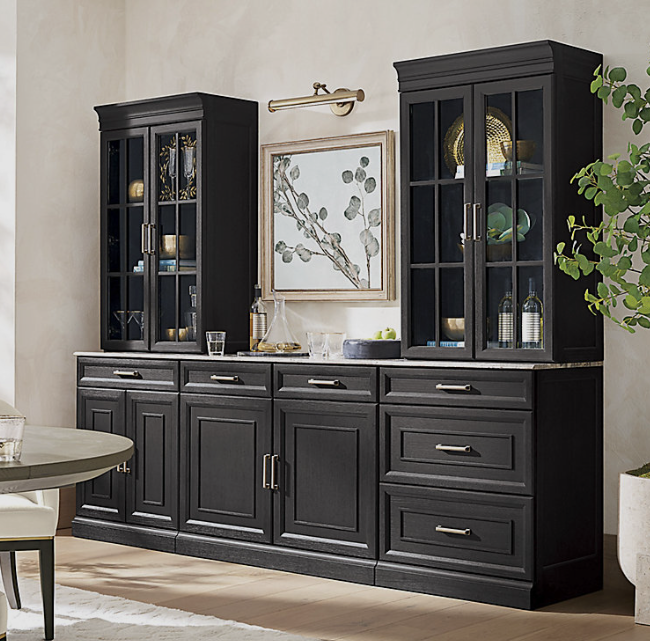
Why US search uses “buffet cabinet” more in dining projects (synonym coverage strategy)
Consumer/home media often explains that people use “sideboard” and “buffet” interchangeably. The difference is largely where it’s placed (dining vs general storage). House Digest
For SEO and for buyer intent, that translates into a practical rule:
- Category page / blog topic: lead with Sideboard for broad coverage.
- Hospitality dining use-cases: include Buffet cabinet and long-tail modifiers (drawers, glass doors, hutch, narrow).
That’s exactly how we structure project content on plywoodmfr.com: one primary category term plus configuration terms that buyers actually type into search and RFQs.
Top Searched Configurations Buyers Actually Specify
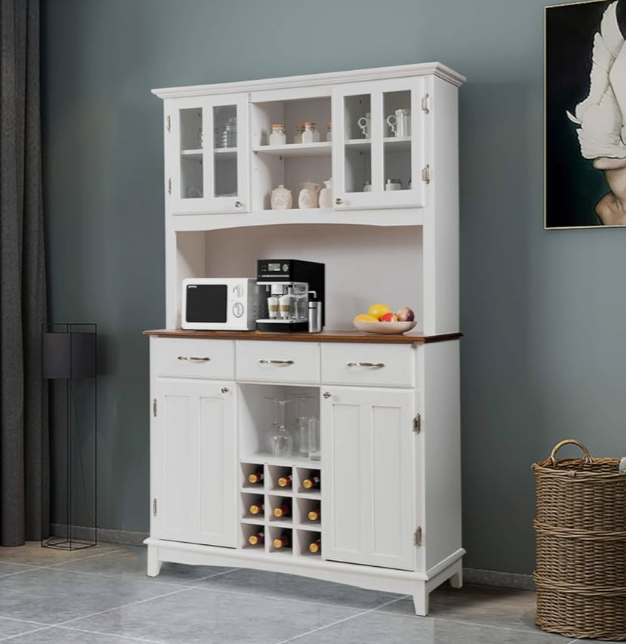
Below are the configurations we most commonly see in hospitality and serviced apartment procurement. These configurations are mapped directly to the search terms that appear in buyer briefs.
Buffet cabinet with drawers / Sideboard cabinet with drawers: how to specify load and slide life
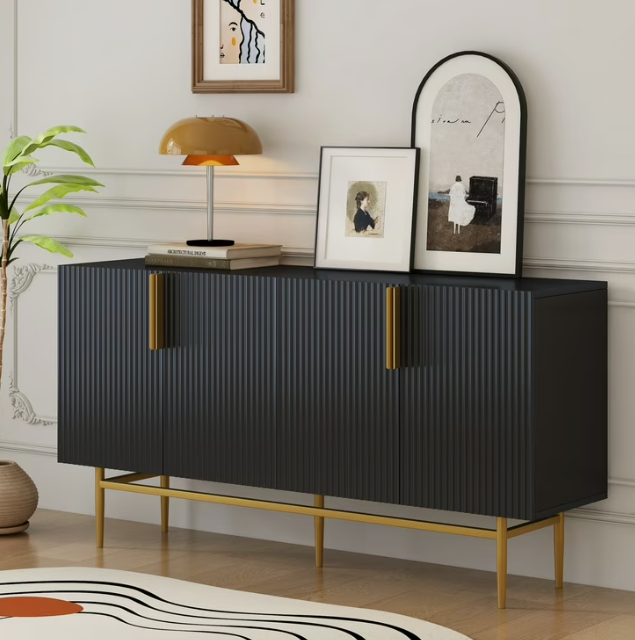
In your page copy and product collections, mention these keywords in a natural way. Use terms like buffet cabinet with drawers and sideboard cabinet with drawers. Also include sideboard cabinet drawers and drawer sideboard cabinet.
What buyers should specify (project-grade):
- Drawer load rating (per drawer)
- Don’t just say “heavy duty.” Specify a target capacity per drawer based on use: cutlery, coffee kits, linens, minibar accessories.
- Slide type + cycle expectations
- Soft-close undermount slides look premium, but for hospitality turnover you want repeatable performance and easy service.
- Drawer box construction
- Plywood drawer boxes typically outperform low-grade board in screw holding and racking resistance over repeated slams.
- Stop and anti-rack design
- Large drawers need anti-rack guidance to prevent binding in long, shallow sideboards.
OEM note: In serviced apartments, drawer failure is a high-cost event. It triggers in-room maintenance calls and leads to guest dissatisfaction. Therefore, slides and fasteners matter more than decorative trim.
Buffet cabinet with glass doors: hinges, damping, and how to reduce breakage in transit
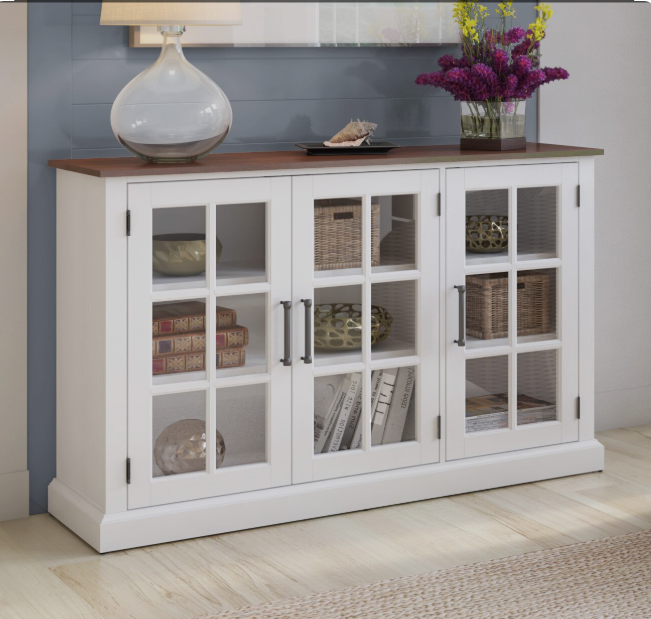
Keywords: buffet cabinet with glass doors, buffet cabinets and sideboards, sideboard buffet cabinets.
For glass-door buffet cabinets used in restaurants, executive lounges, or suite dining areas, failures usually fall into two buckets:
- Transport damage (glass cracks, corner impacts, hinge plate distortion)
- In-field alignment (door rub, sag, magnetic catch misalignment)
Spec checklist:
- Tempered glass (where applicable by design intent)
- Soft-close hinges with adjustable plates
- Door opening angle appropriate for the space (avoid collisions with adjacent walls)
- Protective corner packaging + internal bracing (see Packaging section)
Packaging KPI we track in project programs: We monitor the glass-door damage rate per container and per 100 units. There is a corrective action threshold.
Buffet cabinet with hutch: anti-tip and anchoring requirements for on-site installs
Keywords: buffet cabinet with hutch, sideboard and buffet cabinets, large buffet cabinet.
A hutch turns a low, stable unit into a taller center-of-gravity product. In hospitality, you may use hutches for:
- restaurant service storage
- back-of-house staging
- serviced apartments needing vertical pantry-style storage
What to put in the spec:
- Wall anchoring / anti-tip kit included (hardware kit + clear install instructions)
- Mounting points designed into the product (not “drill anywhere”)
- Site conditions note: wall type (stud/drywall, masonry), and whether the installer is required to anchor
While the US mandatory standard referenced below is focused on clothing storage units (dressers, wardrobes, etc.), the underlying safety logic (stability under loads) is a best practice mindset for any tall storage used in family-facing environments. U.S. Consumer Product Safety Commission+1
Narrow buffet cabinet: small footprints, corridor constraints, and ADA-minded planning
Keywords: narrow buffet cabinet, small sideboards and cabinets, sideboards and cabinets, sideboard kitchen cabinet.
In hospitality, “narrow” is often driven by:
- corridor widths and housekeeping carts
- suite entries with tight clearances
- restaurant circulation and code-compliant accessible routes
The 2010 ADA Standards establish minimum clear width concepts for accessible routes. The Access Board’s guidance summarizes that accessible routes generally have a 36-inch minimum clear width. There are limited exceptions. ADA.gov+2Access Board+2
Procurement translation (practical):
- Don’t place a deep buffet/sideboard in a way that reduces circulation below the project’s accessibility requirements.
- If the unit must sit in a circulation zone, consider a shallower depth, rounded corners, and wall alignment.
Compliance & Risk: TSCA Title VI and Tip-Over Safety
Panel compliance: TSCA Title VI (plywood/MDF/particleboard) — documents, labels, and audit readiness
For hospitality programs in the US, panel compliance is not “nice to have.” You want documentation that stands up during developer compliance review.
What TSCA Title VI is (in plain English):
EPA regulates formaldehyde emissions from composite wood products. This is done under TSCA Title VI to reduce exposure risks. 美国环保局+1
What to request in your RFQ / supplier submittals (typical buyer expectations):
- Confirmation is needed that regulated composite wood products used in the furniture meet TSCA Title VI requirements. The scope depends on components and construction. 联邦公报+1
- Supplier documentation pack (test reports/certifications as applicable; many buyers also ask for chain-of-custody info when sustainability is a bid requirement). 美国环保局
- Material types must be clearly identified. Determine whether components are plywood, MDF, or particleboard. It is important to know if any components are laminated or veneered. This helps compliance and quality teams. 美国环保局
Factory/OEM tip:
If you want smooth approvals, submit compliance documents before mass production and keep them consistent across phases. Multi-building hospitality programs fail when Phase 2 uses a different core or adhesive without updated paperwork.
Stability / anti-tip: how CPSC and ASTM F2057 changed the expectation for storage furniture
The US Consumer Product Safety Commission (CPSC) has adopted ASTM F2057-23 as a mandatory standard. This adoption aims to address tip-over incidents for dressers and other clothing storage units. U.S. Consumer Product Safety Commission+2Federal Register+2
Important scope note (for accurate specs):
Buffet cabinets and sideboards are not always classified as clothing storage units. However, hospitality projects—especially serviced apartments—often adopt anti-tip and anchoring best practices because:
- units may be placed in family-facing suites
- housekeeping and guest behavior create unpredictable loads
- “hutch” configurations increase tip-over risk
How to write it into your spec without over-claiming:
- For buffet cabinet with hutch or tall sideboard configurations:
- “Provide wall-anchoring hardware kit and installation guide; unit must be capable of secure anchoring to wall substrate.”
- For standard-height units in serviced apartments:
- “Provide anti-tip provisions upon request; confirm stability testing approach and anchoring options.”
This approach aligns safety mindset with project realities while respecting regulatory scope. U.S. Consumer Product Safety Commission+1
Project-Grade Construction: Materials, Tops, Details that Survive Turnover
This is where hospitality buyers win or lose total cost. The focus should be on avoiding edge swelling, loose hardware, and finish failures. These issues often turn into service calls. It’s not about shaving $3 off a unit.
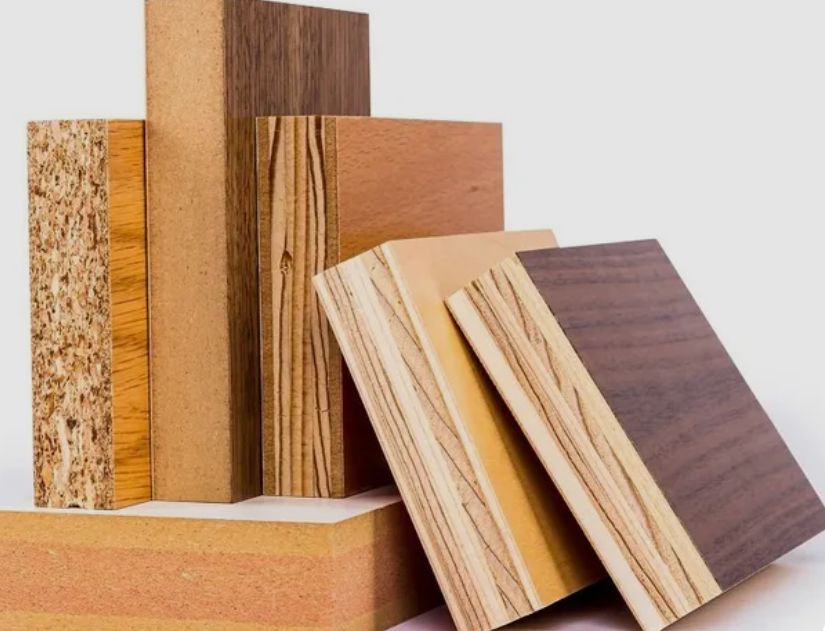
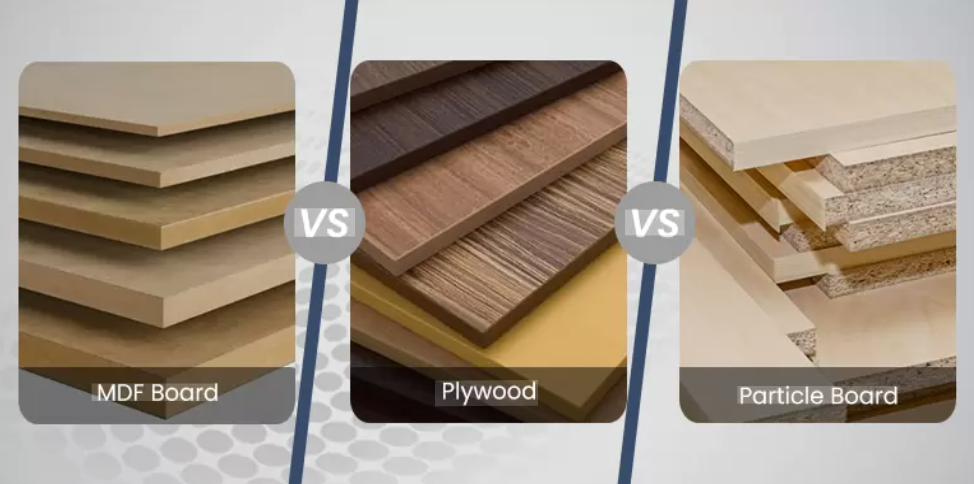
Plywood vs MDF vs particleboard (edge banding, hardware, screw holding, rework rate)
For buffet cabinets and sideboards, the most common construction choices:
- Plywood carcass: strong screw holding, stable, good for repeated assembly/disassembly
- MDF: smooth paint surface; heavier; edges must be sealed carefully
- Particleboard/MFC: cost-efficient; relies heavily on lamination quality, edge banding, and proper fasteners
What to specify (B2B language):
- Edge banding thickness on exposed edges (hospitality units get kicked, cleaned, and moved)
- Hardware attachment method (confirm inserts/dowels/confirmat screws where needed)
- Back panel design (squareness retention matters for long, shallow sideboards)
If your brand requires “wooden buffet cabinet” aesthetics, consider wood veneer over a stable core for consistency at scale. Reserve solid wood for legs and face frames where it adds value without the risk of movement.
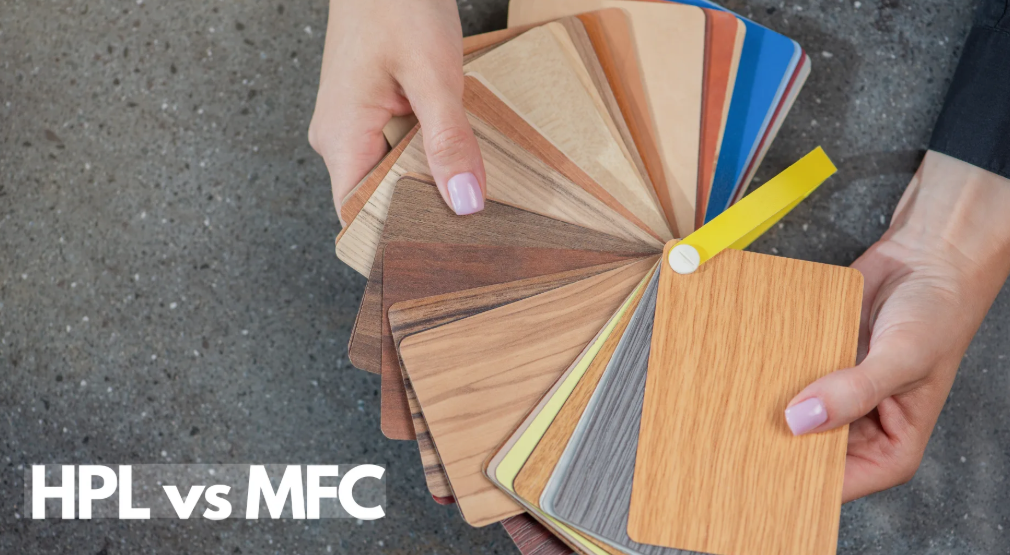
Durable tops: HPL vs melamine vs veneer + coating (cleaner resistance matters)
Hospitality dining storage surfaces see:
- acidic cleaners
- alcohol wipes
- coffee spills and food stains
- abrasion from trays and service equipment
Common project-grade options:
- HPL (high-pressure laminate): high durability, consistent, great for restaurant/service zones
- Melamine/MFC: good value, requires strong edge protection; can be excellent if specified correctly
- Veneer + coating: premium look, but must be a proven coating system for cleaning chemicals
Procurement tip:
Ask for finish performance references such as scratch, stain, and chemical resistance. Approve a golden sample that stays on file through the program.
Toe-kick, back panels, and cable access (hospitality needs are different)
For serviced apartments and hotel suites, sideboards often double as:
- coffee station base
- minibar cabinetry
- microwave shelf support
- concealed tech storage
Include in specs:
- Toe-kick height and wall scribe allowances
- Ventilation and cable grommets (if appliances are involved)
- Serviceability: removable back access panel for maintenance
Packaging & Install: Where Total Cost Is Won or Lost
Assembled vs KD/RTA: elevator logistics, hallway risk, install labor
For hospitality, the decision is not just “shipping cost.” It’s an equation:
- Assembled: faster on site, less assembly error; higher cube, higher freight; corridor damage risk
- KD/RTA: better for elevators and narrow hallways; requires clear instructions, better hardware kits, and tighter QC to avoid install delays
Rule of thumb we see in multi-unit hospitality:
- Tight access + large volumes → KD/RTA often wins total delivered cost
- Luxury suites with high finish sensitivity → assembled may reduce field damage if protected correctly
Drop-test thinking: corner protection, glass protection, and spare parts as a KPI
For a buffet cabinet with glass doors, packaging is part of product engineering.
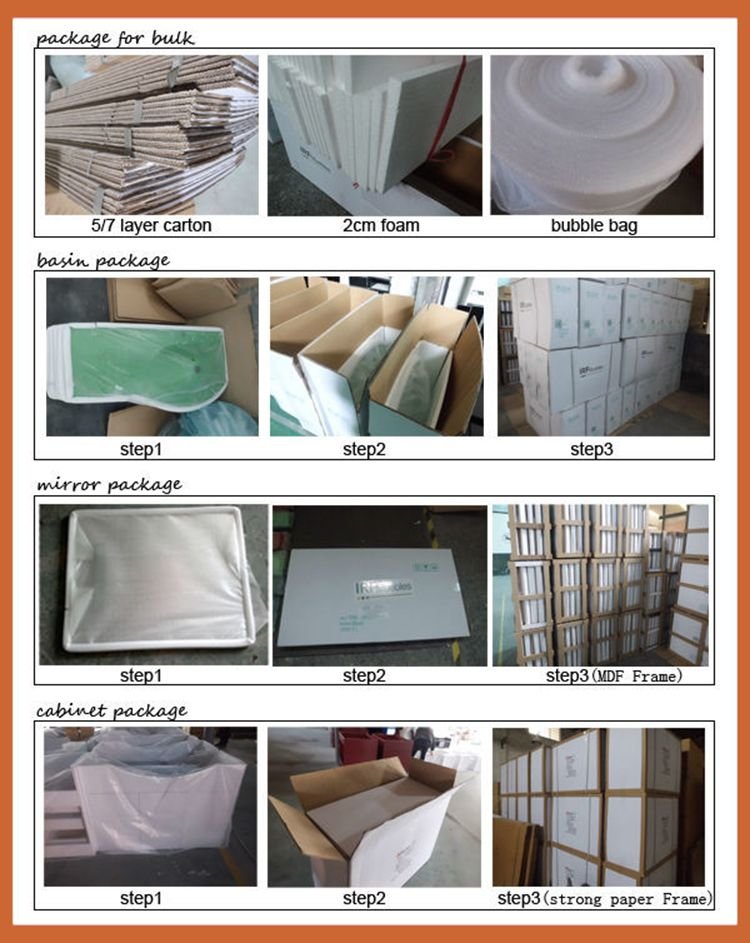
Packaging measures that reduce claims:
- reinforced corners
- internal bracing to prevent racking
- glass protection (edge guards, separation layers)
- included spare hardware kit per X units (slower to source on-site than you think)
Field efficiency KPI buyers care about:
“% installed without punch list” and “time-to-replace damaged parts.”
Copy-Paste RFQ Template for Hospitality Sideboards
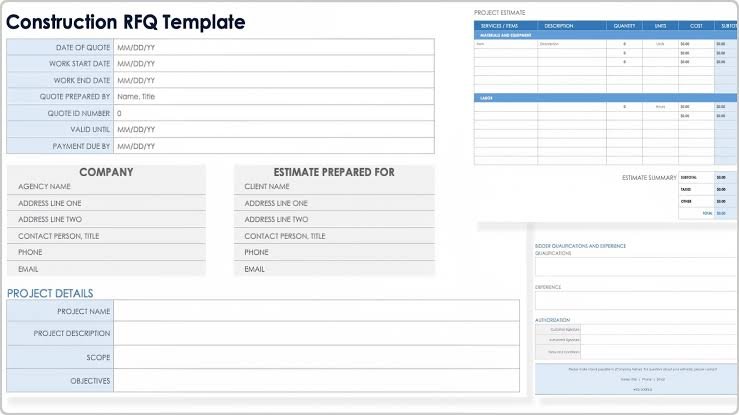
Use this RFQ block to reduce back-and-forth and force apples-to-apples quotes.
1) Product Name (in documents):
- Sideboard (Buffet Cabinet), contract-grade
2) Dimensions (inches):
- W: ___ / D: ___ / H: ___
- For narrow buffet cabinet request depth target: ___
3) Configuration (choose):
- buffet cabinet with drawers: ___ drawers
- Doors: ___ (solid) / buffet cabinet with glass doors: ___ glass doors
- buffet cabinet with hutch: Yes/No (if yes: anchoring required)
- Shelves: adjustable/fixed; load rating: ___
4) Finish & Color:
- white sideboard buffet cabinet / wood tone / custom match
- Top surface: HPL / melamine / veneer + coating (state performance requirement)
5) Materials:
- Carcass: plywood / MDF / particleboard (state preference)
- Edge banding thickness: ___ mm on exposed edges
- Drawer box: plywood / engineered; joinery method: ___
6) Hardware:
- Hinges: soft-close, adjustable
- Slides: soft-close; load rating: ___; cycle expectation: ___
- Pulls: metal/wood; finish: ___
7) Compliance Submittals (US):
- TSCA Title VI documentation for composite wood products used (as applicable). 美国环保局+1
- Indoor air / sustainability certifications if required (e.g., UL GREENGUARD, FSC chain-of-custody). UL Solutions+1
8) Safety / Installation:
- For hutch/tall units: wall anchoring kit included + instructions (anti-tip best practice). U.S. Consumer Product Safety Commission
9) Packaging & Spares:
- ISTA-style approach or drop-test requirement (state your internal standard)
- Spare hardware kit: 1 per ___ units
- Glass-door protection requirements (if applicable)
10) Warranty & Service:
- Warranty terms: ___
- Spare parts lead time: ___ days
FAQ
Is a buffet cabinet the same as a sideboard in the US?
Most of the time, yes—buyers and media use the terms interchangeably. “Buffet cabinet” is more tied to dining/serving use, while “sideboard” is a broader category label. House Digest
What documents prove TSCA Title VI compliance for engineered wood furniture?
US buyers typically request documentation related to EPA’s TSCA Title VI formaldehyde emission standards for composite wood products. They also ask for supporting supplier submittals and test documentation as applicable to the materials used. 美国环保局+2联邦公报+2
Do sideboards need anti-tip hardware in multi-family hospitality projects?
CPSC’s mandatory standard is targeted at clothing storage units. However, hospitality buyers often apply anchoring/anti-tip best practices for taller storage. This is especially true for hutches or units placed in family-facing serviced apartments. U.S. Consumer Product Safety Commission+1
What’s the safest configuration for high-traffic hospitality use?
A stable core is important. It often uses plywood or high-quality MFC. A durable top, such as HPL or a proven coating, is also necessary. Robust edge banding and serviceable hardware are crucial. Together, they generally deliver the lowest lifecycle cost.
What should I specify to reduce damage on glass-door buffet cabinets?
Tempered glass (where applicable), adjustable soft-close hinges, reinforced corner packaging, internal bracing, and spare hardware/door bumpers for fast field fixes.
Get in Touch & Start Your Project
Whether you’re launching a new furniture brand, remodeling an apartment, or need large-scale furniture orders, Starwood is here to help. Contact us today to get started — let’s turn your vision into finely crafted furniture.
STARWOOD INDUSTRY CO.,LTD
Contact: Winnie Huang (Sales Manager)
Email: [hwinnie168@gmail.com]
Phone: +86‑13691994727
WhatsApp / WeChat / Skype: hwinnie168@gmail.com
Add: No.150 Yongshen Road, Pengjiang Area, Jiangmen City, Guangdong Province, China
We look forward to collaborating with you and bringing your furniture dreams to life.